

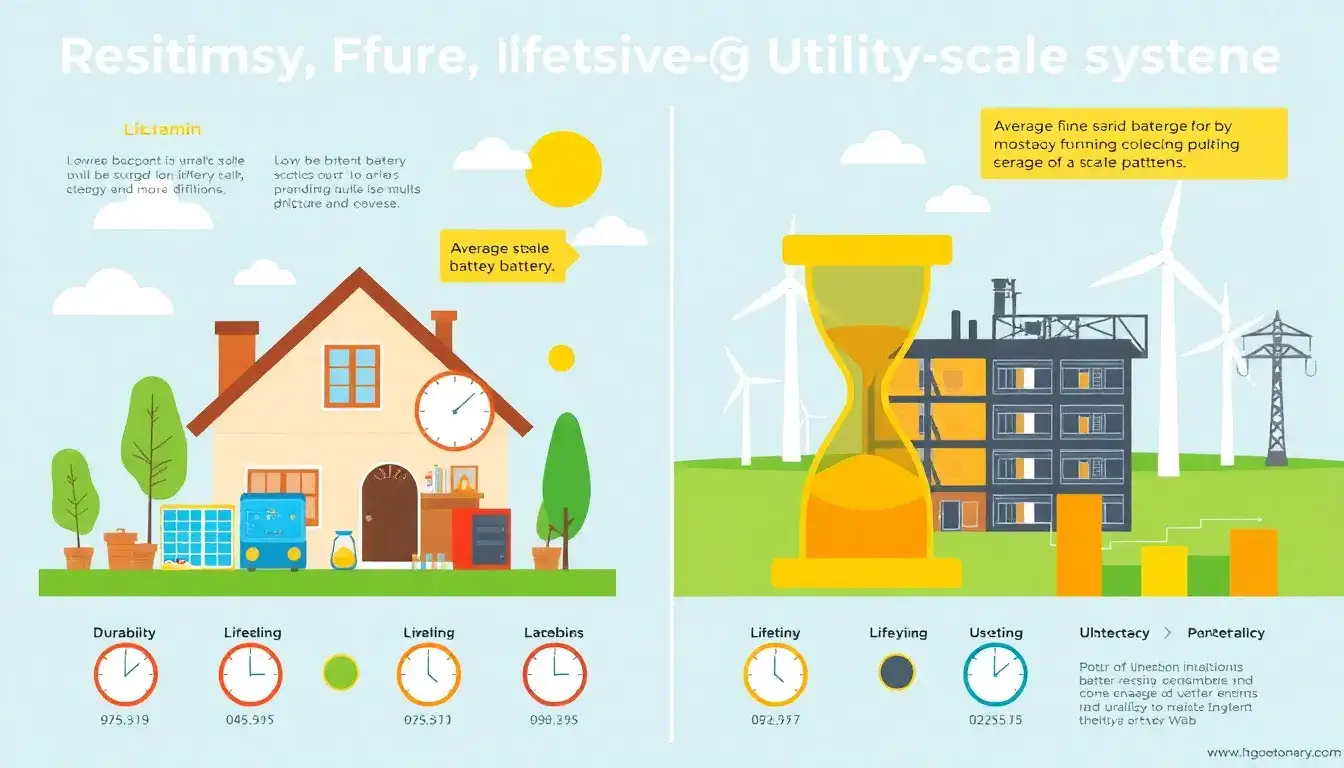
Residential Battery Storage Systems
- Lifespan: Generally, residential solar batteries last between 5 to 15 years.
- Types of Batteries: Lead-acid, lithium-ion, and saltwater batteries are used. Lithium-ion batteries, particularly those with lithium iron phosphate (LFP) chemistry, are preferred due to their longevity and efficiency.
- Factors Affecting Lifespan: Usage cycles, depth of discharge, storage conditions (temperature and humidity), and maintenance practices significantly influence battery lifespan.
Utility-Scale Battery Storage Systems
- Lifespan: Utility-scale batteries often have longer lifespans compared to residential ones, typically lasting 15 to 25 years or more, depending on the technology and operational conditions.
- Types of Batteries: Utility-scale systems also primarily use lithium-ion batteries, but larger systems may explore other technologies like flow batteries for longer durations.
- Factors Affecting Lifespan: Similar factors affect utility-scale systems, including charge/discharge cycles, temperature, and maintenance. However, larger systems benefit from more advanced cooling systems and better monitoring capabilities to manage these factors more effectively.
- Warranty and Performance: Warranty periods for utility-scale systems often extend beyond those for residential systems, reflecting their longer lifetimes and more complex maintenance requirements.
Comparison of Lifetimes
- Duration: Utility-scale batteries generally have longer lifetimes than residential batteries.
- Technology Advancements: Both sectors benefit from advancements in battery technology, but utility-scale systems may adopt newer technologies more quickly due to their larger scale and economies.
- Operational Complexity: Utility-scale systems are more complex, typically involving larger capacities and more sophisticated management systems, which can help extend lifespan through better control over factors like temperature and charge/discharge rates.
Overall, while both residential and utility-scale battery storage systems face similar challenges in terms of lifespan factors, utility-scale systems tend to have longer durations due to their size, operational complexity, and access to more advanced technologies.
Original article by NenPower, If reposted, please credit the source: https://nenpower.com/blog/how-do-the-lifetimes-of-residential-and-utility-scale-battery-storage-systems-compare/

