

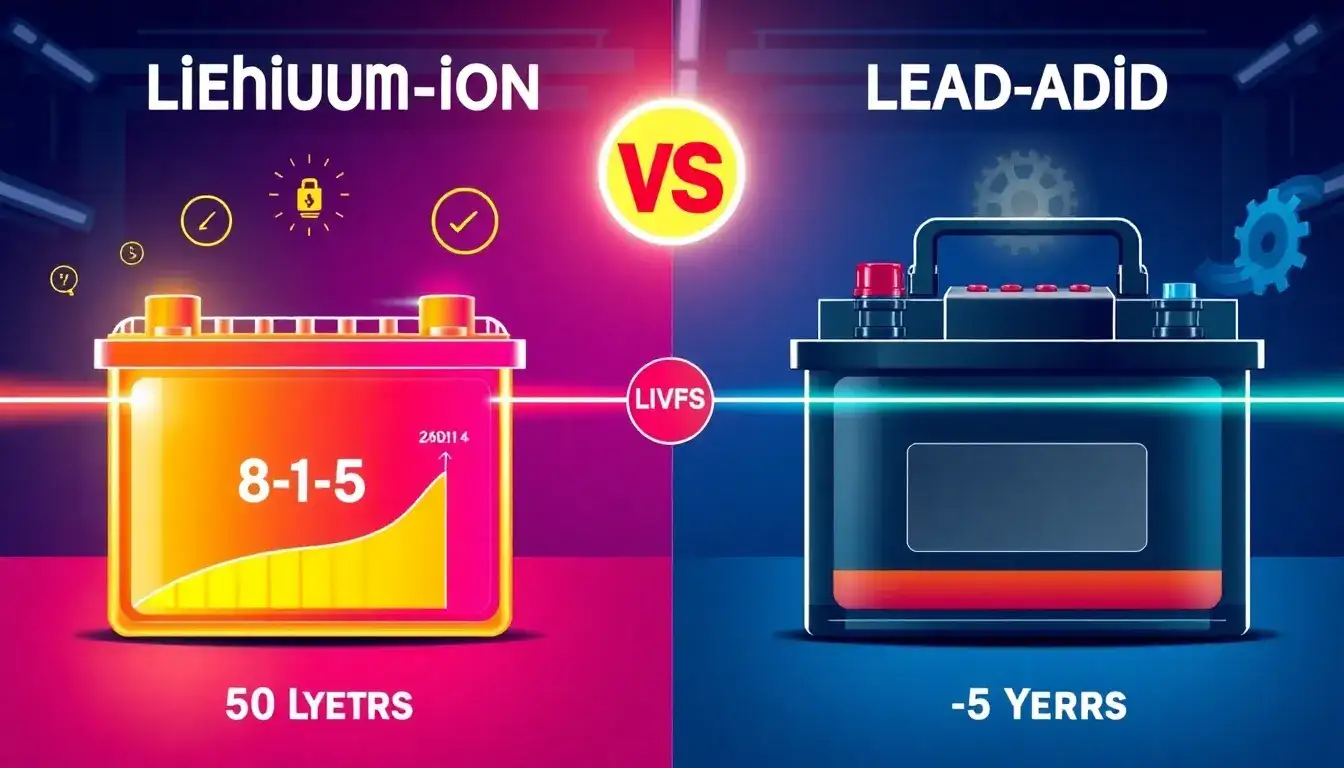
Lithium-ion batteries generally have significantly longer lifespans compared to lead-acid batteries, both in terms of years of service and number of charge-discharge cycles.
- Lifespan in Years:
- Lithium-ion batteries typically last between 2 to 10 years depending on the specific chemistry and usage conditions. For example, common Li-ion batteries last about 2-10 years, while Lithium Iron Phosphate (LiFePO4) versions can last 5-15 years under good care.
- Lead-acid batteries usually have a lifespan of about 3 to 5 years.
- Cycle Life (Number of Charge Cycles):
- Lithium-ion batteries usually endure from around 300 up to 3,000 cycles depending on type and maintenance. Most manufacturers expect at least 2,000 cycles minimum, with some well-maintained batteries reaching 3,000 cycles.
- Lead-acid batteries commonly last between 200 and 300 cycles before their capacity significantly declines.
Summary Table:
| Battery Type | Lifespan (Years) | Typical Cycle Life |
|---|---|---|
| Lithium-ion (general) | 2 – 10 | 300 – 3,000 cycles |
| Lithium Iron Phosphate | 5 – 15 | Higher end of cycles |
| Lead-acid | 3 – 5 | 200 – 300 cycles |
This means lithium-ion batteries can last approximately 2-3 times longer than lead-acid batteries in both years and charge cycles, making them more durable and cost-effective over time, especially in applications requiring frequent cycling or longer service life.
Original article by NenPower, If reposted, please credit the source: https://nenpower.com/blog/how-do-the-lifespans-of-lithium-ion-batteries-compare-to-lead-acid-batteries/

