

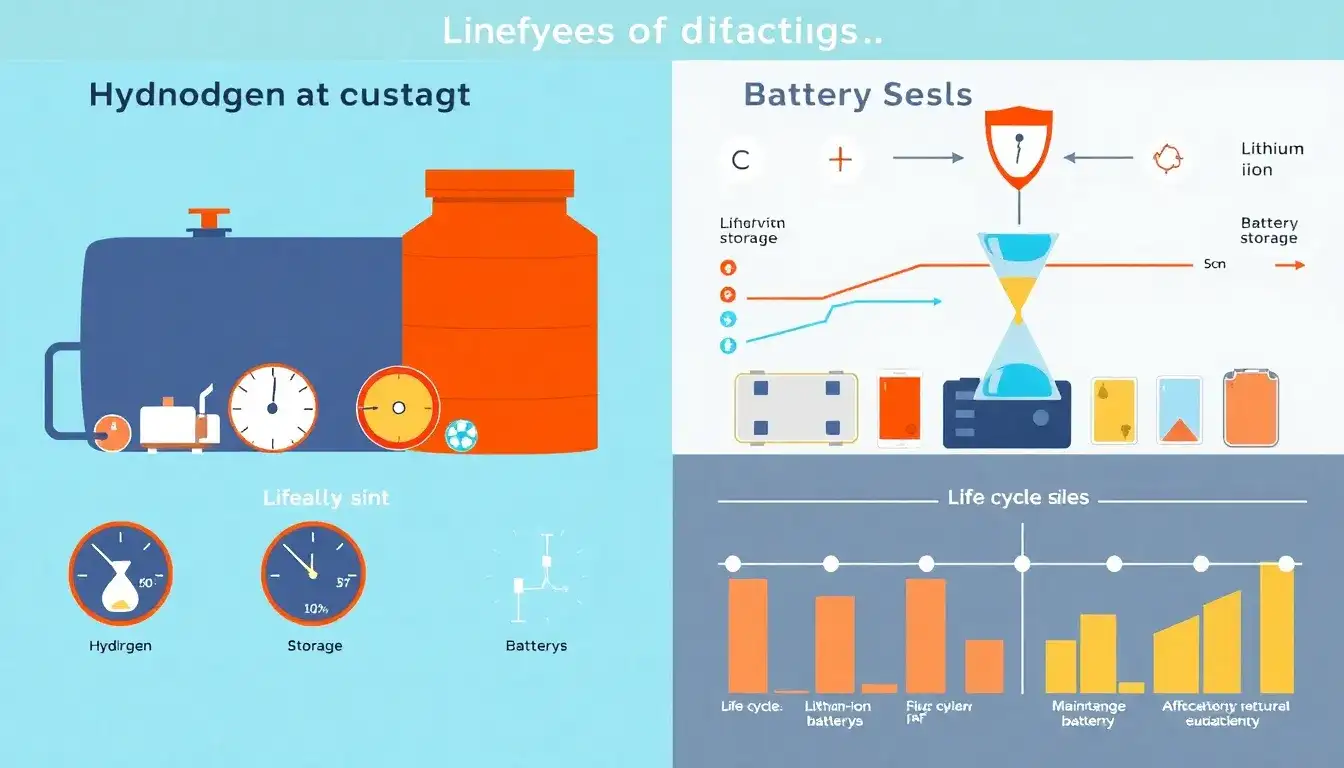
Hydrogen storage systems generally have significantly longer lifespans compared to typical battery storage systems.
- Hydrogen storage systems are expected to last around 30 to 50+ years, with some emerging technologies reporting lifespans of about 30 years, which is roughly triple the lifespan of lithium-ion batteries. This longevity contributes to hydrogen’s appeal as a long-term energy storage solution.
- Battery storage systems, such as lithium-ion and lead-acid batteries, commonly have operational lifespans of 10 to 20 years under typical conditions, with some advanced battery types (e.g., vanadium redox flow batteries) reaching 20 to 30 years. However, battery life depends heavily on usage patterns, operating temperature, and depth of discharge, which can reduce effective lifespan significantly.
In summary, hydrogen storage systems tend to offer a much longer service life than conventional battery storage, making them more suitable for applications requiring durable, long-term energy storage. Batteries, while flexible and efficient for shorter durations or rapid cycling, usually need replacement or refurbishment sooner than hydrogen storage systems.
Original article by NenPower, If reposted, please credit the source: https://nenpower.com/blog/how-do-the-lifespans-of-hydrogen-storage-systems-compare-to-battery-storage-systems/

