

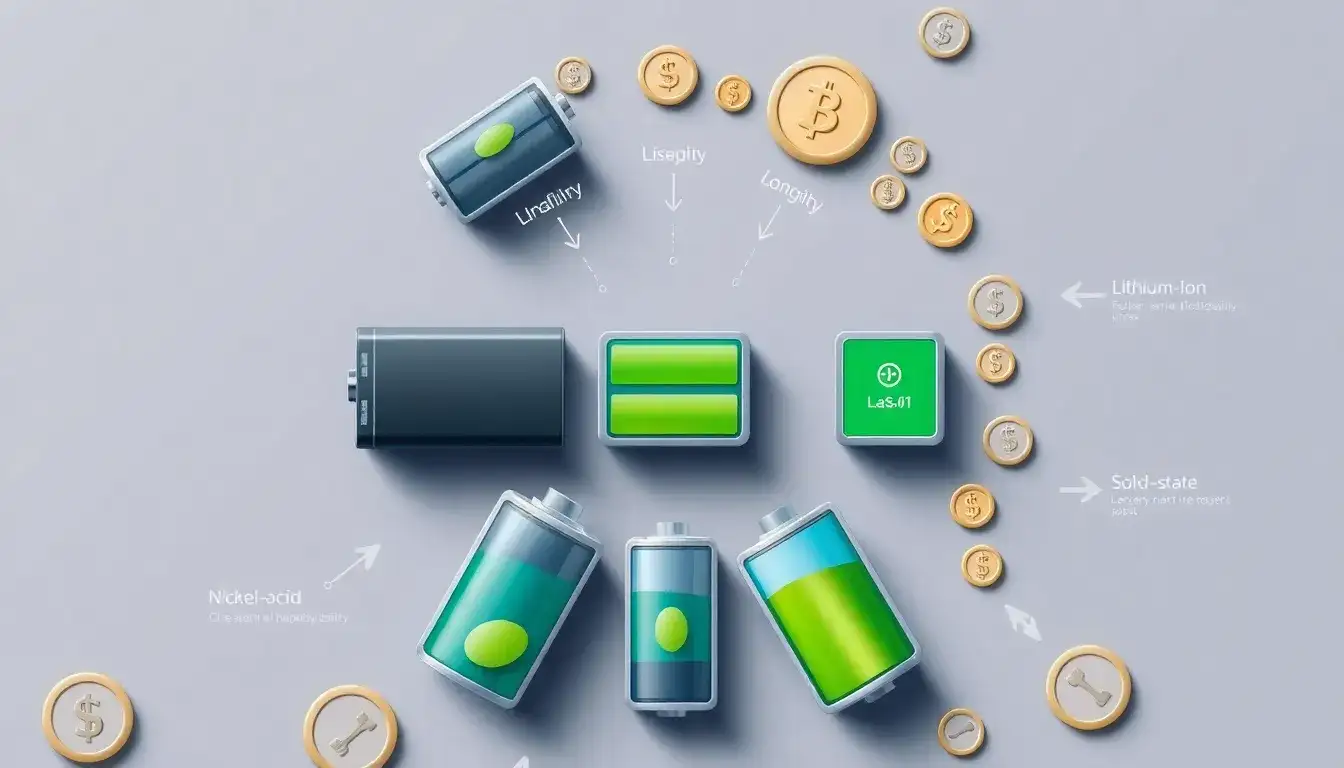
The lifespan of different battery types significantly impacts their overall cost, particularly when considering total cost of ownership (TCO). Here’s a comparison between lithium-ion and lead-acid batteries, two of the most commonly used types, highlighting how their lifespans influence their cost structures:
Lifespan Comparison
- Lithium-Ion Batteries: These batteries have a significantly longer lifespan, typically lasting 3,000 to 5,000 charge cycles, which can translate to approximately 8-10 years in high-usage environments.
- Lead-Acid Batteries: In contrast, lead-acid batteries generally last for 300 to 500 charge cycles, requiring frequent replacements and adding to their overall cost.
Impact of Lifespan on Cost
1. Initial Purchase vs. Long-Term Cost
- Lead-Acid: While initially cheaper, lead-acid batteries necessitate frequent replacements, leading to higher long-term costs.
- Lithium-Ion: Although more expensive upfront, lithium batteries provide better value over their extended lifespan, significantly reducing total costs.
2. Maintenance and Labor Costs
- Lead-Acid: Requires regular maintenance such as watering and cleaning, which increases labor costs. Additionally, battery swaps and storage requirements add to these costs.
- Lithium-Ion: Offers zero maintenance needs, eliminating costs associated with upkeep like watering and ventilation. Their built-in battery management systems (BMS) ensure efficient performance without manual intervention.
3. Energy Efficiency
- Lithium-Ion: These batteries are more energy-efficient, using approximately 30% less electricity compared to lead-acid. This efficiency contributes to lower electricity bills over time.
- Lead-Acid: Less efficient in terms of energy retention and usage, leading to higher energy costs over their lifespan.
4. Second-Life Opportunities
- Lithium-Ion: At the end of their automotive use, lithium-ion batteries can be repurposed for other applications like energy storage, extending their utility and value.
- Lead-Acid: Generally do not have viable second-life applications, contributing less to reducing waste and environmental impact.
In summary, while lithium-ion batteries are more expensive initially, their longer lifespan, lower maintenance requirements, and higher energy efficiency make them a more cost-effective choice in the long run. The potential for repurposing also extends their value beyond their primary use. Conversely, lead-acid batteries, though cheaper upfront, incur higher long-term costs due to shorter lifespans and increased maintenance needs.
Original article by NenPower, If reposted, please credit the source: https://nenpower.com/blog/how-do-the-lifespans-of-different-battery-types-impact-their-overall-cost/

