

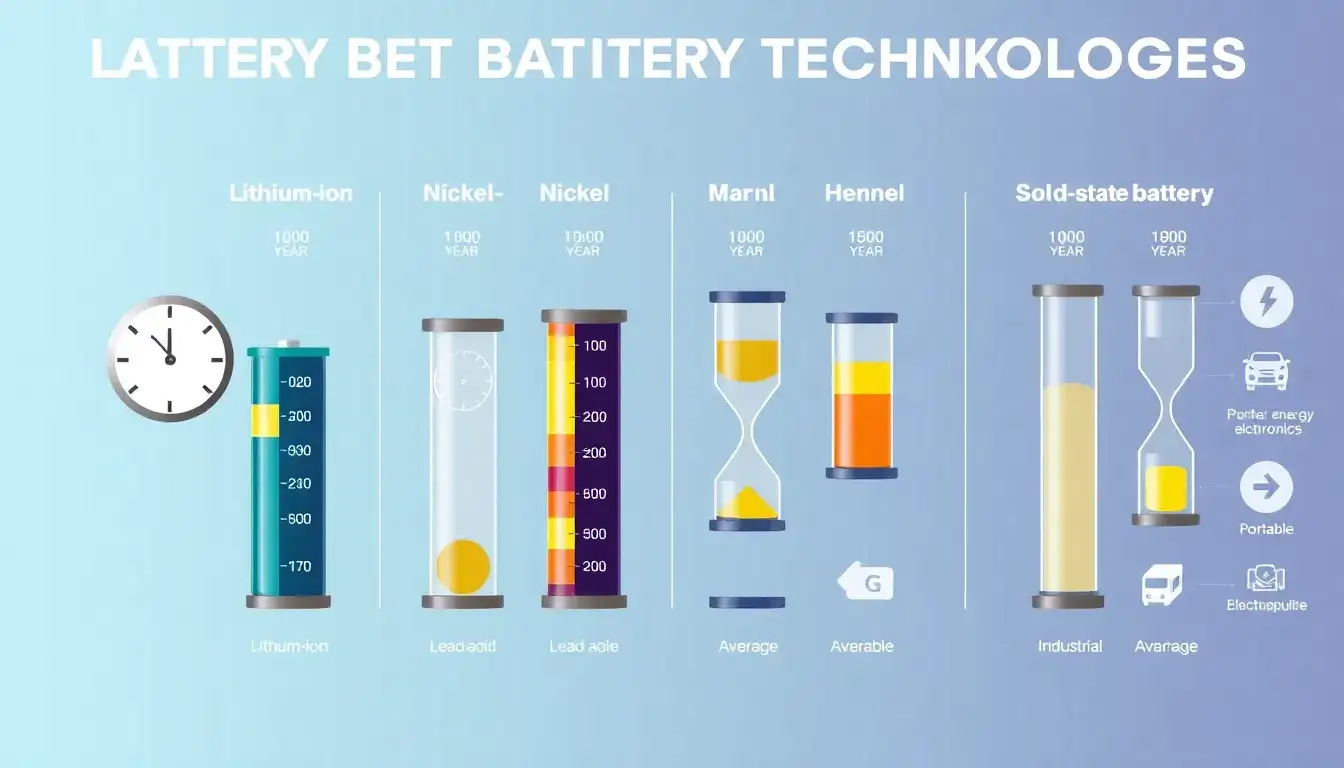
The lifespans of different battery technologies vary significantly based on chemistry, design, and usage conditions. Here is a detailed comparison of common battery types based on available data:
Lithium-Ion vs. Lead-Acid Batteries
- Lithium-ion batteries typically last thousands of charge/discharge cycles, often in the range of 1000 to 5000 cycles depending on specific chemistry and management systems. They have become the dominant technology for portable electronics, electric vehicles (EVs), and renewable energy storage due to their high energy density, efficiency, and longer lifespan.
- Lead-acid batteries generally have a much shorter lifespan, typically needing replacement after about 300-500 cycles, with some deep-cycle varieties offering up to around 1000 cycles. Deep discharging significantly reduces their usable life.
- In terms of calendar life, lithium-ion batteries can last 5 to 10 years with proper care, whereas lead-acid batteries often last 2 to 5 years depending on maintenance and usage.
Lithium Polymer vs. Lithium-Ion Batteries
- Lithium polymer (LiPo) batteries typically provide a longer cycle life than standard lithium-ion batteries, often lasting between 1500 to 2000 charge-discharge cycles, while lithium-ion batteries usually last from 500 to 1000 cycles.
- The solid or gel-like electrolyte in LiPo batteries reduces internal stress and degradation, making them more durable over time compared to lithium-ion batteries with liquid electrolytes, which may degrade faster due to electrolyte evaporation or dendrite formation.
Electric Vehicle (EV) Lithium-Ion Batteries
- EV batteries, which are mostly lithium-ion variants (such as NMC, LFP chemistries), have an average lifespan of 15 to 20 years in real-world conditions, with degradation rates averaging about 1.8% per year under moderate use.
- Battery health and longevity depend heavily on factors such as temperature management, state-of-charge range (ideal 20%-80%), charging methods (slower AC charging preferred over frequent DC fast charging), and overall usage patterns.
- Advanced thermal management like liquid cooling significantly improves lifespan compared to passive air cooling systems.
3-Year vs. 10-Year Lifetime Batteries (General)
- Batteries designed for a 3-year lifespan are typically made with cost efficiency in mind and may use standard lithium-ion or alkaline chemistries. They are intended for less critical uses where frequent replacement is acceptable.
- Batteries engineered for a 10-year lifespan use advanced chemistries and materials engineered for durability and reliability, suitable for critical applications like medical devices or home security systems. These batteries have higher upfront costs but offer better long-term value and lower environmental impact.
Summary Table of Cycle Life and Longevity
| Battery Technology | Typical Cycle Life | Calendar Life | Key Notes |
|---|---|---|---|
| Lead-Acid | 300-1000 cycles | 2-5 years | Lower energy density, heavier, requires maintenance |
| Lithium-Ion (general) | 1000-5000 cycles | 5-10 years | High energy density, widely used in EVs and devices |
| Lithium Polymer (LiPo) | 1500-2000 cycles | Comparable to Li-ion | Gel-like electrolyte, higher durability |
| EV Lithium-ion (NMC, LFP) | 1000-1500 cycles typical | 15-20 years (vehicle life) | Slow degradation with proper thermal management |
| 3-Year Lifetime Batteries | Varies | ~3 years | Cost-effective, for less demanding uses |
| 10-Year Lifetime Batteries | Advanced chemistries | ~10 years | Higher upfront cost, reliability critical |
In conclusion, lithium-based batteries generally offer much longer lifespans and better performance than lead-acid batteries. Lithium polymer batteries tend to outlast standard lithium-ion by a moderate margin in charge cycles due to their stable electrolyte. EV lithium-ion batteries, with sophisticated thermal management and optimized usage, can reliably last 15-20 years. Battery lifespan depends critically on chemistry, design, and operational factors such as charging habits and temperature control. Choosing the right battery technology requires balancing upfront cost, expected lifespan, maintenance requirements, and application needs.
Original article by NenPower, If reposted, please credit the source: https://nenpower.com/blog/how-do-the-lifespans-of-different-battery-technologies-compare/

