

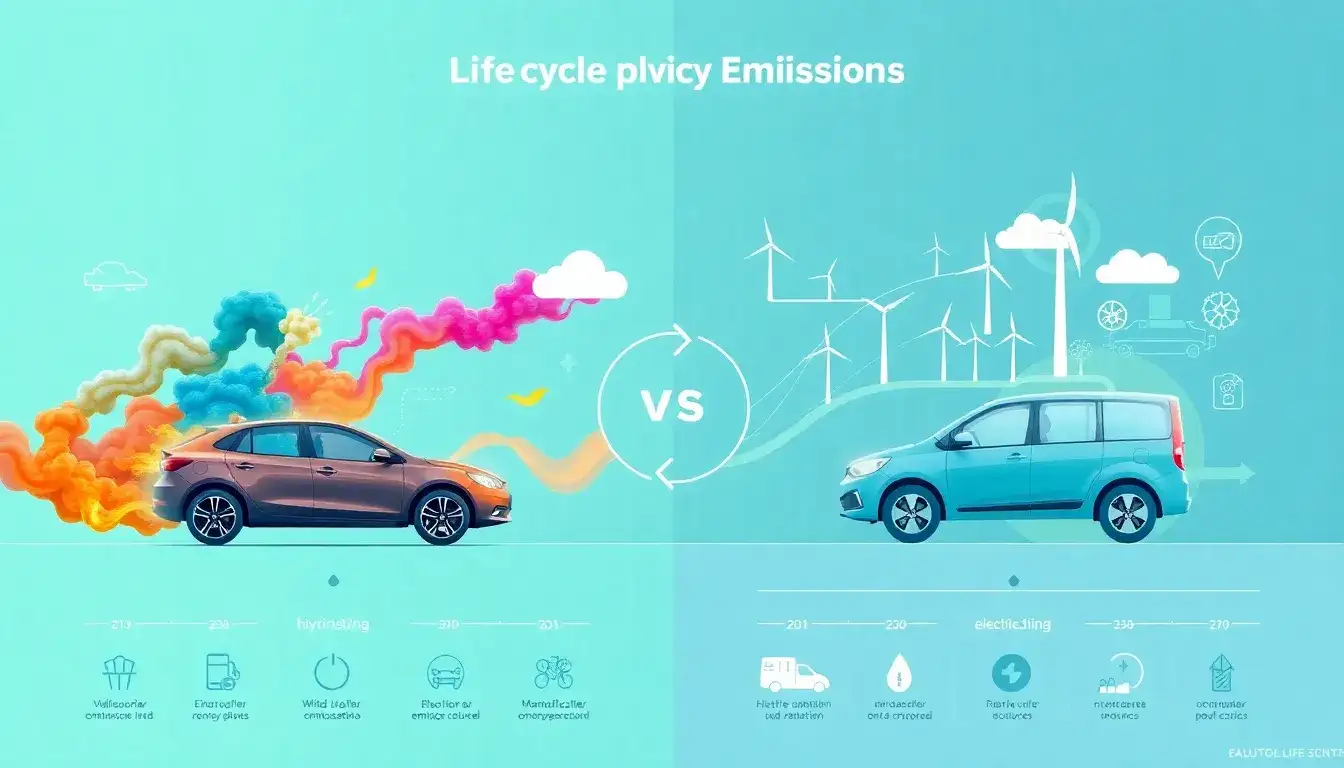
Comparing Life Cycle Emissions: Hybrid Vehicles vs. Electric Vehicles
Overview
When comparing the life cycle emissions of hybrid vehicles and electric vehicles, several factors need to be considered, including fuel sources, vehicle production, and the energy mix used. Here’s a breakdown of how these vehicles compare:
Types of Hybrid Vehicles and Electric Vehicles
- Hybrid Electric Vehicles (HEVs): These vehicles use a combination of a conventional internal combustion engine and an electric motor. While they reduce emissions compared to traditional internal combustion engine vehicles (ICEVs), they still have tailpipe emissions and significant lifecycle emissions.
- Plug-in Hybrid Electric Vehicles (PHEVs): These vehicles can run solely on electricity for a certain distance, reducing tailpipe emissions, but they also include an ICE for longer trips.
- Battery Electric Vehicles (BEVs): These vehicles run entirely on electricity and have zero tailpipe emissions, though lifecycle emissions depend on the electricity source.
Life Cycle Emissions Comparison
- Hybrid Electric Vehicles (HEVs) vs. BEVs:
- HEVs generally have more than twice the lifecycle greenhouse gas emissions of BEVs in an average grid scenario.
- In scenarios where electricity is generated from 100% renewable sources, HEVs can have nearly five times higher lifecycle emissions than BEVs.
- Plug-in Hybrid Electric Vehicles (PHEVs) vs. BEVs:
- PHEVs typically have lifecycle greenhouse gas emissions about twice those of BEVs, powered by an average grid mix.
- On average, PHEVs show about a 34% reduction in lifecycle emissions compared to gasoline vehicles, but this can vary.
- Influence of Electricity Grid:
The cleanliness of the electricity grid significantly affects the lifecycle emissions of BEVs and PHEVs. Cleaner electricity sources reduce lifecycle emissions, whereas dirtier grids increase them.
Conclusion
In summary, while both hybrid vehicles and electric vehicles offer emissions reductions compared to traditional gasoline vehicles, battery electric vehicles (BEVs) generally have the lowest lifecycle emissions, especially when powered by renewable electricity. PHEVs also provide significant emissions benefits, though they are typically higher than those of BEVs. HEVs offer some reduction but remain behind PHEVs and BEVs in terms of lifecycle emissions.
Original article by NenPower, If reposted, please credit the source: https://nenpower.com/blog/how-do-the-life-cycle-emissions-of-hybrid-vehicles-compare-to-those-of-electric-vehicles/

