

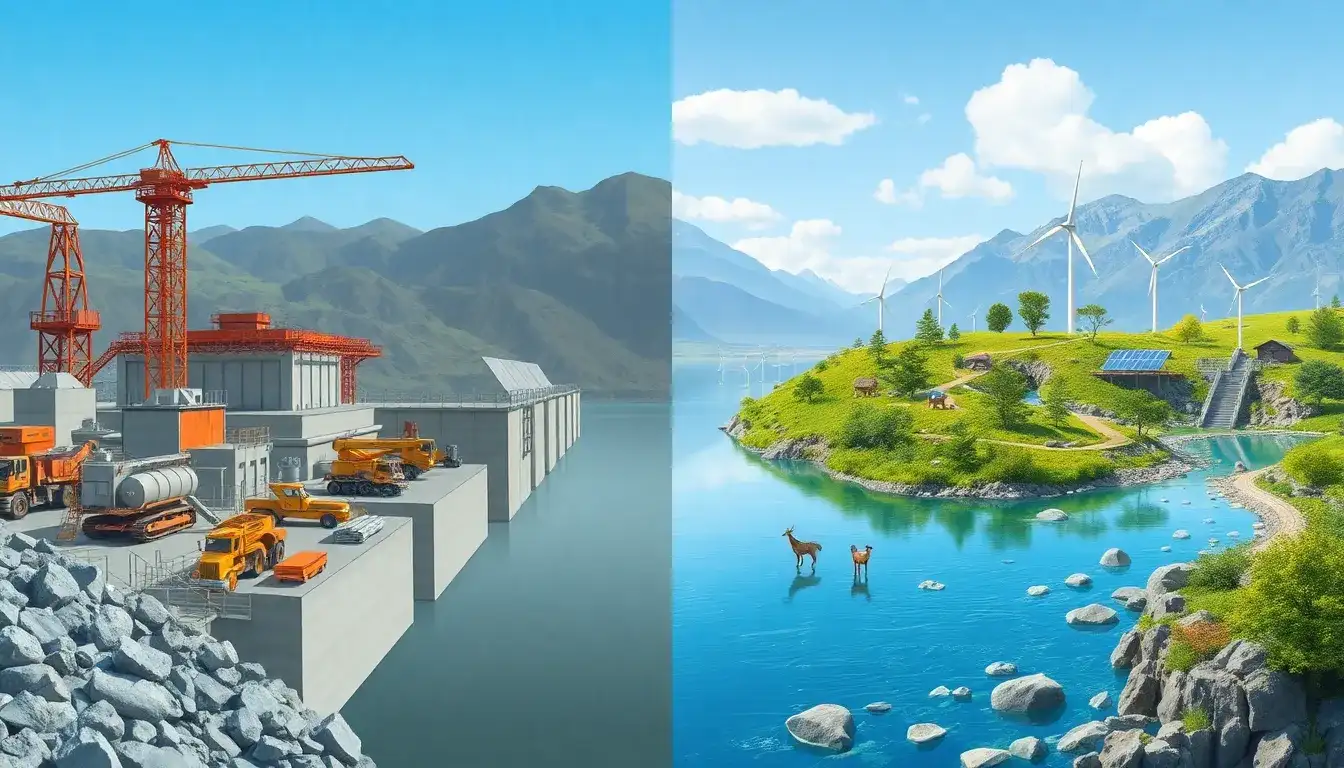
The initial construction costs of pumped hydro storage (PHS) systems can significantly influence their overall environmental sustainability. Here are several ways in which these costs impact sustainability:
1. Environmental Impact of Infrastructure Development
- Land Use and Water Impacts: The construction of PHS facilities requires large tracts of land for reservoirs, which can disrupt ecosystems, displace wildlife habitats, and affect local water cycles. The financial burden can limit project feasibility, especially in sensitive environmental areas, potentially reducing the environmental footprint by discouraging projects in these regions.
- Material Requirements: The construction process involves substantial materials, including concrete for dams and steel for turbines. The cost and sourcing of these materials can lead to environmental concerns, such as resource extraction impacts and carbon footprint associated with material production.
2. Economic Viability and Sustainability Trade-offs
- Cost-Benefit Analysis: High construction costs might make PHS less economically competitive compared to other renewable energy storage solutions. This could lead to a preference for alternatives that are more cost-effective but potentially less environmentally friendly in the long term.
- Energy Efficiency and Greenhouse Gas Savings: Despite initial costs, PHS systems can offer significant long-term energy efficiency and CO2 savings by enabling renewable energy sources like wind and solar to operate at maximum capacity during off-peak hours. This reduces the overall carbon footprint of the energy mix.
3. Technological and Operational Efficiency
- Efficiency Improvements: Investing in PHS can lead to improvements in operational efficiency over time, reducing energy losses during the pumping and generating cycles. However, initial costs might hinder the adoption of more efficient technologies.
- Long-Term Operation and Maintenance: Low operational costs and the long lifespan of PHS facilities can contribute to sustainability by minimizing recurrent environmental impacts such as fuel consumption and emissions associated with energy storage.
4. Scalability and Flexibility
- Modular Designs: New approaches like modular pumped storage (m-PSH) aim to reduce costs and environmental impacts by utilizing existing infrastructure and smaller-scale designs. This could increase sustainability by making PHS more feasible in diverse settings.
Conclusion
While the initial construction costs of PHS systems present challenges, they also highlight opportunities for increased environmental sustainability in the long term, particularly through their efficiency and contribution to renewable energy integration. Balancing economic viability with environmental stewardship is crucial for maximizing the sustainability of PHS systems.
Original article by NenPower, If reposted, please credit the source: https://nenpower.com/blog/how-do-the-initial-construction-costs-of-pumped-hydro-storage-systems-affect-their-overall-environmental-sustainability/

