

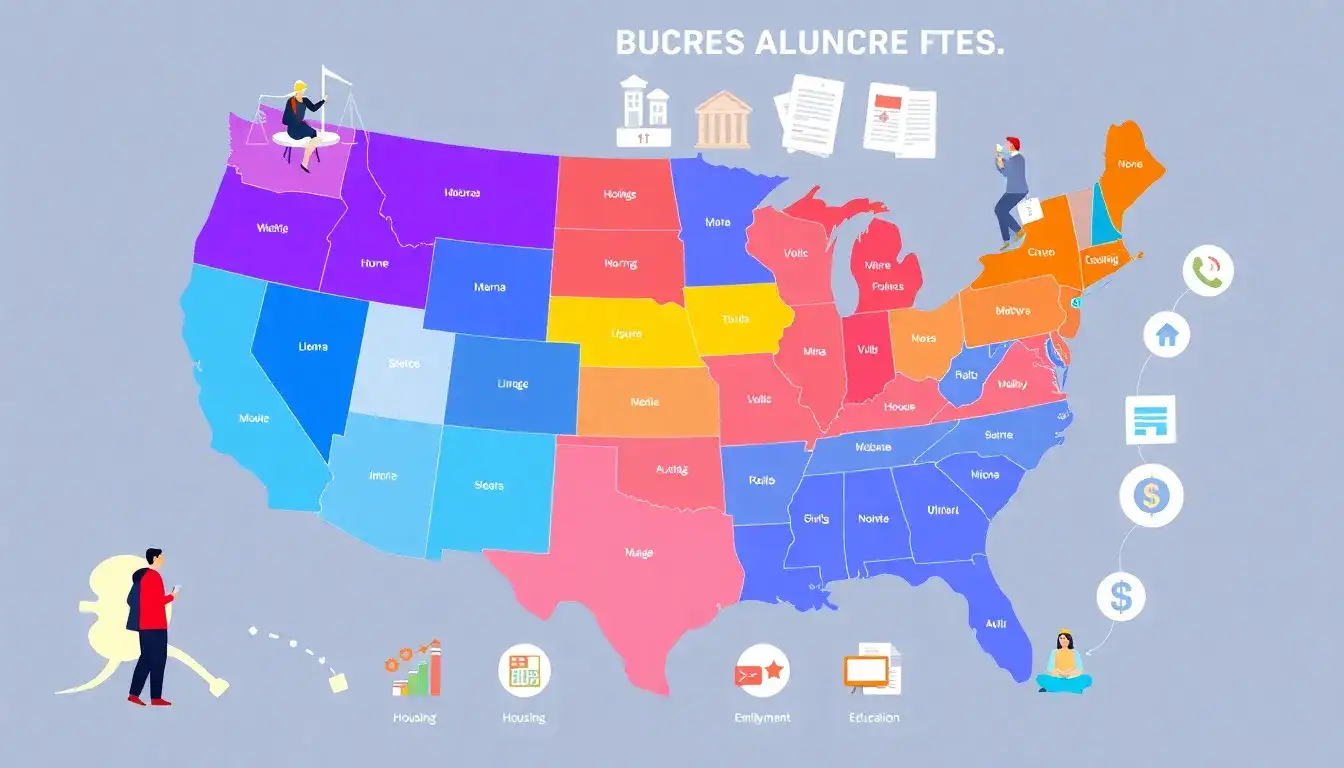
Income eligibility requirements for Medicaid and other public health programs differ significantly between states, reflecting variations in state policies, Medicaid expansion status, and target populations. Here is a detailed overview of how these requirements differ:
1. Income Limits Vary by State and Program
- States have distinct monthly or annual income limits for Medicaid eligibility based on household size and category of eligibility (e.g., adults, children, pregnant women, seniors).
- For example, Minnesota’s income guidelines for Medical Assistance in 2024 set monthly income limits for adults over 18 at about $1,669 for a single-person household and $2,265 for two people, with higher limits for children and pregnant women.
- Iowa allows adults aged 19 to 64 with incomes up to 133% of the Federal Poverty Level (FPL), or about $1,507 per month for a single adult, with income limits increasing with household size.
- Louisiana, a Medicaid expansion state, sets limits for adults at 138% FPL — roughly $2,649 monthly income for a family of three — with higher income limits for children and pregnant women, illustrating variation even for similar household sizes.
2. Medicaid Expansion and Eligibility
- Income eligibility is particularly influenced by whether a state has adopted Medicaid expansion under the Affordable Care Act:
- In expansion states, adults under 65 without disabilities or caretaker status can qualify if their income is below 138% of the FPL, regardless of other factors.
- Ten states, including Alabama, Florida, Kansas, and Texas, have not expanded Medicaid, meaning adults without disabilities, caretaker roles, or pregnancy generally do not qualify regardless of income.
3. Different Income Policies for Seniors and Long-Term Care
- States also have specific income limits for seniors and those seeking Medicaid for long-term care services that can differ greatly:
- For example, Kansas has no set income limit for institutional Medicaid (nursing home care), but income above a minimal amount ($62/month) must be allocated toward care costs.
- Regular Medicaid for aged, blind, and disabled individuals in Kansas has a set income limit of $475 per month.
- Kentucky allows institutional Medicaid with much higher income limits (up to $2,901 per month for the applicant), highlighting state discretion in these rules.
4. Special Categories Have Different Income Thresholds
- Pregnant women, children, and families often have separate, sometimes higher, income thresholds, reflecting policy choices to prioritize these groups:
- Minnesota, for instance, sets much higher income limits for children’s Medical Assistance and pregnant women compared to adults.
- Louisiana sets higher qualifying income for children in three-person households ($4,165/month) than for adults ($2,649/month).
Summary Table Example (Approximate, for Illustration)
| State | Medicaid Expansion? | Adult Income Limit (% FPL) | Monthly Income Limit for Single Adult* | Special Population Income Limits |
|---|---|---|---|---|
| Minnesota | Yes | Varies by program | ~$1,669 | Higher for children & pregnant women |
| Iowa | Yes | 133% | ~$1,507 | Higher thresholds for families and pregnant women |
| Louisiana | Yes | 138% | ~$2,649 | Children and pregnant women higher |
| Kansas | No | Restricted | Institutional care income unbounded, regular Medicaid $475 | Waivers and home-based services have higher limits |
| Alabama | No | Not expanded | Generally ineligible unless disabled or caretaker | N/A |
*Note: Monthly income limits are approximate and vary by household size.
Key Takeaway
Income eligibility requirements for Medicaid and other assistance programs differ widely between states due to Medicaid expansion status, state-specific income thresholds, different treatment of population groups (adults, children, pregnant women, seniors), and program type (general Medicaid vs. long-term care). These differences mean eligibility for the same household income can vary significantly depending on the state of residence.
This complexity requires applicants to consult their specific state’s income guidelines and Medicaid rules to determine eligibility accurately.
Original article by NenPower, If reposted, please credit the source: https://nenpower.com/blog/how-do-the-income-eligibility-requirements-differ-between-states/

