

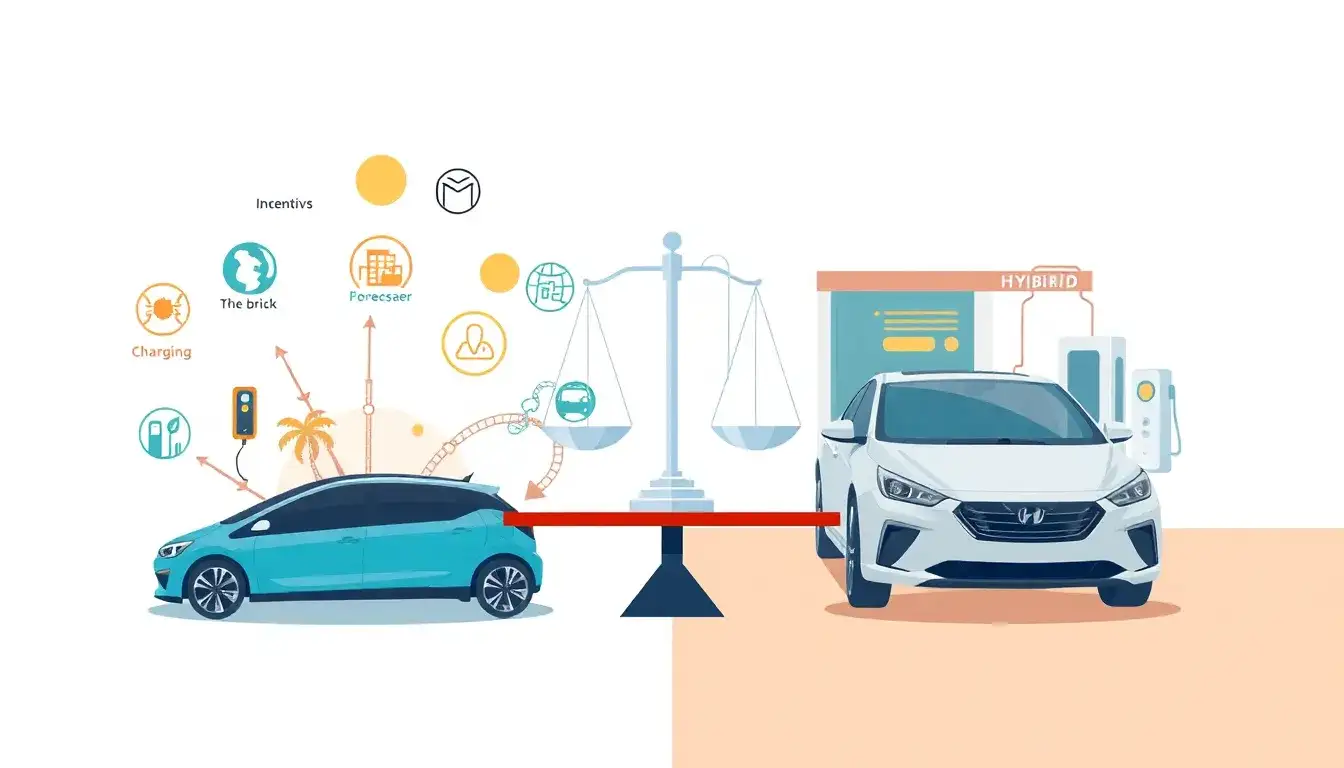
The incentives for new electric vehicles (EVs) and hybrid vehicles differ significantly, with new EVs receiving notably more substantial federal tax credits than hybrids.
Incentives for New Electric Vehicles (EVs)
- New electric vehicles are eligible for a federal tax credit of up to $7,500. This credit depends on battery size and compliance with specific sourcing requirements for battery assembly and critical minerals.
- The $7,500 credit is split equally between two criteria:
- Battery assembly/manufacturing in North America (increasing from 60% in 2024-2025 to higher percentages in later years).
- Critical minerals sourcing from the U.S. or countries with free-trade agreements (with thresholds rising from 50% in 2024 to 80% by 2027).
- If a vehicle meets just one of these conditions, it may qualify for a partial credit of $3,750.
- Most 2025 and 2026 new EVs, such as the Acura ZDX, qualify for the full $7,500 credit assuming they meet these requirements.
Incentives for Hybrid Vehicles
- For 2024, the federal incentive program primarily covers fully electric vehicles and some plug-in hybrids (PHEVs). Traditional hybrid vehicles without plug-in capability, like the Toyota Prius or Honda CR-V Hybrid, do not qualify for the federal EV tax credit.
- Some plug-in hybrids that meet battery assembly and sourcing requirements may be eligible for federal credits, but these are generally less comprehensive or fewer in number compared to fully electric vehicles.
- When purchasing a hybrid vehicle, the buyer might receive the credit if the vehicle qualifies; however, if leasing a hybrid, the manufacturer receives the credit, which can lower the lease payments for the consumer but does not directly provide a tax credit to the lessee.
Summary Comparison
| Aspect | New Electric Vehicles (EVs) | Hybrid Vehicles |
|---|---|---|
| Maximum federal tax credit | Up to $7,500 | Generally not eligible, except select plug-in hybrids may qualify with smaller credits |
| Credit based on battery requirements | Yes, must meet North American assembly and critical minerals sourcing requirements | Only some plug-in hybrids qualify; traditional hybrids do not |
| Eligibility focus | New fully electric vehicles primarily | Limited mainly to plug-in hybrids; traditional hybrids excluded from credit |
| Leasing credit benefit | Lessee can benefit via lower lease payments if manufacturer claims credit | Manufacturer receives credit; lessee benefits indirectly |
In conclusion, new fully electric vehicles have more robust and clearly defined federal incentives, with potential for up to $7,500 in tax credits based on strict battery sourcing rules. Hybrid vehicles, especially non-plug-in models, receive very limited or no federal tax credit incentives under current rules.
Original article by NenPower, If reposted, please credit the source: https://nenpower.com/blog/how-do-the-incentives-for-new-evs-compare-to-those-for-hybrid-vehicles/

