

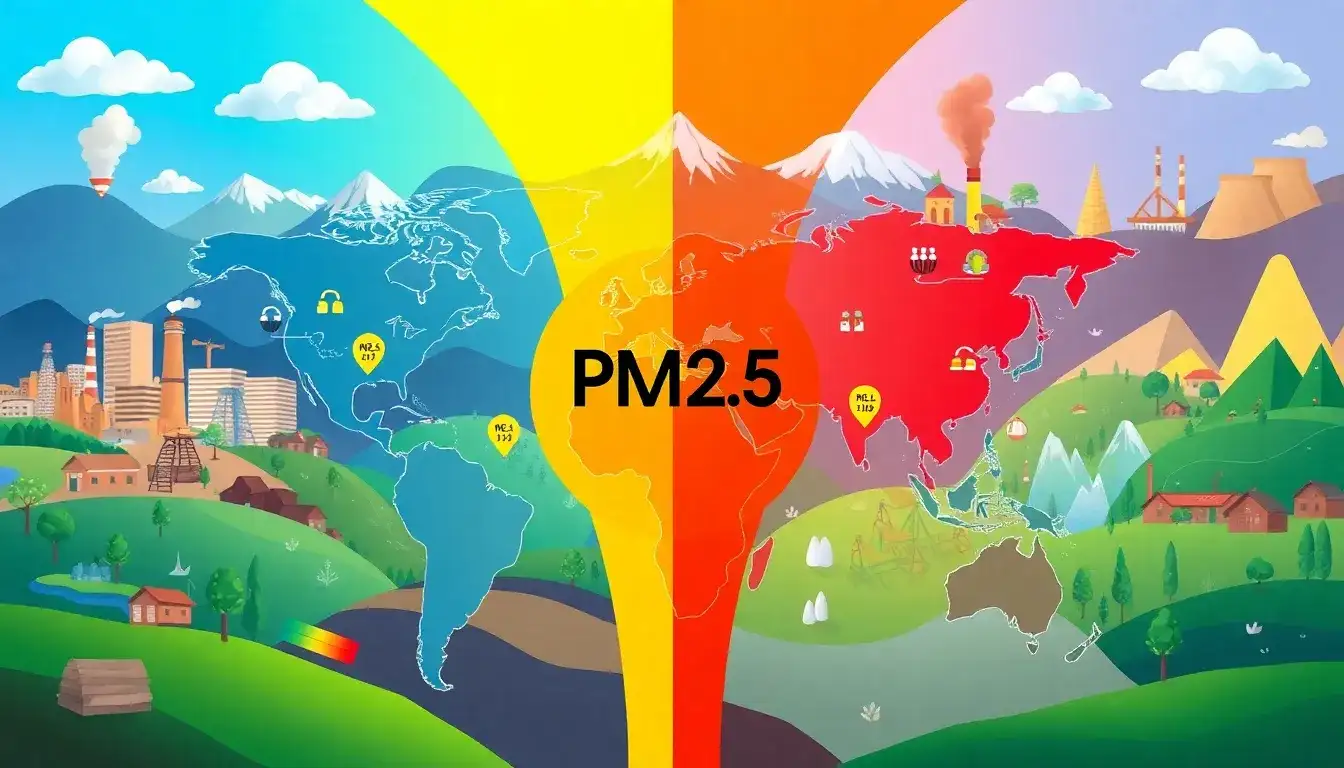
The health benefits of reducing PM2.5 (particulate matter 2.5 micrometers or smaller) vary across different regions due to several factors, including population density, local air pollution sources, socioeconomic status, and urbanicity.
Regional Differences in Health Benefits
- Population Density and Urbanicity: Areas with higher population densities and more urbanized environments tend to have higher PM2.5 concentrations, exacerbating health impacts. However, urban areas may also have more infrastructure and policies in place to mitigate these effects compared to rural areas.
- Economic and Socioeconomic Factors: Lower socioeconomic status (SES) areas often experience higher health risks from air pollution due to a lack of resources and access to green spaces, which can provide some protection against pollution impacts. Reducing PM2.5 in these areas can lead to more pronounced health benefits.
- Regional Emission Sources: The presence of industrial, power generation, or transportation sectors can significantly affect PM2.5 levels and health benefits. Nationwide efforts to reduce emissions from these sectors can provide substantial health benefits, with a considerable portion of these benefits remaining local.
- Greenness and Protective Effects: Living in areas with higher greenness (e.g., parks and trees) is associated with lower mortality risks linked to PM2.5 exposure. This suggests that regional strategies should consider enhancing green spaces as part of their mitigation efforts.
Variability in Response to Standards and Policies
- National vs. Regional Standards: Implementing regional air quality standards can be more effective than a single national standard, especially in countries like China, as regional conditions and pollution sources vary significantly.
- Impact of Lowering NAAQS (National Ambient Air Quality Standards): Lowering PM2.5 standards, such as from 10 µg/m³ to 8 µg/m³, can lead to greater per capita mortality benefits in high-exposure areas, often found in urban or disadvantaged communities.
Overall, the health benefits of PM2.5 reduction can vary significantly across regions due to local conditions, policy implementations, and socioeconomic factors. Tailored regional strategies may be more effective than uniform national policies in addressing these disparities.
Original article by NenPower, If reposted, please credit the source: https://nenpower.com/blog/how-do-the-health-benefits-of-pm2-5-reduction-vary-across-different-regions/

