

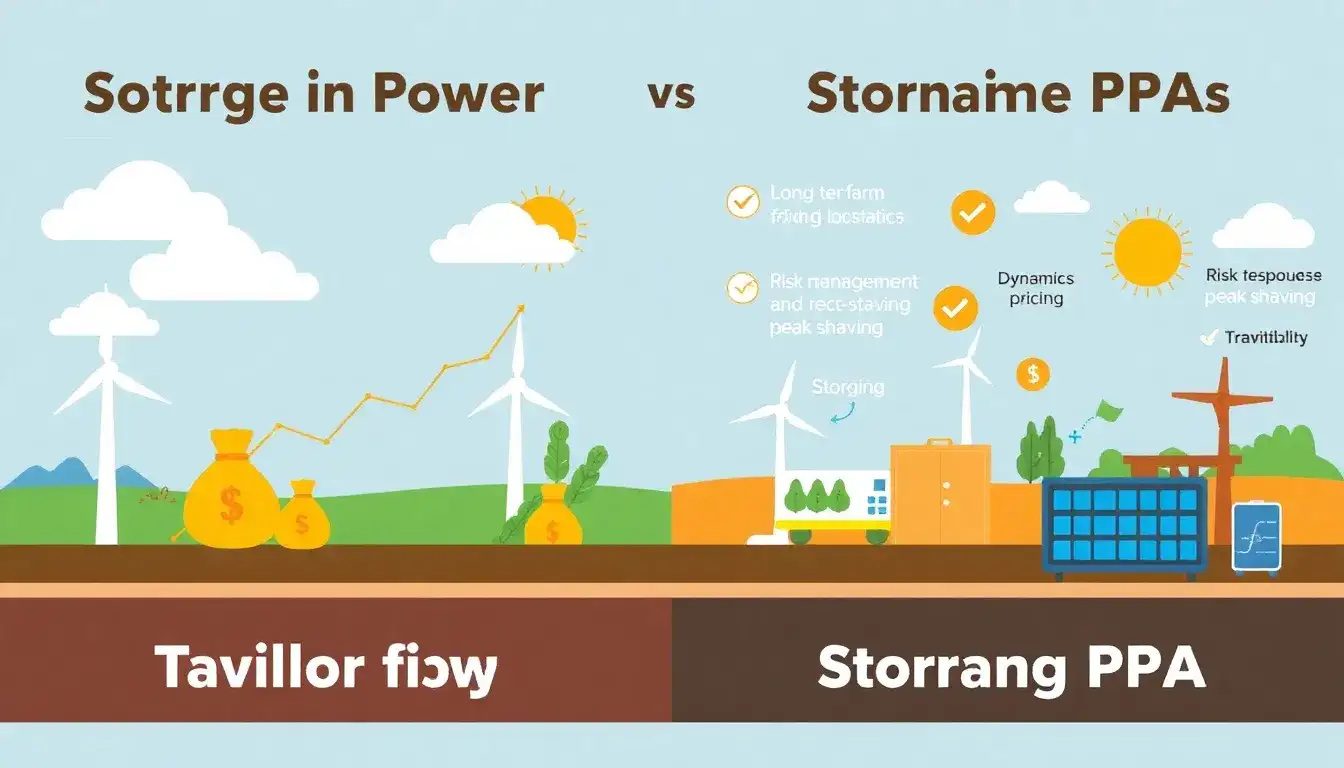
Financial Incentives: Storage PPAs vs. Traditional PPAs
1. Revenue Streams
- Storage PPAs: These often involve a combination of fixed capacity payments and variable energy payments per megawatt hour (MWh), which can be more complex than traditional renewable PPAs. Additionally, they may involve hedging contracts to ensure fixed revenue streams, especially in energy-only markets like Texas. In some cases, developers bear the risk of procuring energy inputs, which requires them to manage multiple revenue streams effectively.
- Traditional PPAs: Typically provide a fixed price for the electricity produced, with the buyer purchasing 100% of the output. The financial incentives are often based solely on the power generated.
2. Risk and Ownership
- Storage PPAs: The structure may involve tolling arrangements or capacity contracts where the developer manages the sale and costs of energy, shifting risks away from utilities. This requires the developer to have a robust financial and operational strategy.
- Traditional PPAs: Generally involve a third-party owner operating and maintaining the system, with the customer paying for the power used. This reduces upfront costs and operational risks for the buyer.
3. Financing and Incentives
- Storage PPAs: While they can benefit from tax credits and other incentives similar to traditional renewable PPAs, they often require more complex financing structures to manage risk associated with energy input costs and variable revenue streams.
- Traditional PPAs: Benefit from tax credits (like the Solar Investment Tax Credit), rebates, and other incentives that can significantly lower the cost of the system for the developer, allowing for lower PPA rates for customers.
4. Market Adaptability
- Storage PPAs: Need to adapt to evolving market rules and technologies, making them more flexible and responsive to changing energy demands and market conditions.
- Traditional PPAs: Are generally less complex in terms of market dynamics, focusing primarily on straightforward power purchase agreements.
Overall, while both types of PPAs help manage financial risks and provide predictable revenue streams, storage PPAs involve more complexity due to their dispatchable nature, variable revenue streams, and evolving market conditions.
Original article by NenPower, If reposted, please credit the source: https://nenpower.com/blog/how-do-the-financial-incentives-of-storage-ppas-differ-from-those-of-traditional-ppas/

