

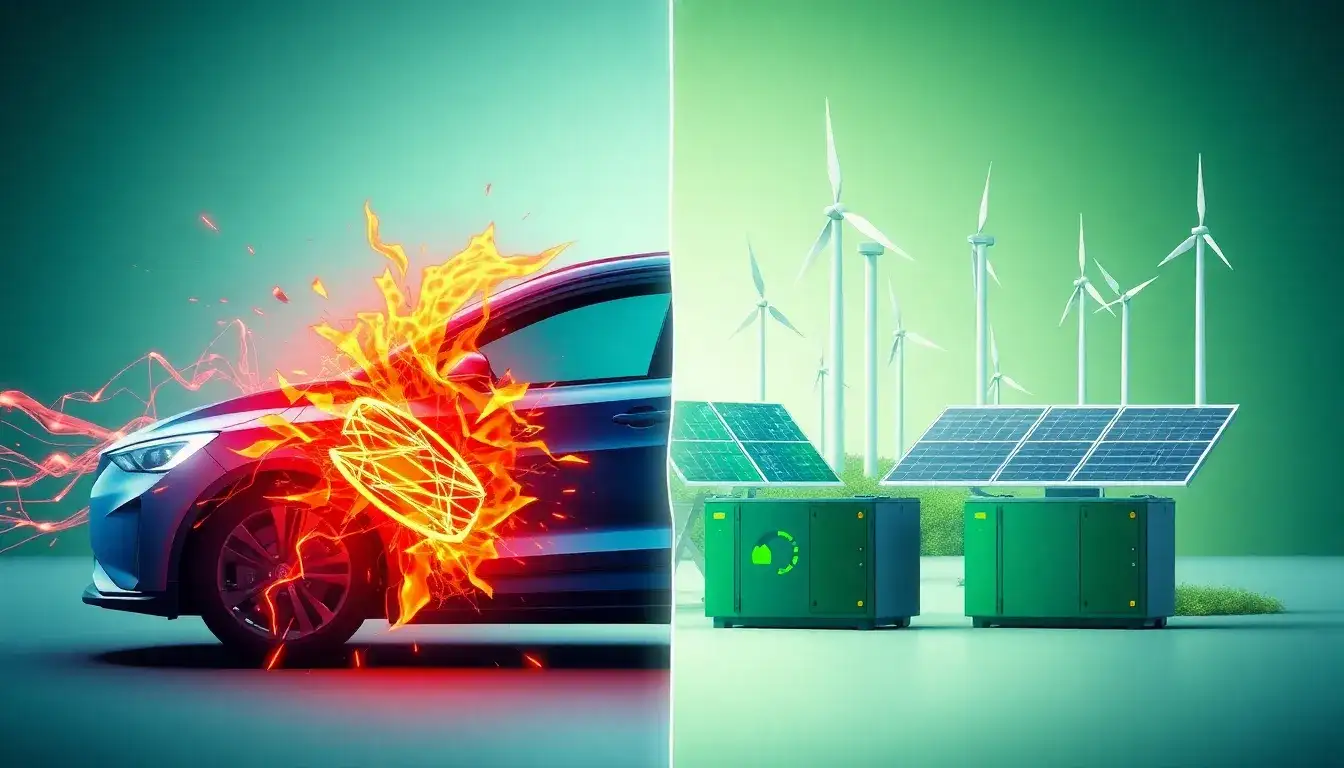
Comparing the failure rates of lithium-ion batteries in electric vehicles (EVs) to those in renewable energy systems requires examining the specific contexts and uses of these batteries. Here’s a breakdown based on available data:
Lithium-ion Batteries in Electric Vehicles
- Failure Rate: While specific failure rates for EVs are not widely detailed, electric vehicle battery failure rates have generally ranged from 1.6% to 4.4% in recent years, though this figure primarily accounts for general performance issues rather than catastrophic failures like fires.
- Battery Fire Rate: The fire rate for EVs using lithium-ion batteries is approximately 0.03% per vehicle per year, indicating that severe failures are rare.
- Degradation Rate: EV batteries typically degrade at about 1.8% to 2.3% per year, depending on usage and charging methods.
Lithium-ion Batteries in Renewable Energy Systems
- Failure Rate: Specific failure rates for lithium-ion batteries in renewable energy systems (like solar or wind farms) are less frequently discussed in public literature. However, lithium-ion batteries used in energy storage systems generally have a lower risk of catastrophic failure compared to EVs, as they are typically operated under more controlled conditions (e.g., less exposure to extreme temperatures and physical stress).
- Operational Stress: Batteries in renewable energy systems often experience less stress than those in EVs, as they typically operate within a narrower state of charge (SOC) range and are less frequently subjected to rapid charging or deep discharging.
- Industry Practices: Renewable energy storage systems often benefit from more regulated environments, with strict quality control and maintenance practices that can reduce the likelihood of failures.
Comparison
- Stress Factors: EV batteries face more stress due to rapid charging, extreme temperatures, and physical strain compared to renewable energy storage systems.
- Failure Types: Both applications have different risk profiles for failure types (e.g., fires vs. degradation), with EVs being more prone to highlighted fire risks due to their portable nature and frequent charging.
- Environmental Factors: EVs are more exposed to varying environmental conditions, affecting their performance and longevity compared to stationary renewable energy systems.
In summary, while both applications use lithium-ion batteries, their operational conditions and failure risks differ significantly. EVs face higher stress from rapid charging and environmental factors, whereas renewable energy systems operate under more controlled conditions.
Original article by NenPower, If reposted, please credit the source: https://nenpower.com/blog/how-do-the-failure-rates-of-lithium-ion-batteries-in-electric-vehicles-compare-to-those-in-renewable-energy-systems/

