

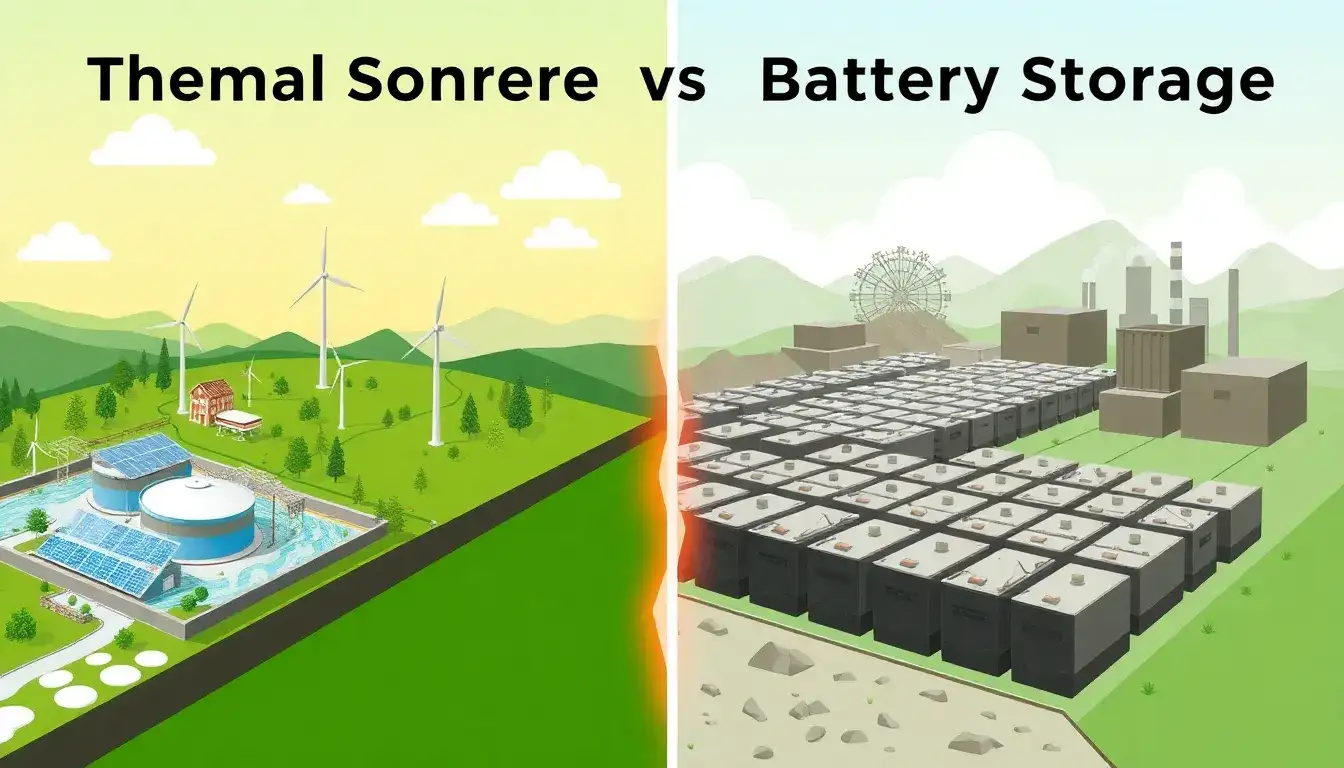
Thermal Energy Storage
Environmental Benefits:
- Reduction in Greenhouse Gas Emissions: TES can reduce GHG emissions by shifting energy usage to off-peak hours, reducing the need for inefficient fossil-fuel peaking plants. It can decrease life cycle GHG emissions up to 7% compared to no storage and significantly more compared to natural gas backup.
- Renewable Energy Integration: TES helps make renewable energy more viable by storing excess energy generated during periods of high production. This allows for better utilization of intermittent resources like solar and wind.
- Peak Demand Reduction: By reducing peak electricity demand, TES can delay or prevent the construction of new power plants, further reducing emissions and environmental impact.
Environmental Considerations:
- Pollution from Thermal Plants: While TES itself is cleaner, thermal energy generation can produce pollution in the form of escaped chemicals or water from traditional thermal power plants.
Battery Storage
Environmental Benefits:
- Peak Demand Management: Similar to TES, battery storage helps reduce peak demand by using energy stored during off-peak periods, which can decrease the reliance on less efficient power plants.
- Renewable Integration: Batteries can store excess renewable energy for later use, helping to stabilize the grid and increase renewable energy utilization.
- Portability and Flexibility: Batteries offer flexible deployment options, from residential to grid-scale applications, which can enhance grid resilience.
Environmental Considerations:
- Material Extraction: Battery production involves extracting materials like lithium and cobalt, which can have environmental impacts related to mining.
- Recycling and Waste: Improper disposal or insufficient recycling of batteries can lead to environmental issues like pollution and contamination.
- Energy Efficiency: Battery charging and discharging can result in energy losses, though advancements in technology are improving efficiency.
Comparison Summary
| Feature | Thermal Energy Storage (TES) | Battery Storage |
|---|---|---|
| Environmental Benefits | Reduces peak demand, supports renewables, GHG reduction | Enhances grid stability, supports renewables |
| Environmental Considerations | Pollution from thermal plants, water temperature impacts | Material extraction for production, recycling challenges |
| Flexibility and Deployment | Primarily suited for cooling applications | Widespread use in various applications |
| Impact on Emissions | Up to 7% reduction in GHG emissions | Supports low-carbon energy sources but involves production emissions |
In summary, both TES and battery storage support renewable integration and reduce peak demand, but TES focuses on thermal applications and can lead to significant GHG reductions. Battery storage offers flexibility across various use cases but comes with challenges related to material extraction and waste management.
Original article by NenPower, If reposted, please credit the source: https://nenpower.com/blog/how-do-the-environmental-impacts-of-thermal-energy-storage-and-battery-storage-differ/

