

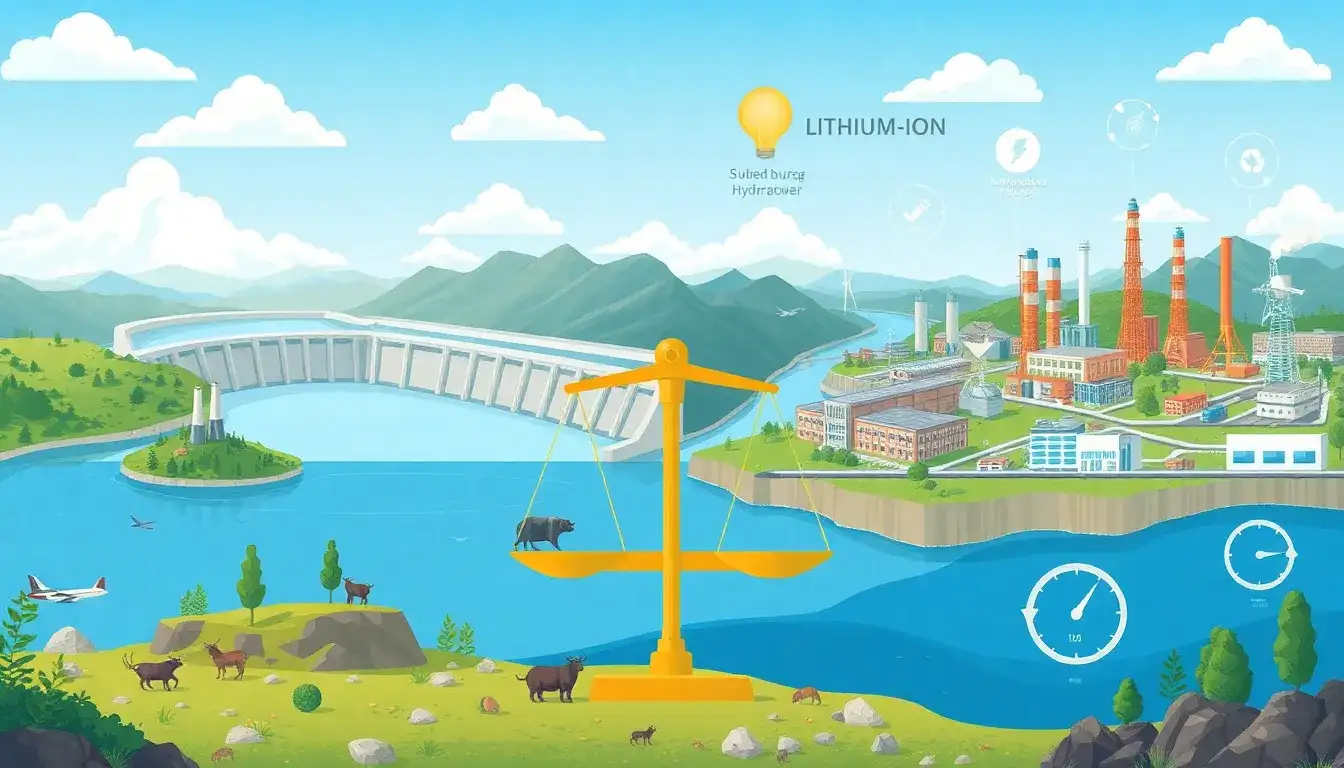
The environmental impacts of pumped hydroelectric storage (PHS) and lithium-ion batteries differ notably in origin, scale, and type:
Pumped Hydroelectric Storage (PHS):
- PHS primarily involves large-scale infrastructure such as dams and reservoirs, either in open-loop systems (connected to natural water bodies) or closed-loop systems (off-stream, isolated reservoirs).
- Open-loop PHS can cause broader ecological disruptions, including alteration of aquatic ecosystems, river diversion during construction, and risks of flooding. Open-loop systems also contend with water rights and aquatic resource impacts due to continuous connection with natural water flows.
- Closed-loop PHS tends to localize impacts more, reducing aquatic and terrestrial ecosystem disturbance since it operates independently of natural waterways. However, it can have higher localized impacts on soils, geology, and groundwater if it uses groundwater sources.
- Across its life cycle, PHS has very low greenhouse gas emissions compared to other energy storage forms, making it one of the greenest energy storage technologies available.
- Environmental concerns include initial habitat disruption during construction and potential long-term ecological impacts if dams alter natural water flows and landscapes.
Lithium-Ion Batteries:
- Lithium-ion batteries, widely used for grid and portable energy storage, have environmental impacts mainly linked to raw material extraction (lithium, cobalt, nickel), manufacturing processes, and end-of-life disposal or recycling. These impacts encompass habitat degradation, pollution, and significant energy use in mining and processing.
- Although not detailed in the provided search results, broader scientific understanding indicates that lithium-ion batteries have higher greenhouse gas emissions over their life cycle compared to PHS, mainly due to production and mining activities.
- Battery storage offers high flexibility and lower land and water footprint during operation, without risks such as flooding or aquatic ecosystem disruption inherent in PHS.
Summary Comparison:
| Aspect | Pumped Hydroelectric Storage (PHS) | Lithium-Ion Batteries |
|---|---|---|
| Land and Water Impact | Large-scale land alteration, potential aquatic ecosystem disruption (especially open-loop) | Smaller operational footprint; mining impacts during raw material extraction |
| Ecosystem Disruption | Potentially significant during construction and operation (open-loop), localized but notable in closed-loop | Mainly indirect via mining; minimal direct ecosystem disruption during use |
| Greenhouse Gas Emissions (Life Cycle) | Very low emissions, among the lowest for energy storage | Higher emissions mainly from mining and manufacturing |
| Operational Risks | Risk of flooding, aquatic resource impacts, water rights issues | Chemical hazards, recycling and disposal challenges |
| Environmental Mitigation Potential | Improved in closed-loop designs, siting flexibility reduces some impacts | Recycling and sustainable sourcing improving but still evolving |
In conclusion, pumped hydroelectric storage generally exhibits lower greenhouse gas emissions but can have significant local environmental impacts related to water and ecosystem disruption, particularly in open-loop systems. Closed-loop PHS mitigates many aquatic impacts but may affect soils and groundwater more locally. Lithium-ion batteries avoid large-scale ecological disruption during operation but have notable environmental costs in material extraction and production, with higher life cycle emissions compared to PHS.
Original article by NenPower, If reposted, please credit the source: https://nenpower.com/blog/how-do-the-environmental-impacts-of-pumped-hydroelectric-storage-compare-to-those-of-lithium-ion-batteries/

