

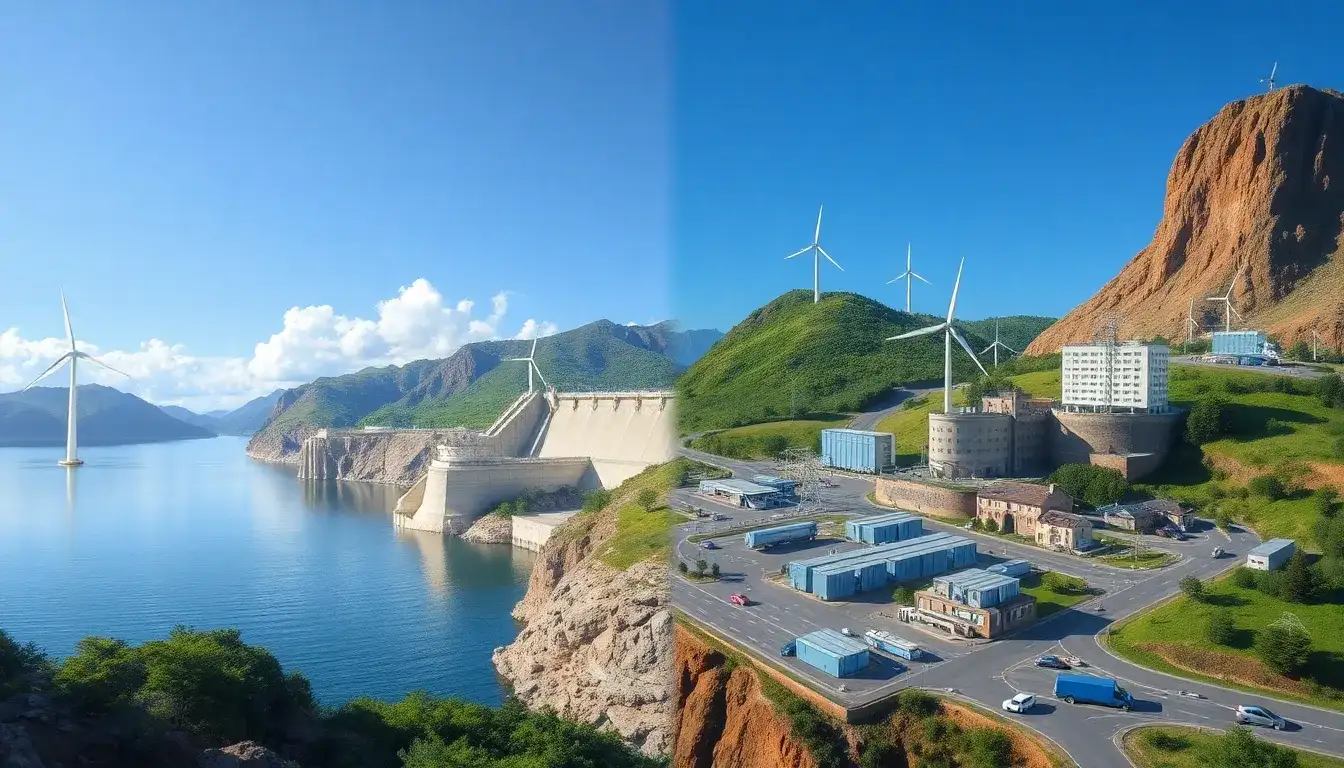
Pumped hydroelectric energy storage (PHES) demonstrates distinct environmental trade-offs compared to other utility-scale energy storage technologies, particularly in lifecycle emissions and ecological disruption:
Greenhouse Gas Emissions
PHES consistently exhibits the lowest lifecycle greenhouse gas emissions among grid-scale storage options. Studies indicate that closed-loop PHES systems outperform alternatives like lithium-ion batteries or compressed air storage in total emissions per unit of energy delivered. This advantage stems from PHES’s reliance on gravity-based water cycling rather than chemical processes, though upstream emissions from construction materials (concrete, steel) contribute significantly during the building phase.
Ecosystem and Water Impacts
- Closed-loop vs. open-loop systems: Closed-loop PHES (using artificial reservoirs) reduces river ecosystem disruption compared to open-loop systems but still requires large water volumes, risking local hydrological changes.
- Construction risks: Dams and reservoirs can alter local ecosystems, increase flooding risks, and necessitate river diversions during construction. Open-loop systems pose higher risks to aquatic biodiversity.
Material and Resource Use
- Concrete and steel: PHES infrastructure demands vast quantities of these materials, contributing to non-renewable resource depletion and emissions during production.
- Land footprint: PHES requires significant land for reservoirs, though less mineral-intensive than lithium mining for batteries.
Comparative Performance Table
| Factor | PHES | Lithium-Ion Batteries | Compressed Air Storage |
|---|---|---|---|
| Lifecycle GHG | Lowest | Moderate-High | Moderate |
| Water Use | High (closed-loop lower) | Low | Low |
| Ecosystem Risk | High (site-dependent) | Moderate (mining impacts) | Low |
| Material Intensity | High (concrete/steel) | High (lithium/cobalt) | Moderate |
Future Outlook
As grid electricity mixes incorporate more renewables, PHES’s environmental footprint will decrease further, since its operational emissions depend on the energy used for pumping. However, site selection and closed-loop design remain critical to minimizing ecological harm. While PHES leads in emissions efficiency, trade-offs with local ecosystems and resource use necessitate careful project evaluation.
Original article by NenPower, If reposted, please credit the source: https://nenpower.com/blog/how-do-the-environmental-impacts-of-pumped-hydroelectric-energy-storage-compare-to-those-of-other-utility-scale-energy-storage-solutions/

