

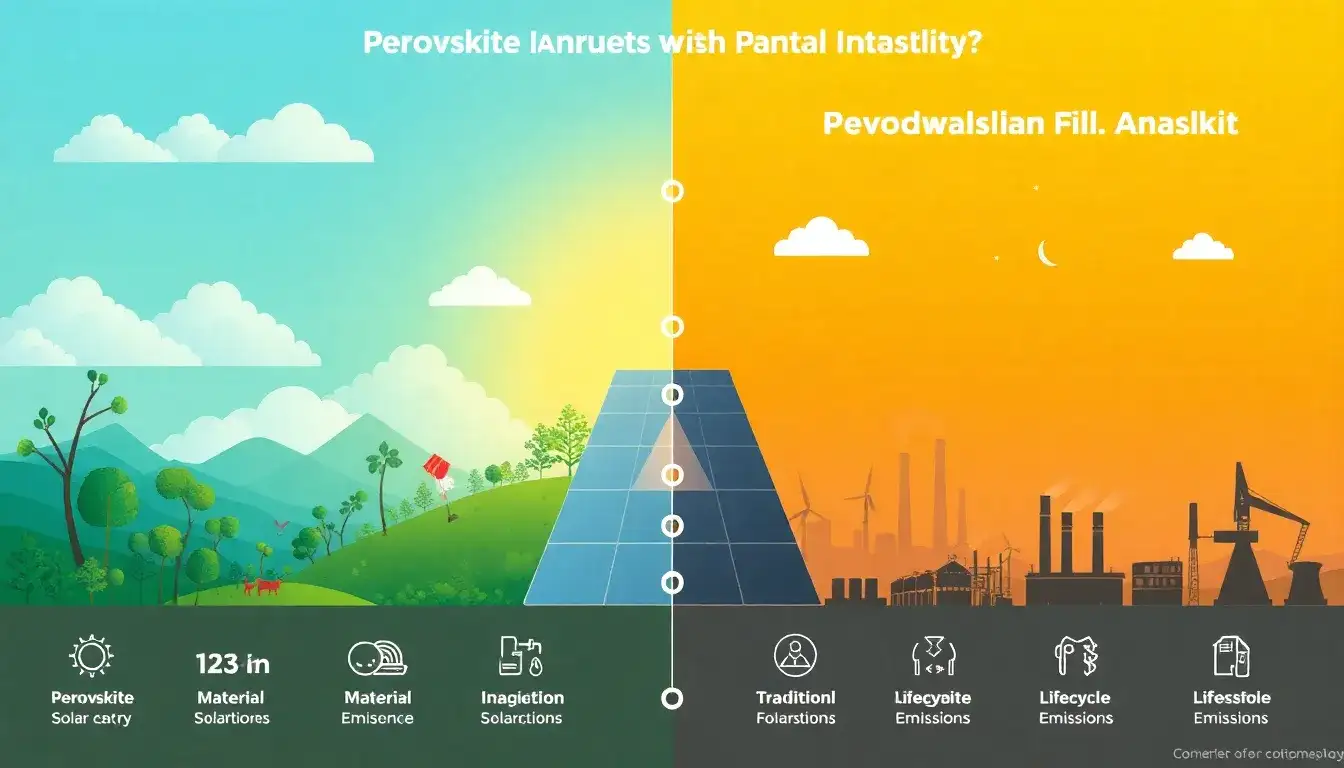
Perovskite-silicon tandem solar cells show nuanced environmental trade-offs compared to traditional silicon panels, with results varying based on production methods, module lifetimes, and efficiency gains. Here’s a synthesized analysis:
1. Production Phase Impacts
- Higher per-device footprint: Adding perovskite layers increases the environmental impact per device by 5–15% during manufacturing due to additional materials and processing.
- Key contributors: Silicon wafer production dominates impacts (global warming potential, freshwater use), while copper, aluminum, and glass further affect ecotoxicity and metal depletion. Lead in perovskite layers shows negligible ecotoxicity in lifecycle assessments when properly managed.
2. Lifetime Efficiency Advantages
- Lower emissions per kWh: Despite higher upfront impacts, tandems achieve 8–10 g CO₂-eq/kWh by 2050 (vs. 11–13 g for silicon) due to higher efficiency and grid decarbonization.
- Current performance: For the same 25-year lifetime, tandems generate 6–18% lower impacts per kWh by producing more energy, offsetting their manufacturing footprint.
- Critical factors: Degradation rates must stay below 1–3% annually, and lifetimes should exceed 28–29 years for tandems to outperform silicon in carbon footprint.
3. Long-Term Projections & Improvements
- Efficiency gains: Tandems reaching >30% efficiency (vs. ~22% for silicon) reduce land use and balance-of-system impacts.
- Recycling potential: Recovering silicon and silver at end-of-life mitigates resource depletion, though perovskite layer recycling remains underdeveloped.
Comparison Table
| Aspect | Perovskite-Silicon Tandems | Traditional Silicon Panels |
|---|---|---|
| GWP (g CO₂-eq/kWh) | 8–10 (2050 projection) | 11–13 (2050 projection) |
| Efficiency | 30%+ | 20–22% |
| Lifetime Requirement | ≥28 years | ~25 years |
| Toxicity Concerns | Minimal lead impact | Lower due to simpler design |
In summary, tandem cells offer a net environmental benefit if longevity and degradation are controlled, leveraging higher efficiency to outweigh manufacturing impacts over their lifecycle. However, their sustainability hinges on continued improvements in stability and recycling infrastructure.
Original article by NenPower, If reposted, please credit the source: https://nenpower.com/blog/how-do-the-environmental-impacts-of-perovskite-silicon-tandem-solar-cells-compare-to-traditional-silicon-solar-panels/

