

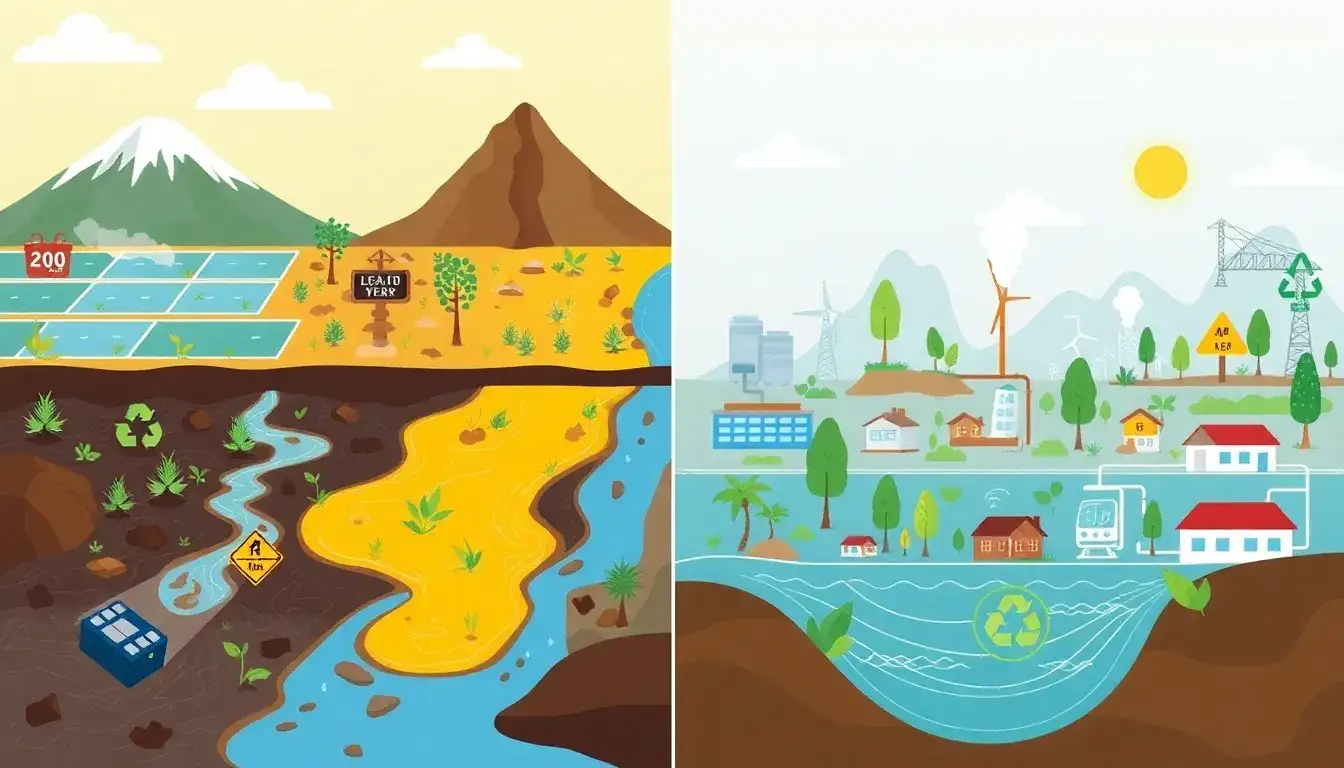
The environmental impacts of lead-acid batteries and lithium-ion batteries differ significantly, primarily due to the materials used and their recyclability.
Lead-Acid Batteries
Key Environmental Concerns:
- Toxic Materials: Lead-acid batteries contain lead and sulfuric acid, which are harmful to the environment. Lead can contaminate groundwater and soil if not disposed of properly.
- Recycling Challenges: While over 99% of lead-acid batteries are recyclable, improper recycling practices, common in many developing countries, release lead particles into the air, water, and soil, posing serious environmental and health risks.
- Energy Efficiency and Usage: Lead-acid batteries have lower energy density, requiring more frequent charging and increasing energy consumption compared to lithium-ion batteries.
- Shorter Lifespan: They typically have a shorter cycle life and need to be replaced more often, which increases waste generation.
Lithium-Ion Batteries
Key Environmental Concerns:
- Less Toxic Materials: Lithium-ion batteries do not contain toxic heavy metals like lead, making them a more environmentally friendly option.
- Lower Energy Consumption: They have higher energy density and can be charged more efficiently, reducing overall energy consumption and carbon footprint.
- Recycling Challenges: While technically recyclable, lithium-ion battery recycling is not yet widespread due to high costs and limited infrastructure. Lithium itself is rarely recycled.
- Resource Extraction: Lithium mining can lead to soil pollution and water usage issues, especially in regions like Bolivia.
Comparative Analysis
| Aspect | Lead-Acid Batteries | Lithium-Ion Batteries |
|---|---|---|
| Toxic Materials | Contain lead and sulfuric acid, highly toxic. | Do not contain toxic heavy metals. |
| Recyclability | Highly recyclable, but improper disposal common. | Technically recyclable, but not common. |
| Energy Efficiency | Lower energy density, higher energy consumption. | Higher energy density, lower energy consumption. |
| Resource Extraction Impact | Not directly related to specific extraction impacts. | Impacts from lithium mining (water usage, soil pollution). |
| Environmental Impact | High risk of lead contamination during improper recycling. | Lower environmental risk during use, but mining impacts exist. |
Overall, lithium-ion batteries offer a more environmentally favorable option when considering toxicity and energy efficiency, but both types of batteries pose unique challenges that need to be addressed through responsible manufacturing, use, and recycling practices.
Original article by NenPower, If reposted, please credit the source: https://nenpower.com/blog/how-do-the-environmental-impacts-of-lead-acid-batteries-differ-from-those-of-lithium-ion-batteries/

