

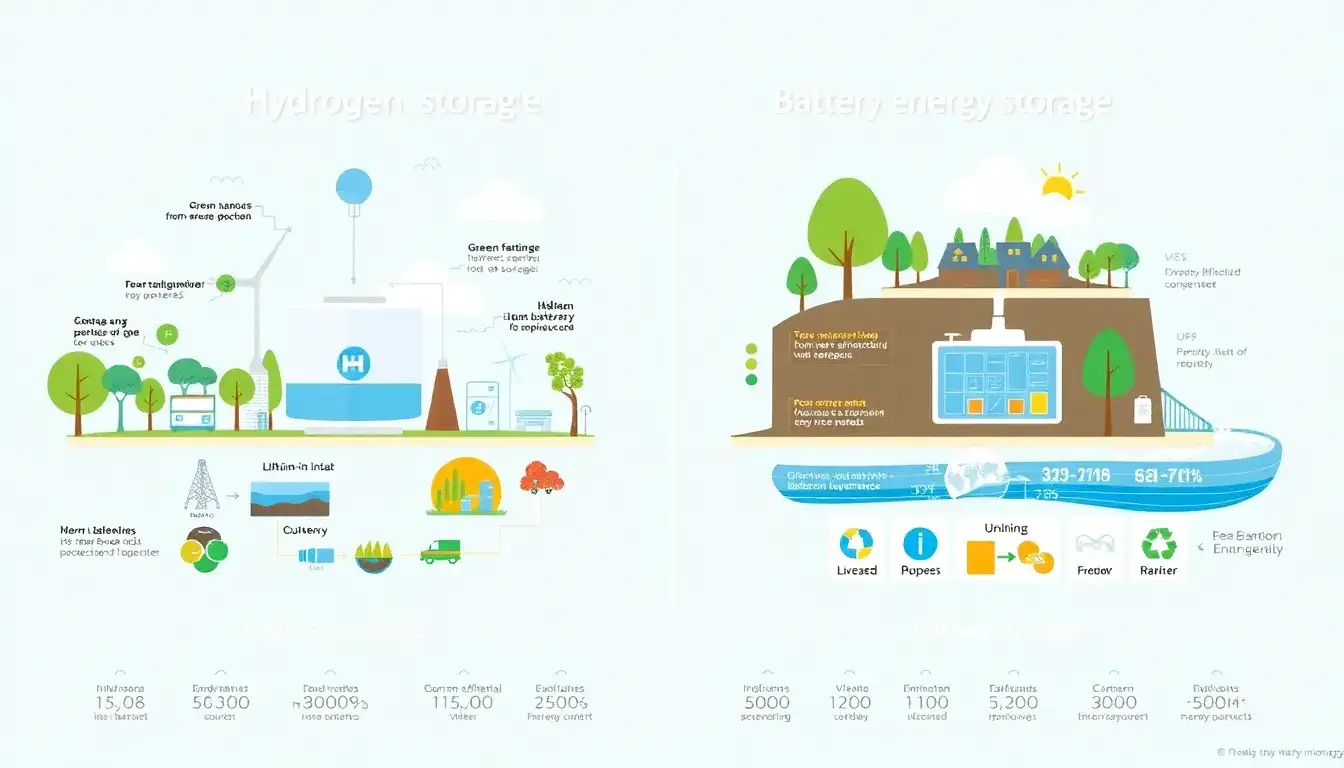
Environmental Impacts of Hydrogen Energy Storage Systems
- Greenhouse Gas Emissions: Hydrogen can offer near-zero GHG emissions if produced from renewable sources like solar or wind, allowing it to significantly reduce emissions when used in energy applications. However, traditional hydrogen production methods using fossil fuels can lead to substantial emissions.
- Resource Use and Pollution: The production of green hydrogen requires a significant amount of water, potentially exacerbating water scarcity issues. Additionally, there are risks of contamination from chemicals used in production. Hydrogen storage poses risks of leaks, which can lead to explosions and environmental damage.
- Ecosystem Impacts: Large-scale green hydrogen production might necessitate extensive land use for renewable energy generation, potentially impacting biodiversity. This can lead to ecosystem loss and vulnerability to natural hazards.
- Climate Impacts: Hydrogen leaks can cause potent near-term warming effects, necessitating stringent measures to prevent leakage. If not managed properly, these emissions can offset climate benefits.
Environmental Impacts of Battery Energy Storage Systems
- Material Inputs and Emissions: Battery production involves materials such as lithium, cobalt, and nickel, which can have environmental impacts during extraction and processing. Energy use during manufacturing can result in greenhouse gas emissions.
- Disposal and Recycling: Proper disposal and recycling of battery components are critical to reduce toxic waste and environmental contamination at the end of their life cycle.
- Land Use and Resource Extraction: While battery systems may not directly require large land areas for operation, the extraction of raw materials can have environmental impacts on mining regions.
- Energy Efficiency: Battery systems generally have high energy efficiency and can effectively store and release electrical energy without generating harmful emissions during operation.
Comparative Analysis
| Criteria | Hydrogen Energy Storage Systems | Battery Energy Storage Systems |
|---|---|---|
| Production Emissions | Can be near-zero with renewable energy, but traditional methods emit significantly | Emissions mainly during manufacturing from energy use and material extraction |
| Storage Risks | High-pressure storage increases risk of leaks and accidents, with potent near-term warming effects | Generally safer with fewer environmental risks during operation |
| Resource Use | Significant water consumption; potential land use impact for renewable energy generation | Material extraction has environmental impacts, but operational land use is minimal |
| Operational Emissions | Minimal during use, but leakage risks significant emissions | Zero emissions during operation |
In summary, while both systems have environmental considerations, hydrogen’s benefits are heavily contingent on its production method and leakage management, whereas battery systems face concerns related to material extraction and recycling.
Original article by NenPower, If reposted, please credit the source: https://nenpower.com/blog/how-do-the-environmental-impacts-of-hydrogen-energy-storage-systems-compare-to-those-of-battery-energy-storage-systems/

