

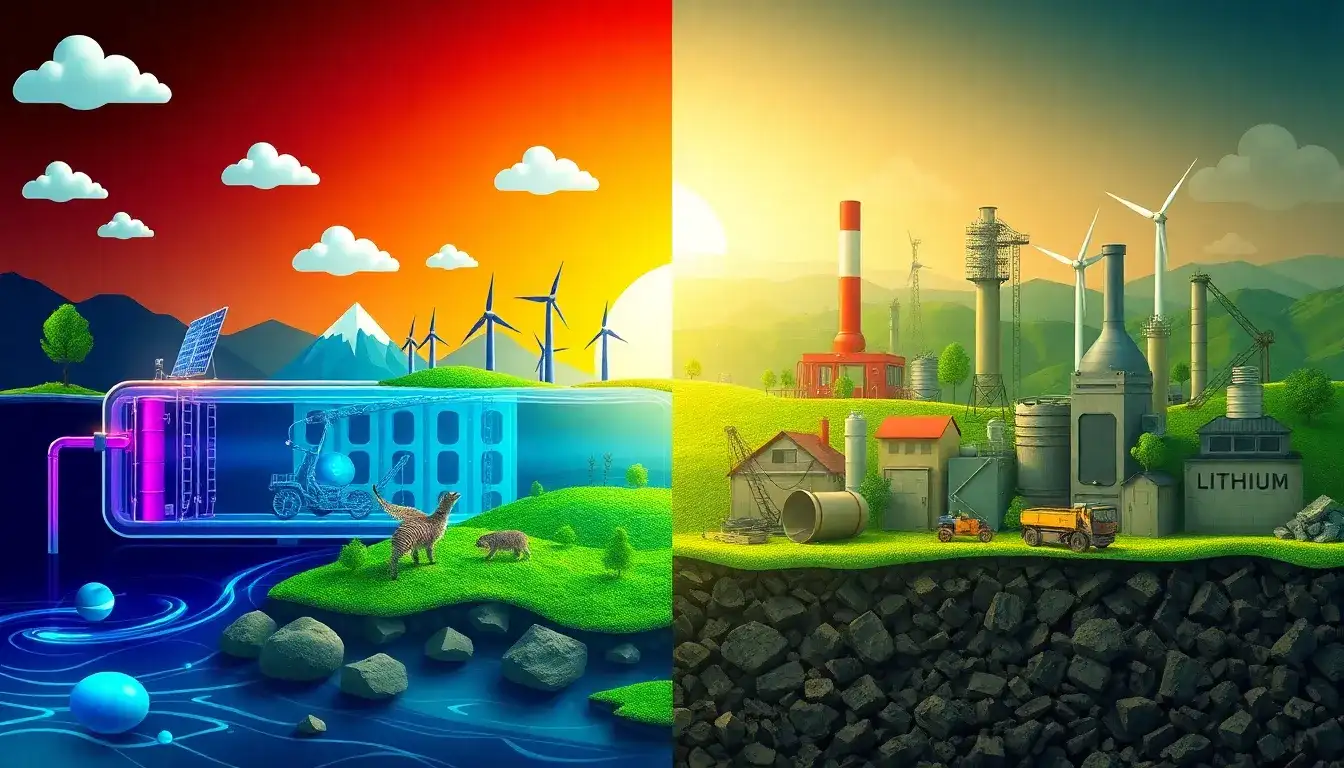
Environmental Impacts
Flow Batteries
- Materials and Production: Flow batteries generally use less toxic materials than lithium-ion batteries. However, their production impacts vary depending on the chemistry:
- Vanadium-Redox Flow Batteries: These have higher environmental impacts during production due to vanadium pentoxide production, contributing significantly to emissions like particulate matter and acidification potential.
- All-Iron Flow Batteries: These have lower environmental impacts in most categories, except for ecotoxicity.
- Recyclability: Flow batteries, such as vanadium flow batteries, offer close to 100% recyclability, which is a significant sustainability advantage.
- Safety and Flammability: Flow batteries have low flammability and environmental impact, making them safer in terms of fire risk compared to lithium-ion batteries.
Lithium-Ion Batteries
- Materials and Production: Lithium-ion batteries involve more toxic materials and have higher energy demands during production. They also have mining-related environmental issues, affecting water and soil.
- Recyclability: While recyclable, lithium-ion batteries currently have a lower recycling rate compared to the potential of flow batteries.
- Safety and Flammability: Lithium-ion batteries are known for their higher flammability compared to flow batteries, posing fire safety risks.
Overall Comparison
- Environmental Footprint: Flow batteries generally have a lower environmental footprint than lithium-ion batteries, particularly in terms of flammability and recyclability. However, the production phase of vanadium flow batteries presents challenges.
- Sustainability: Flow batteries, particularly those with high recyclability, are seen as a sustainable choice compared to lithium-ion batteries. For instance, vanadium flow batteries can reduce CO₂ emissions by over 50% compared to lithium-ion batteries over their warranty periods.
In summary, while flow batteries have some production-related environmental challenges, they offer advantages in terms of recyclability, safety, and overall sustainability compared to lithium-ion batteries.
Original article by NenPower, If reposted, please credit the source: https://nenpower.com/blog/how-do-the-environmental-impacts-of-flow-batteries-compare-to-lithium-ion-batteries/

