

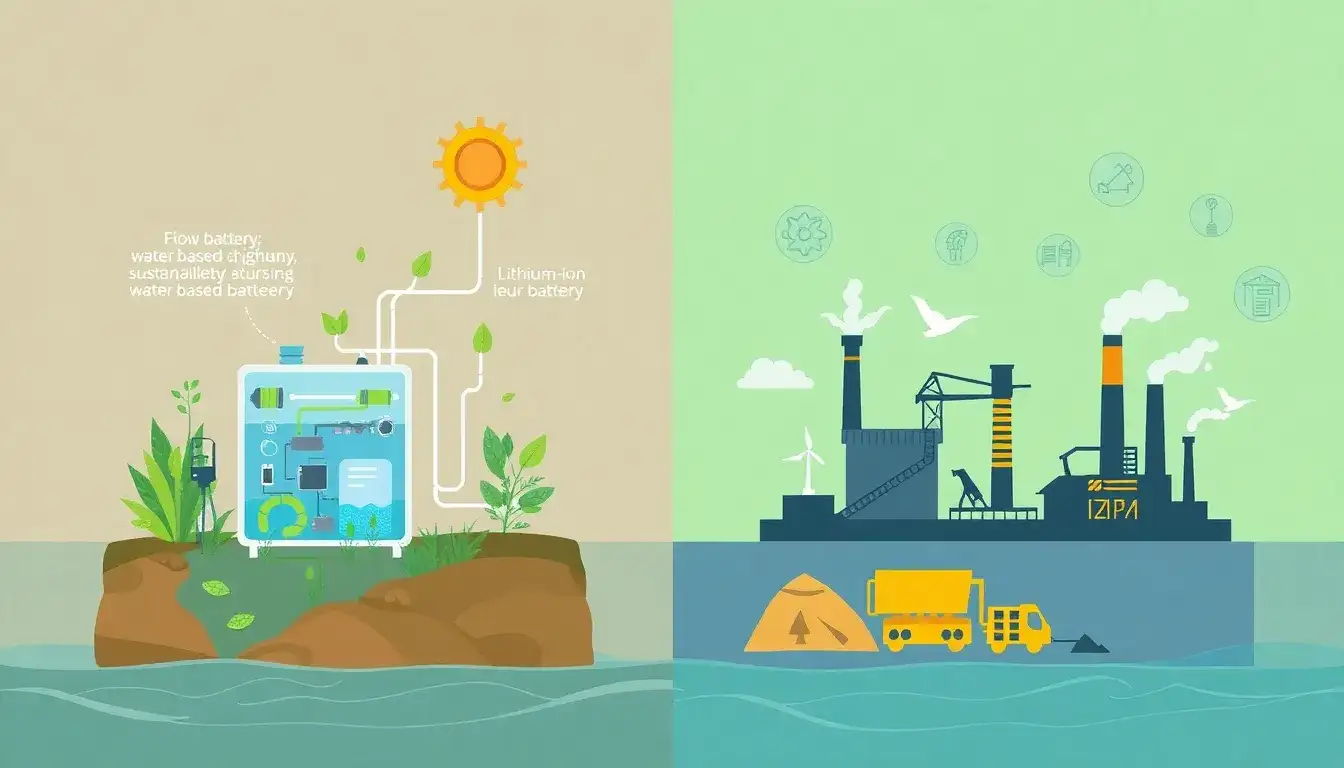
Environmental Impacts Comparison
Production Phase
- Flow Batteries: These batteries, especially iron flow batteries, have a lower environmental impact during production compared to lithium-ion batteries. Iron flow batteries show the lowest impacts in several environmental categories such as global warming potential and cumulative energy demand. Vanadium redox flow batteries, however, have higher impacts due to the production of vanadium pentoxide, but they can be reused extensively.
- Lithium-ion Batteries: The extraction of lithium and other materials (like cobalt) contributes significantly to environmental degradation. Lithium mining can lead to water pollution and resource depletion.
Materials and Recycling
- Flow Batteries: They often use low-cost, abundant materials and can be recycled or reused, such as the electrolyte in vanadium redox flow batteries, which can be recovered up to 97%. Iron flow batteries use earth-abundant materials like iron, salt, and water, reducing reliance on scarce metals.
- Lithium-ion Batteries: These batteries contain conflict materials like cobalt and are harder to recycle, increasing end-of-life disposal issues.
Operational Safety and Longevity
- Flow Batteries: They have low flammability and are generally safer in operation. Flow batteries can also last longer (up to 20 years) and maintain their power efficiency over many cycles.
- Lithium-ion Batteries: These batteries can be prone to thermal runaway and have a shorter lifespan (about 7-10 years under heavy use), requiring more frequent replacements.
End-of-Life Disposal
- Flow Batteries: Iron flow batteries offer environmentally friendly disposal options due to the recyclable nature of their components.
- Lithium-ion Batteries: Disposal poses significant environmental risks if not handled properly, as they contain hazardous materials.
Summary
Flow batteries, particularly iron flow batteries, generally have lower environmental impacts during production and end-of-life compared to lithium-ion batteries. However, vanadium redox flow batteries have higher production impacts due to vanadium extraction but offer excellent recyclability. Overall, flow batteries provide a more sustainable long-term energy storage solution due to their longer lifespan, recyclability, and use of abundant materials.
Original article by NenPower, If reposted, please credit the source: https://nenpower.com/blog/how-do-the-environmental-impacts-of-flow-batteries-and-lithium-ion-batteries-differ/

