

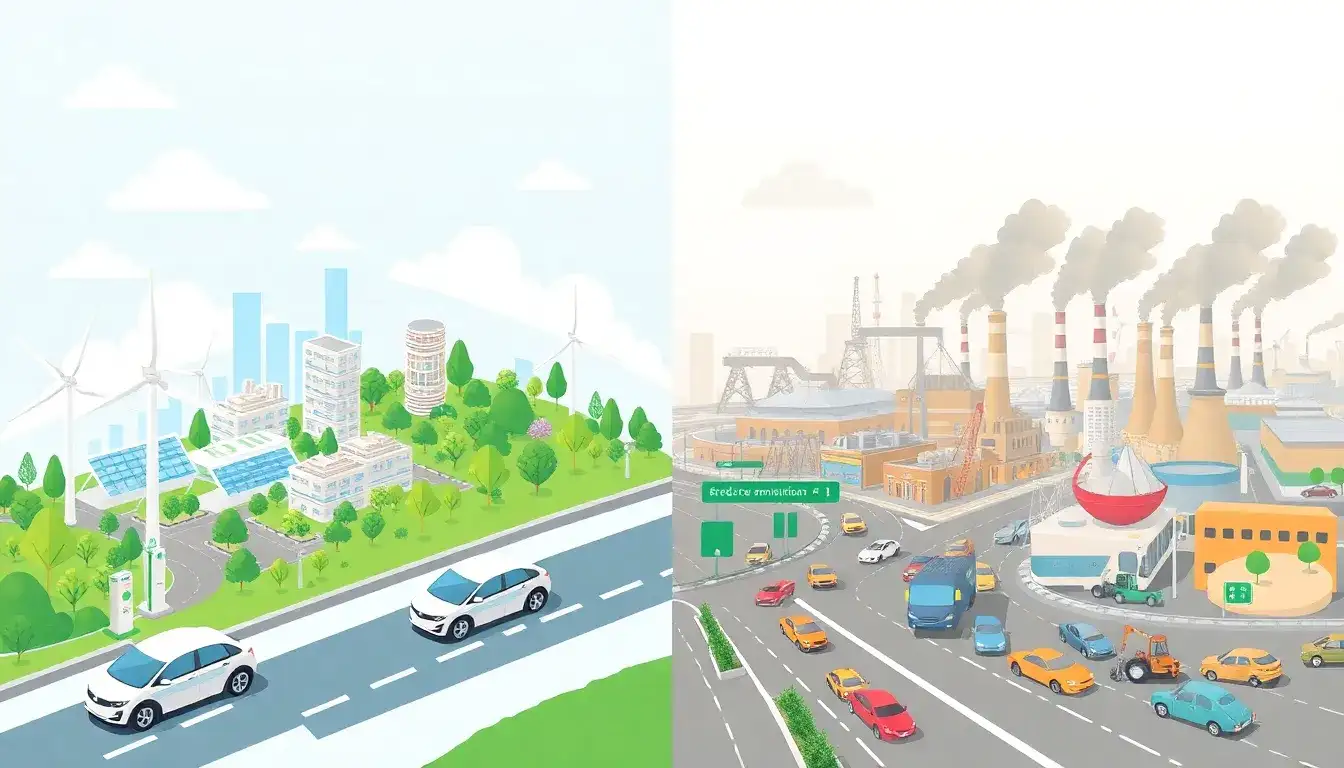
Manufacturing Stage
- Electric Vehicles: EVs have a higher carbon footprint during manufacturing, primarily due to the production of their batteries. However, this disadvantage is offset by their cleaner operation over time.
- Gas-Powered Cars: Gasoline vehicles have lower manufacturing emissions compared to EVs, but they generate significant emissions during use.
Operational Stage
- Electric Vehicles: EVs produce no tailpipe emissions, making them cleaner during operation. However, emissions are generated from the production of electricity used for charging. The overall operational emissions depend on the energy mix of the region; cleaner sources like wind or solar reduce these emissions.
- Gas-Powered Cars: Gasoline vehicles emit greenhouse gases directly from their tailpipes. They burn fossil fuels inefficiently, converting only about 16-25% of energy into movement.
Efficiency Comparison
- Electric Vehicles: EVs are highly efficient, using approximately 87%–91% of the electrical energy from the battery to propel the vehicle.
- Gas-Powered Cars: Gasoline vehicles are less efficient, converting a smaller fraction of the energy in gasoline into movement.
Emissions Over Vehicle Lifetime
- Electric Vehicles: Studies show that EVs generally produce fewer emissions over their lifetime compared to gas-powered cars, even considering manufacturing impacts. It takes less than two years for EVs to “break even” with gas cars in terms of total emissions.
- Gas-Powered Cars: These vehicles produce more CO2 per mile over their lifetimes, with estimates indicating more than 350 grams of CO2 per mile for a typical lifetime.
In summary, while EVs have a higher manufacturing carbon footprint, their operational efficiency and lack of tailpipe emissions make them generally more environmentally friendly than gas-powered cars over their lifetimes. The environmental benefits of EVs increase as renewable energy sources become more prevalent.
Original article by NenPower, If reposted, please credit the source: https://nenpower.com/blog/how-do-the-environmental-impacts-of-evs-and-gas-powered-cars-compare/

