

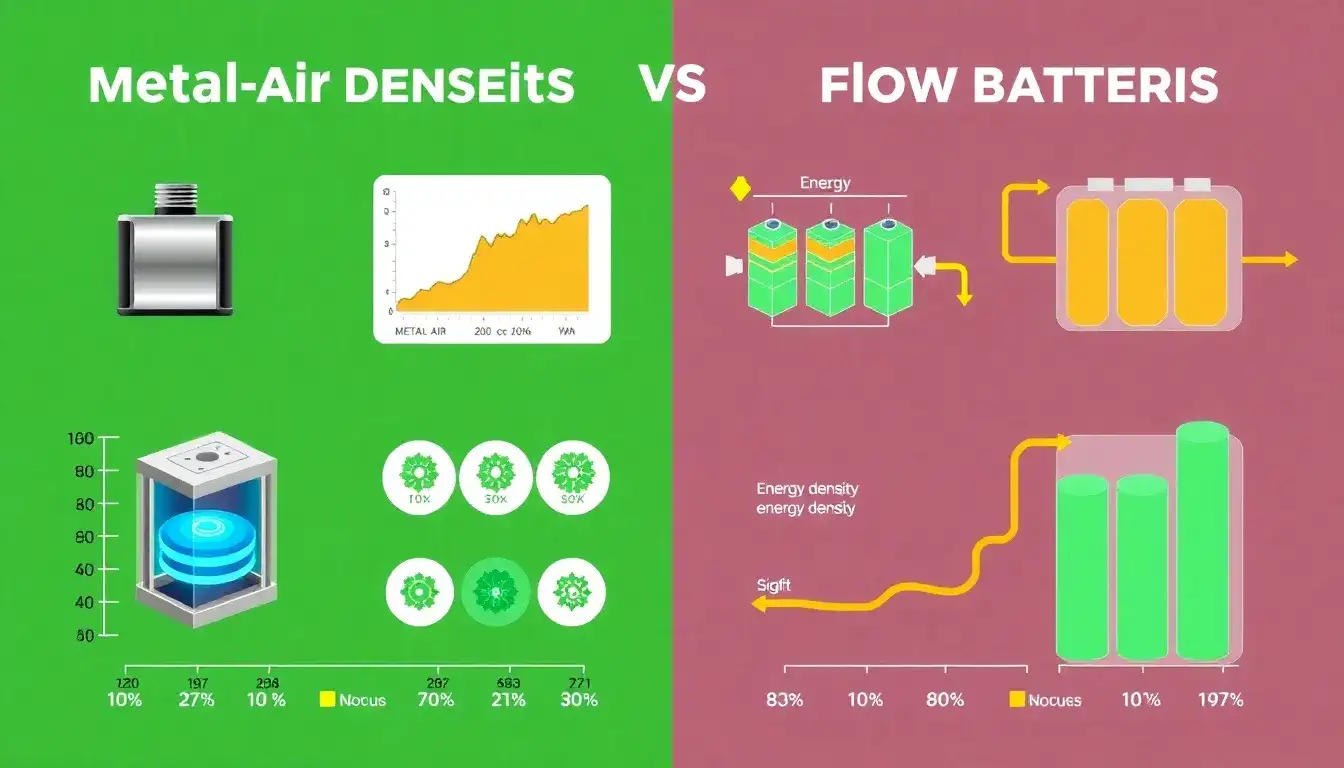
To compare the energy densities of metal-air batteries and flow batteries, let’s examine each type separately:
Metal-Air Batteries
Metal-air batteries are known for their exceptionally high theoretical energy density, which can range from several hundred to thousands of Wh/kg depending on the metal used:
- Aluminum-Air Batteries: These have a theoretical maximum energy density of 6–8 kWh/kg, making them potentially very energy-dense compared to other battery types.
- Zinc-Air Batteries: They typically achieve an energy density of about 300–400 Wh/kg, which is still competitive for certain applications like portable electronics.
Flow Batteries
Flow batteries store energy in liquid electrolytes in external tanks, which allows them to decouple energy storage capacity from the power rating. While they offer high flexibility and scalability in terms of storage capacity, their energy density is generally lower compared to metal-air batteries. Typical energy densities for flow batteries range from about 20 to 100 Wh/kg, depending on the specific chemistry used, such as vanadium redox batteries or zinc-air flow batteries.
Comparison
| Battery Type | Energy Density Range |
|---|---|
| Aluminum-Air Batteries | 6,000–8,000 Wh/kg (theoretical) |
| Zinc-Air Batteries | 300–400 Wh/kg |
| Flow Batteries | 20–100 Wh/kg |
Overall, metal-air batteries, especially aluminum-air, offer significantly higher energy densities than flow batteries, making them attractive for applications requiring high energy storage in lightweight form. However, metal-air batteries often face challenges such as limited rechargeability and sensitivity to environmental conditions, while flow batteries provide scalability and long-duration energy storage.
Original article by NenPower, If reposted, please credit the source: https://nenpower.com/blog/how-do-the-energy-densities-of-metal-air-batteries-and-flow-batteries-compare/

