

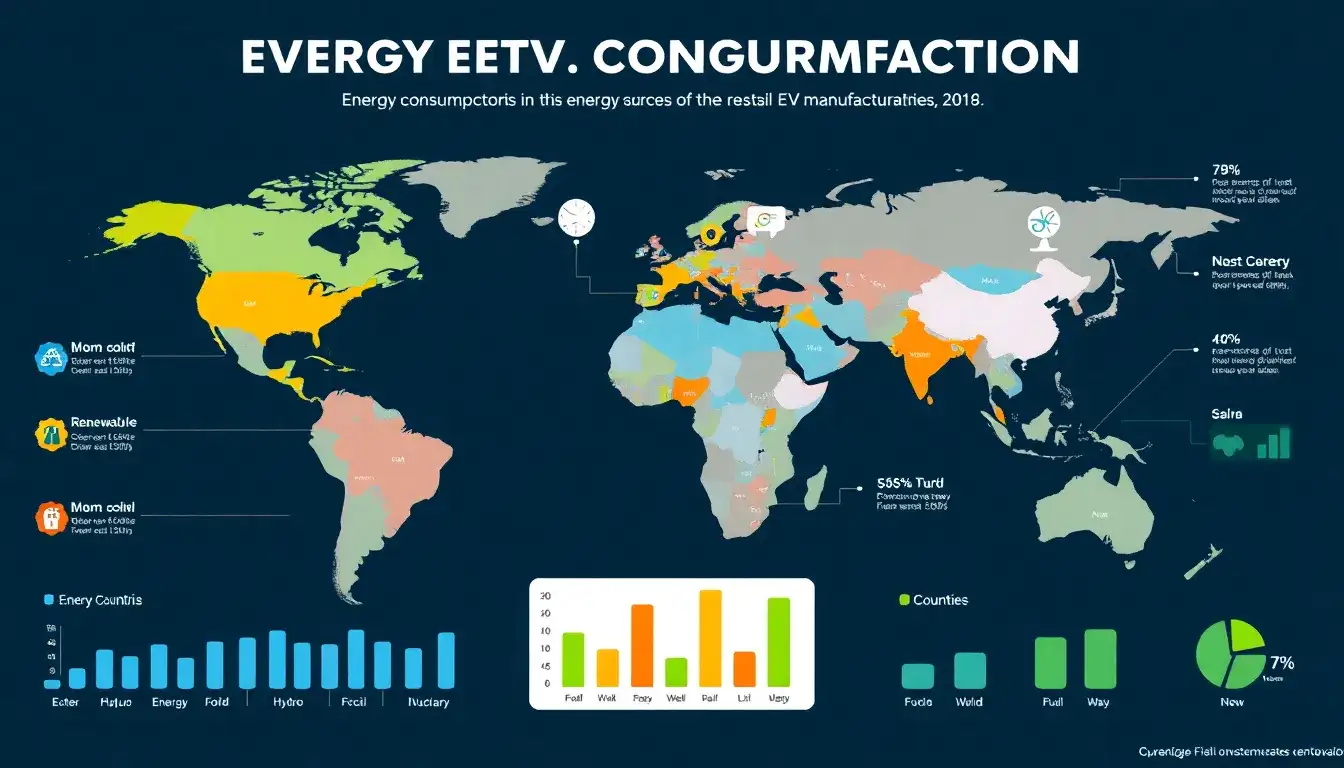
Energy consumption patterns in electric vehicle (EV) manufacturing differ notably between countries depending on their dominant energy sources, influencing both the environmental impact and the operational characteristics of EV production.
Variations in Energy Sources and Impact on EV Manufacturing Energy Use
- Countries with Renewable and Low-Carbon Energy Grids:
Nations that rely heavily on renewable energy sources (such as hydro, wind, and solar) or nuclear power tend to have cleaner energy consumption patterns during EV manufacturing. This results in lower greenhouse gas emissions associated with battery and vehicle production. For example, countries in Europe and parts of Asia, like Norway and Sweden, integrate a large share of renewables into their electricity grid, imparting a lower carbon footprint per kWh used in EV manufacturing. This improves the sustainability of EV production despite potentially high electricity consumption for processes like battery manufacturing. - Countries Dependent on Fossil Fuels:
In contrast, countries relying predominantly on coal, oil, or natural gas for electricity generation exhibit higher indirect emissions from EV manufacturing due to the higher carbon intensity of their power supply. For instance, parts of India and some Southeast Asian countries have announced EV battery manufacturing capacity, but with grids still significantly dependent on fossil fuels, the energy consumed during production corresponds to greater CO2 emissions. This creates a challenge in meeting overall decarbonization targets unless coupled with grid decarbonization efforts.
Regional Manufacturing Capacity and Energy Demand Dynamics
- China, the European Union, and the United States dominate EV battery manufacturing capacity and are also investing in expanding it, which affects their electricity demand profiles. These regions show a growing electricity consumption by EVs overall, with China and Europe already accounting for about 1% of their total final electricity consumption from EVs, underscoring the increasing load on their grids.
- Other regions like India and Southeast Asia have significant growth potential but face challenges due to less developed grid infrastructure and higher reliance on fossil fuels. This can lead to energy consumption patterns in EV manufacturing that are more carbon-intensive compared with more developed regions with advanced renewable energy penetration.
Implications of Charging and Operational Energy Demand
- The pattern of electricity demand from EV use, including slow versus fast charging preferences, also influences how countries manage energy consumption linked to EVs. Regions with better grid management and integration of smart charging technologies can optimize energy use and reduce peak demand pressure, indirectly affecting how energy resources are allocated for both manufacturing and operation of EVs.
- In countries like the U.S., the rapid rise in EV adoption is expected to add substantial electricity demand (between 100 TWh and 185 TWh by 2030), requiring grid adaptations that will influence how energy consumption patterns evolve for EV manufacturing and use. Integration of renewables faces challenges due to their intermittent nature, further shaping consumption patterns based on regional energy mixes.
Summary
Energy consumption patterns in EV manufacturing differ based on the electricity generation mix of a country:
- Countries with cleaner, renewable-heavy grids show lower carbon footprints in EV production despite high energy use.
- Fossil fuel-dependent countries have higher emissions per unit of electricity consumed in manufacturing.
- Manufacturing capacity distribution across regions is linked to their energy sources and infrastructure readiness.
- Grid management and charging strategies influence overall energy consumption and emissions associated with EV deployment.
These differences highlight the critical role of national energy policies and grid evolution in determining the sustainability and efficiency of EV manufacturing globally.
Original article by NenPower, If reposted, please credit the source: https://nenpower.com/blog/how-do-the-energy-consumption-patterns-in-ev-manufacturing-differ-between-countries-with-varying-energy-sources/

