

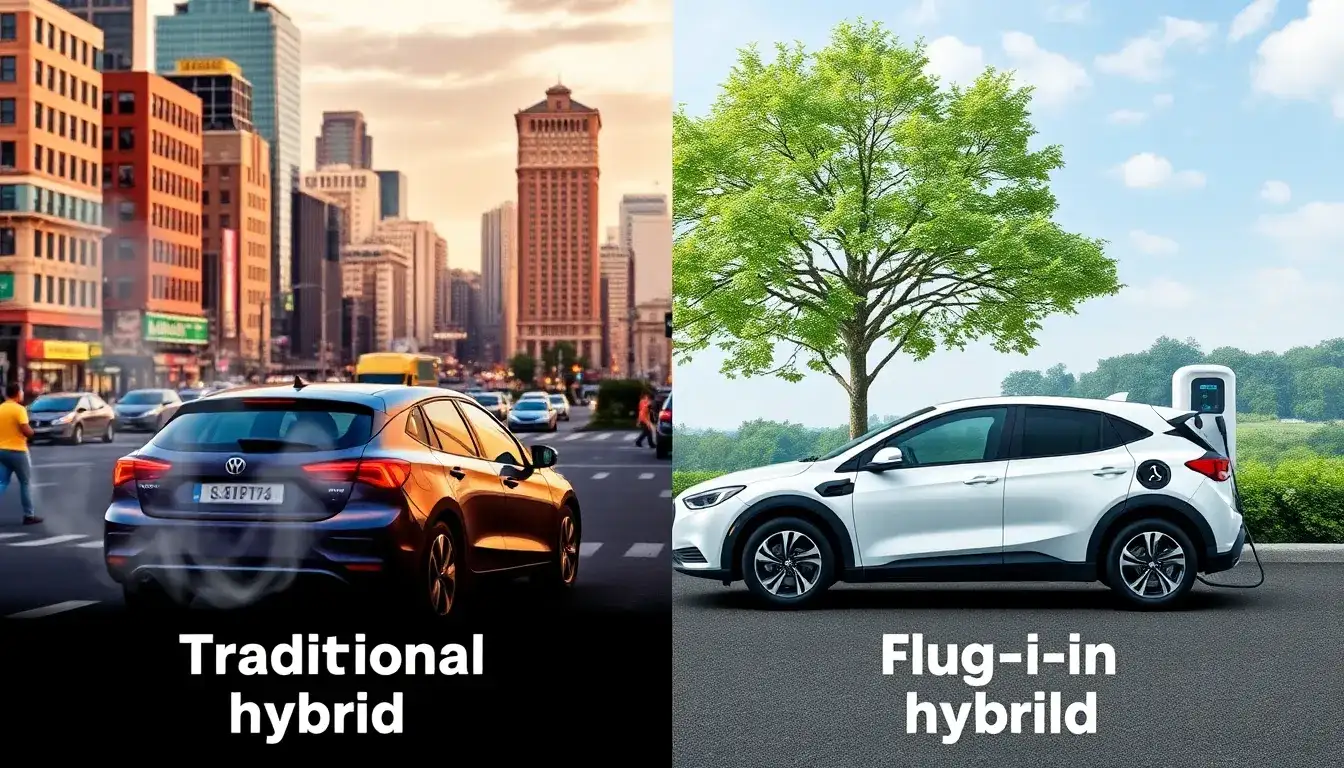
Emissions Comparison: Traditional Hybrids vs. Plug-in Hybrids
Traditional Hybrid Vehicles (HEVs)
Traditional hybrid electric vehicles (HEVs) combine a conventional internal combustion engine (ICE) with an electric motor. They generate electricity from the ICE and sometimes from regenerative braking to assist the engine. Key Points:
- Emissions: HEVs typically produce lower tailpipe emissions than conventional vehicles because they use less fuel and optimize engine operation.
- Emission Source: Emissions occur primarily from the ICE.
- Fuel Efficiency: They are designed to improve fuel efficiency without requiring external charging.
Plug-in Hybrid Vehicles (PHEVs)
Plug-in hybrid electric vehicles (PHEVs) also combine an ICE with an electric motor but can be charged from an external power source. Key Points:
- Emissions: PHEVs produce zero direct emissions when running in all-electric mode but emit tailpipe gases when using the ICE. They can also experience evaporative emissions.
- Emission Source: Emissions come from both electricity production (if the grid is not clean) and ICE operation.
- Fuel Efficiency: PHEVs can offer better fuel efficiency in electric mode, but real-world emissions are often higher than expected, especially when the ICE is engaged.
Comparison Summary
| Vehicle Type | Emissions Source | Emission Levels | Fuel Efficiency |
|---|---|---|---|
| HEVs | ICE only | Lower than conventional | Improved through engine optimization |
| PHEVs | ICE and electricity | Zero in electric mode; higher when ICE is used | Enhanced in electric mode, but variable overall |
In summary, while both HEVs and PHEVs offer lower emissions options compared to conventional vehicles, PHEVs can potentially be cleaner in areas with low-carbon electricity sources by leveraging their electric mode. However, real-world emissions for PHEVs can be significantly higher than advertised when the ICE is used frequently.
Original article by NenPower, If reposted, please credit the source: https://nenpower.com/blog/how-do-the-emissions-of-traditional-hybrid-vehicles-differ-from-those-of-plug-in-hybrid-vehicles/

