

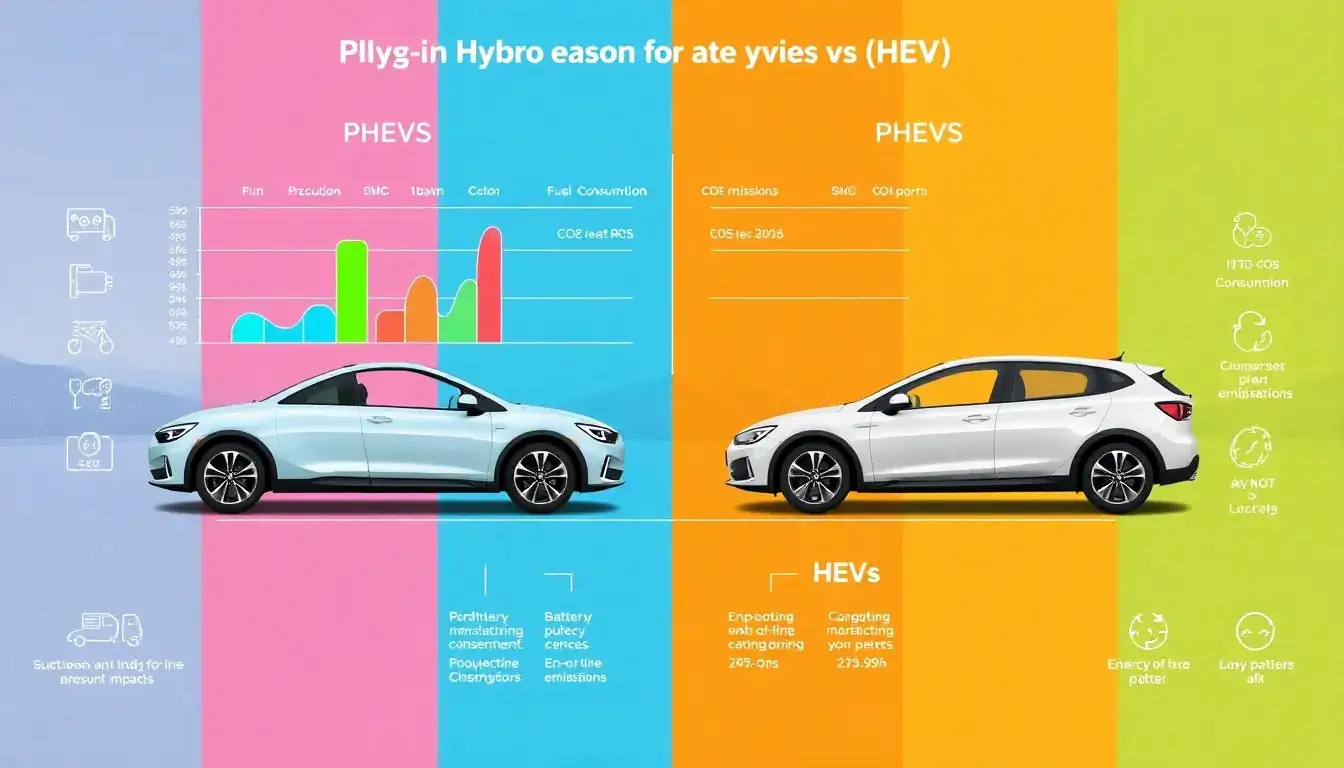
Over their lifetimes, plug-in hybrid electric vehicles (PHEVs) generally have lower greenhouse gas (GHG) emissions than conventional hybrid electric vehicles (HEVs), but the relative benefits depend on several factors including driving patterns, grid mix, and battery size.
Lifetime Emissions Comparison of PHEVs vs HEVs
- PHEVs reduce lifetime emissions more than HEVs:
PHEVs can reduce lifetime emissions by about 30% compared to internal combustion engine vehicles (ICEVs), and they tend to outperform HEVs in cutting emissions across many conditions. For example, in the U.S., PHEVs reduce lifetime emissions by about 46% on average, which is better than typical HEV reductions. The International Energy Agency notes that over 15 years and around 200,000 km, PHEVs produce about 30% less emissions than ICEVs, while HEVs achieve about 40% less than ICEVs, indicating PHEVs have an edge over HEVs but the difference is moderate. - Battery size and electric use impact emissions:
PHEVs have smaller batteries than BEVs—roughly one-sixth the size—and use a mixture of electricity and gasoline (e.g., 70% electric and 30% gasoline driving assumed). This smaller battery size lowers the emissions from production, contributing to better life-cycle emissions compared with HEVs that rely fully on gasoline and regenerative braking. - Grid power emissions influence the comparison:
PHEVs still rely on grid electricity for charging. Their life-cycle emissions advantage over HEVs is more pronounced when the electricity grid is cleaner. In regions where grid emissions are high, PHEVs and HEVs have similar lifecycle emissions since PHEVs still consume gasoline for some miles. - Life-cycle emissions ratios relative to BEVs:
A recent study shows that HEVs emit roughly 2.2 to 2.5 times more GHGs over their lifetime than BEVs powered by the average grid, and PHEVs emit around two times more than BEVs. This suggests PHEVs are slightly better than HEVs but both fall short of full BEVs in emissions terms.
Summary
| Vehicle Type | Typical Lifetime GHG Emissions Compared to BEVs | Lifetime Emissions Compared to ICEVs | Notes |
|---|---|---|---|
| Battery Electric Vehicles (BEVs) | Lowest emissions baseline | ~45-65% lower than PHEVs and HEVs | Strongly benefits from grid decarbonization |
| Plug-in Hybrid Electric Vehicles (PHEVs) | About 2x BEV emissions | ~30% lower emissions than ICEVs | Smaller battery, partial electric driving, better than HEVs overall |
| Hybrid Electric Vehicles (HEVs) | ~2.2-2.5x BEV emissions | ~40% lower emissions than ICEVs | No plug-in charging; higher fossil fuel use than PHEVs |
Thus, PHEVs typically offer better lifetime emissions reductions than HEVs due to their ability to run on electricity part of the time and smaller battery sizes, especially in regions with cleaner electricity grids. However, full battery electric vehicles outperform both in terms of emissions reduction over their life cycle.
Original article by NenPower, If reposted, please credit the source: https://nenpower.com/blog/how-do-the-emissions-of-phevs-compare-to-those-of-hevs-over-their-lifetimes/

