

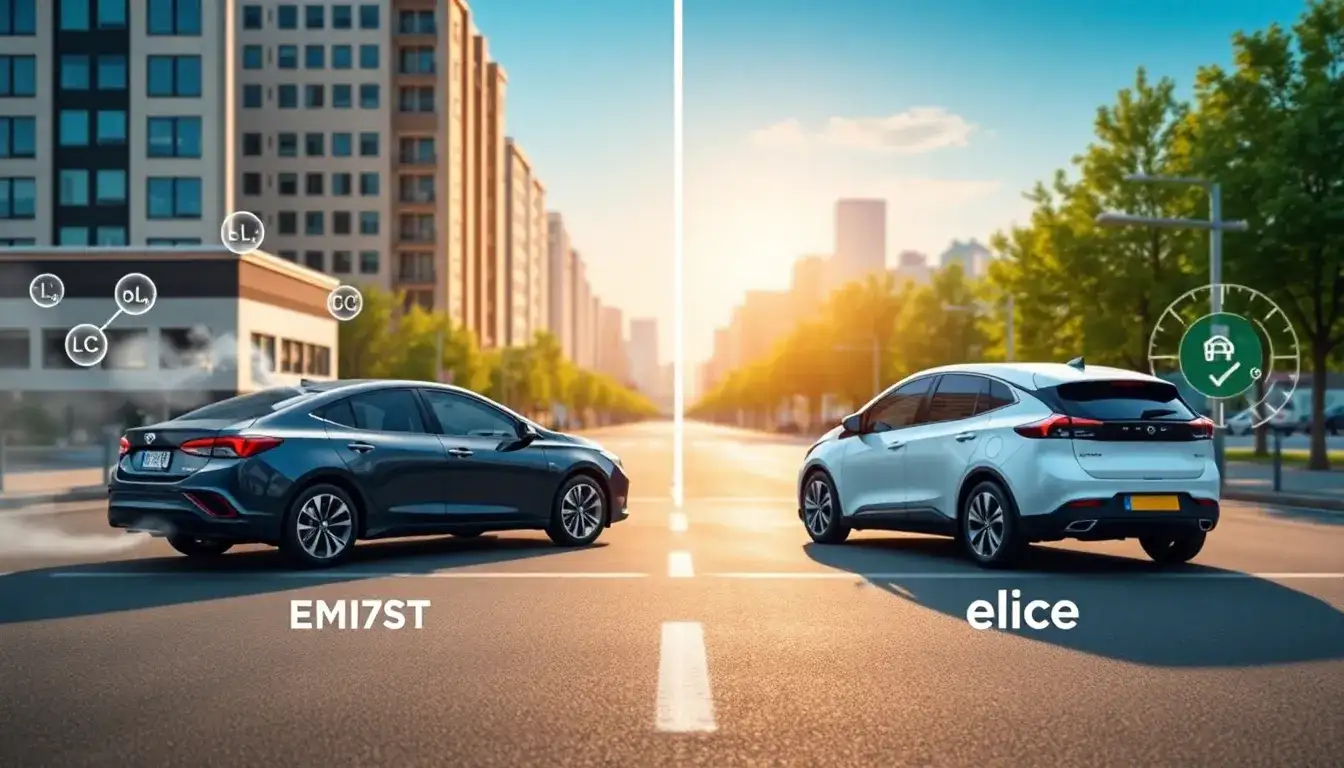
Hybrid vehicles and electric vehicles (EVs) differ notably in their emissions profiles, particularly regarding tailpipe and life cycle emissions.
Tailpipe Emissions
- Electric vehicles (EVs), including battery electric vehicles (BEVs) and plug-in hybrid electric vehicles (PHEVs) running solely on electricity, produce zero tailpipe emissions because they do not burn gasoline or diesel during operation.
- Hybrid electric vehicles (HEVs), which combine an internal combustion engine with an electric motor, produce lower tailpipe emissions than conventional gasoline vehicles but still emit carbon dioxide and other pollutants when running on gasoline. Hybrid vehicles cannot fully eliminate tailpipe emissions because they rely partially on fossil fuel combustion.
Life Cycle Emissions
- Although EVs have zero tailpipe emissions, their total environmental impact depends on the emissions from electricity generation. In regions where electricity is generated from low-emission sources (e.g., renewables, nuclear), EVs have a strong life cycle emissions advantage over hybrids and conventional vehicles. However, if electricity comes from high-emission sources like coal, the life cycle benefits diminish.
- Hybrids generally have lower cradle-to-grave emissions than conventional vehicles due to improved fuel efficiency but tend to have higher life cycle emissions than EVs charged from clean grids because of ongoing gasoline use.
When Hybrids Could Be Cleaner
- Under certain specific conditions, a hybrid vehicle can produce fewer overall climate emissions than an EV. This can occur depending on the vehicle’s manufacturing footprint, the source of electricity, and how the vehicle is driven. For example, if the EV is charged in a region with very high-emission electricity or if the hybrid is driven primarily in electric mode with efficient fuel use, its total climate pollution could be lower.
Quantified Emission Reductions
- Transitioning from conventional gasoline to full hybrids can reduce tailpipe CO2 emissions by around 34% on average. Mild hybrids reduce emissions less, about 11%-17%, and full hybrids add further reductions on top of that.
- EVs running on clean electricity sources typically outperform hybrids on total emissions reductions, especially over their full life cycle.
Summary
| Vehicle Type | Tailpipe Emissions | Life Cycle Emissions | Notes |
|---|---|---|---|
| Battery Electric Vehicles | Zero | Lowest if electricity is clean; variable if electricity is dirty | Depend on grid emissions; zero vehicle exhaust pollution |
| Plug-in Hybrid Electric Vehicles (PHEVs) | Zero when running on electricity only; some emissions when on gas engine | Lower than conventional; depends on electricity source and gas use | Use electricity for some distance, then gasoline engine |
| Traditional Hybrid Vehicles (HEVs) | Reduced but non-zero | Lower than conventional; higher than EVs | Partial reliance on gasoline, benefits from improved efficiency |
Overall, electric vehicles typically have lower emissions than hybrids, especially in regions with cleaner electricity generation. Hybrids offer a significant emissions improvement over conventional vehicles and can sometimes be cleaner than EVs charged from high-emission grids or in specific driving and manufacturing scenarios.
Original article by NenPower, If reposted, please credit the source: https://nenpower.com/blog/how-do-the-emissions-of-hybrid-vehicles-compare-to-those-of-electric-vehicles/

