

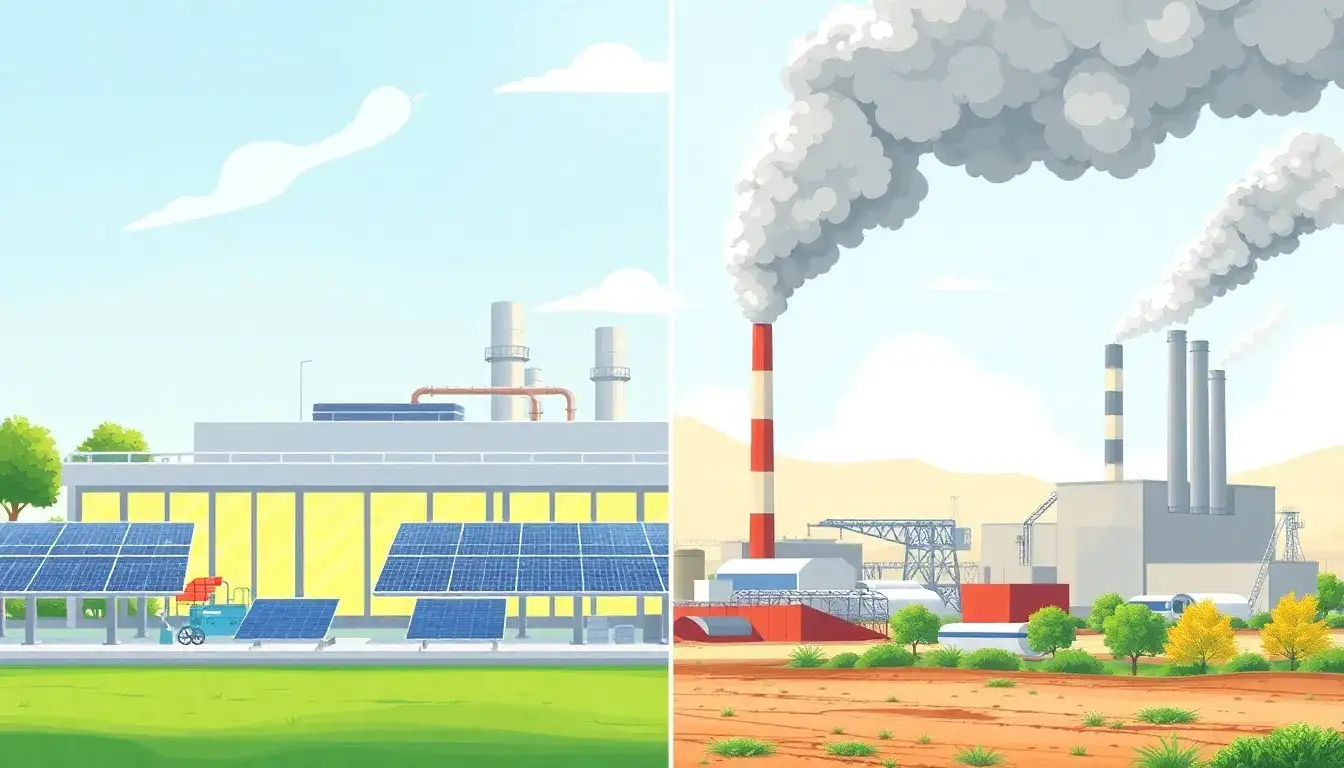
The emissions from solar panel manufacturing are substantially lower than those from fossil fuels when considering their full lifecycle emissions per unit of electricity produced.
- Solar panels emit approximately 40 to 100 grams of CO2 equivalent per kWh over their lifecycle, depending on technology and manufacturing location, with typical values around 43 to 50 g CO2-eq/kWh for solar photovoltaic (PV) panels. This includes emissions from raw material extraction (such as silicon mining), manufacturing processes, transportation, installation, and disposal.
- In contrast, fossil fuel sources like coal and natural gas have much higher lifecycle carbon footprints. Coal has lifecycle emissions around 1,001 g CO2-eq/kWh, and natural gas about 486 g CO2-eq/kWh. This makes solar panel emissions roughly 10 to 20 times lower than coal and about 5 to 10 times lower than natural gas.
- Although the manufacturing of solar panels involves energy-intensive processes, such as polysilicon purification often powered by coal-fired electricity, solar panels become carbon-neutral typically within the first three years of operation due to zero emissions during electricity generation.
- Additionally, efforts to localize and improve solar panel manufacturing efficiency, such as returning production to the U.S., are expected to reduce the carbon footprint of solar panels further by about 33% by 2050.
In summary, despite the emissions associated with their production, solar panels offer a significantly cleaner energy source compared to fossil fuels over their operational lifetime, emitting roughly 20 times less CO2 per kWh than coal and substantially less than natural gas.
Original article by NenPower, If reposted, please credit the source: https://nenpower.com/blog/how-do-the-emissions-from-solar-panel-manufacturing-compare-to-those-from-fossil-fuels/

