

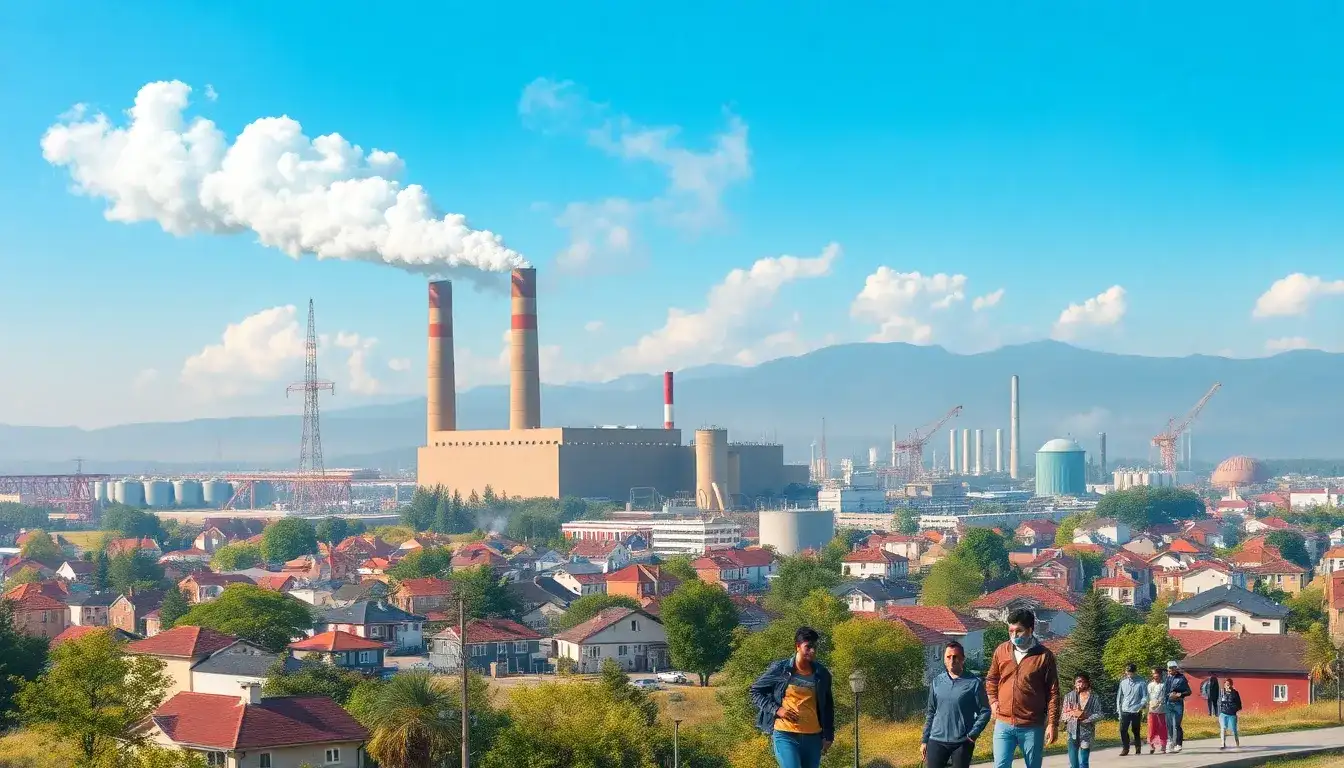
Emissions from natural gas peaking power plants significantly impact local air quality, often more so than baseload power plants. These peaking plants typically operate only during periods of high electricity demand but emit higher levels of air pollutants per unit of electricity generated compared to plants running continuously.
Key impacts on local air quality include:
- Higher Emissions of Sulfur Dioxide (SO2): Peaker plants emit about 1.6 times more sulfur dioxide than baseload plants per unit of generation. SO2 is a harmful pollutant linked to respiratory problems and aggravation of asthma.
- Nitrogen Oxides (NOx) and Fine Particulate Matter (PM2.5): Emissions from peaker plants include NOx and PM2.5, which are associated with lung irritation, asthma exacerbations, and other serious respiratory illnesses from long-term exposure.
- Disproportionate Impact on Vulnerable Communities: Peaker plants are more often located near poor and minority communities, increasing environmental justice concerns as these populations face greater exposure to harmful pollutants.
- Potentially Higher Climate Pollution from New Units: Some studies indicate that newer gas peaker plants can produce more overall emissions than older units used less frequently, posing ongoing challenges for air quality and climate goals.
In summary, while natural gas peaking plants play a critical role in stabilizing the electric grid, their emissions—particularly sulfur dioxide, nitrogen oxides, and fine particulate matter—can degrade local air quality and harm respiratory health, especially in vulnerable communities living close to these facilities. Transitioning to cleaner alternatives such as battery energy storage may reduce these air quality impacts.
Original article by NenPower, If reposted, please credit the source: https://nenpower.com/blog/how-do-the-emissions-from-natural-gas-peaking-plants-impact-local-air-quality/

