

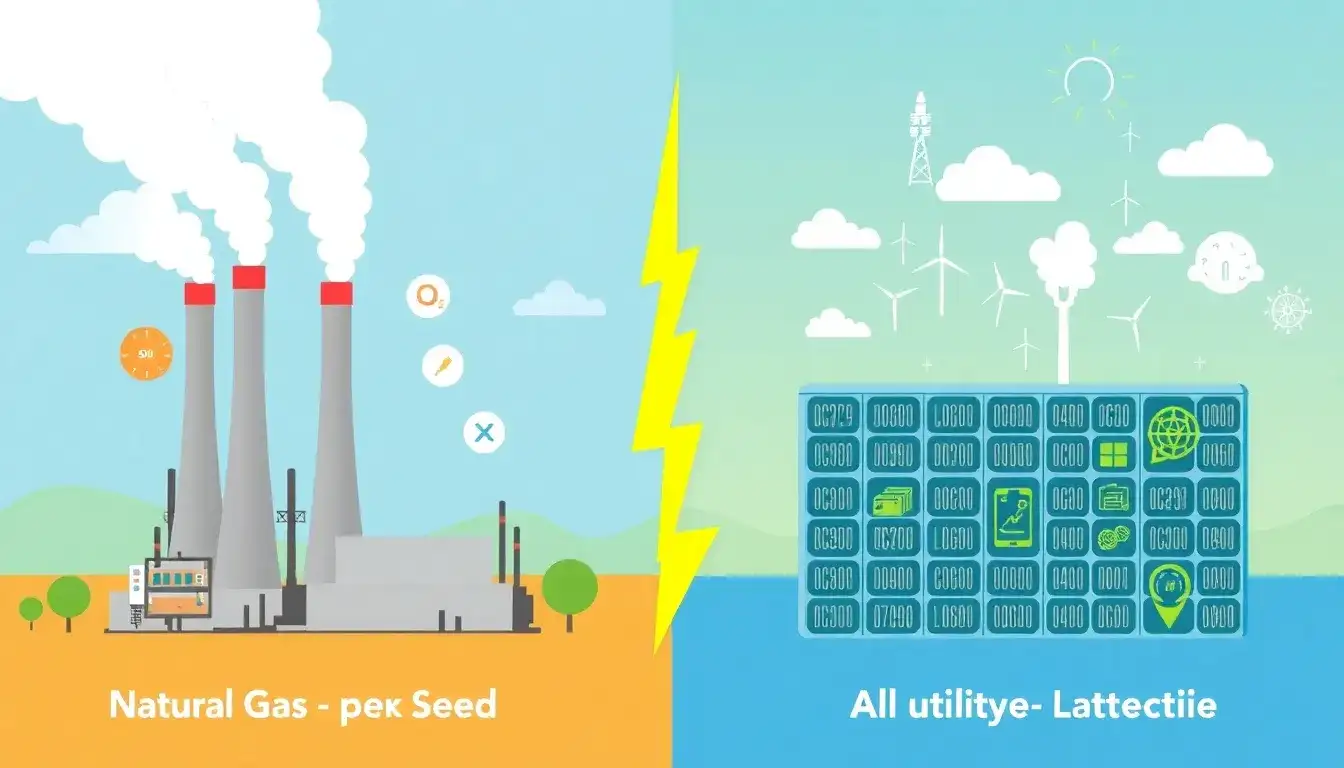
Emissions from natural gas peaking plants versus utility-scale batteries differ significantly in source and impact.
Natural Gas Peaking Plants Emissions:
- Natural gas peaking plants emit greenhouse gases directly when burning fossil fuels to generate electricity, including CO2 and other pollutants associated with combustion.
- These plants typically operate during periods of high demand, so although they are not running continuously, their direct emissions contribute to overall carbon output in the electricity grid.
Utility-Scale Batteries Emissions:
- Utility-scale batteries themselves produce no direct point-source emissions during operation because they store and discharge electricity without combustion.
- However, batteries have indirect emissions primarily from the electricity used to charge them and from their manufacturing and lifecycle energy costs.
- Lithium-ion batteries have round-trip energy losses of about 10-15% or more for long-duration storage, meaning they consume more electricity than they deliver back to the grid.
- If batteries charge using electricity derived from fossil fuels, these losses translate into additional emissions, effectively increasing the grid’s carbon footprint rather than reducing it.
- Furthermore, batteries often provide grid ancillary services that are profitable but not necessarily aligned with reducing emissions because electricity prices do not correlate strongly with emissions intensity at specific times and locations.
- Consequently, current standalone utility-scale batteries in operation often increase net emissions on the grid instead of reducing them.
Comparison Summary:
| Aspect | Natural Gas Peaking Plants | Utility-Scale Batteries |
|---|---|---|
| Type of emissions | Direct CO2 and pollutants from fuel combustion | Indirect emissions from charging losses and manufacturing |
| Emission timing | During operation (peak demand) | Continuous lifecycle emissions plus charging losses |
| Impact on grid emissions | Adds direct carbon emissions | Can increase emissions if charged from fossil sources |
| Operational role | Electricity production | Energy storage and grid services |
| Emission reduction potential | Limited by fuel use | Potential if paired with low-carbon power sources |
In summary, while natural gas peaking plants directly emit greenhouse gases when operating, utility-scale batteries currently tend to increase emissions indirectly due to energy losses and fossil-fuel-based charging, unless specifically paired with clean energy sources to offset those losses.
Original article by NenPower, If reposted, please credit the source: https://nenpower.com/blog/how-do-the-emissions-from-natural-gas-peaking-plants-compare-to-those-from-utility-scale-batteries/

