

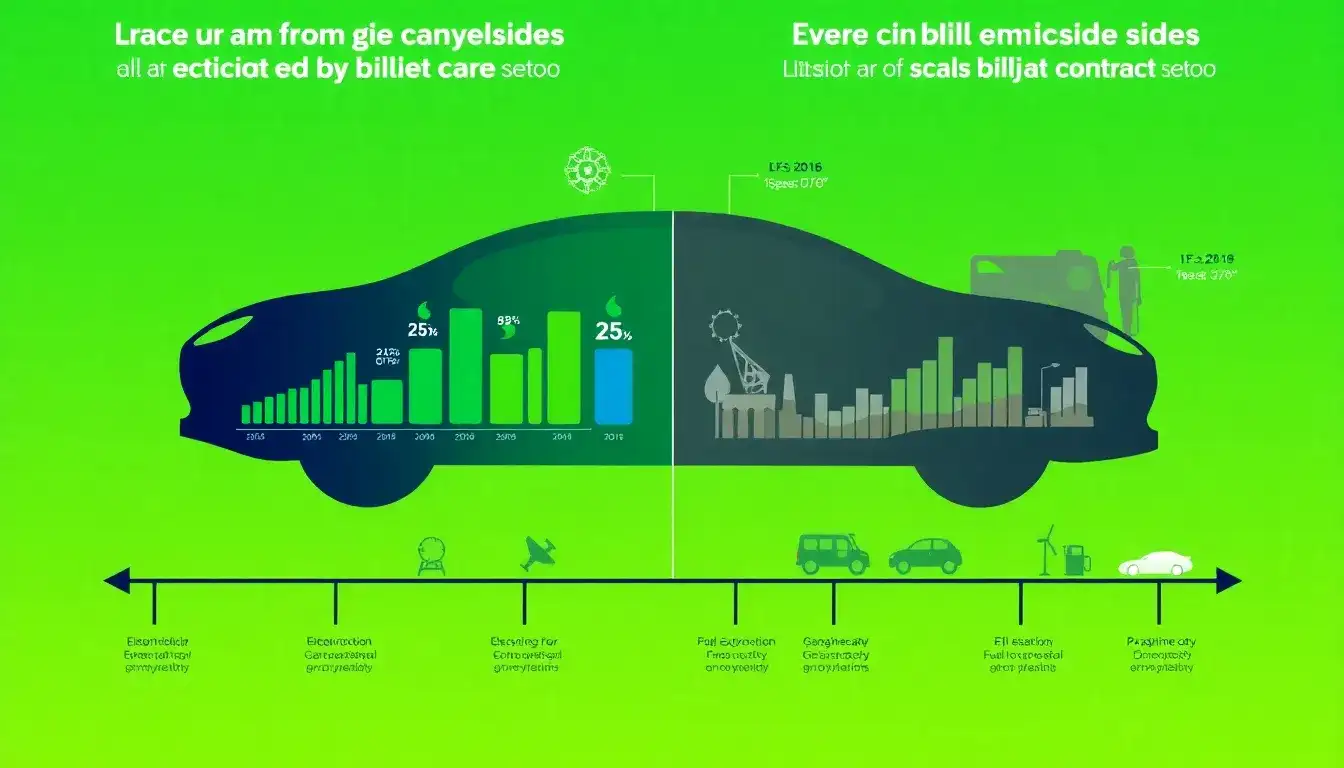
Comparing the emissions from EV battery production with those from traditional gasoline cars over their lifetimes involves several factors, including production emissions, use-phase emissions, and lifecycle emissions.
Production Emissions
Electric Vehicles (EVs):
- Battery Production: EV batteries are a significant contributor to the overall carbon footprint. The production of a typical EV battery pack (e.g., 75 kWh) can emit more than 7 tons of CO2e emissions, primarily due to the extraction and processing of materials like nickel, manganese, cobalt, lithium, and graphite.
- Total Vehicle Production: EVs generally have a higher production footprint than ICE vehicles, with total emissions around double that of ICE vehicles. This includes both body production and battery production.
Internal Combustion Engine (ICE) Vehicles:
- ICE vehicles have lower production emissions compared to EVs, particularly because they do not have large battery packs. However, ICE vehicles still produce significant emissions during production, often cited between 5 to 10 tons of CO2e for the entire vehicle.
Use-Phase Emissions
Electric Vehicles:
- Zero Tailpipe Emissions: EVs produce no emissions at the tailpipe during operation, making them cleaner in use compared to ICE vehicles.
- Well-to-Wheel Emissions: The overall emissions depend on the source of electricity used to charge them. Renewable energy sources can significantly reduce lifecycle emissions.
Internal Combustion Engine Vehicles:
- Continuous Tailpipe Emissions: ICE vehicles emit CO2 and other pollutants directly during operation, contributing significantly to air pollution and greenhouse gas emissions throughout their lifecycle.
- Fossil Fuel Dependency: Their emissions are directly tied to the burning of fossil fuels, which have a high carbon footprint compared to potential EV charging from renewable sources.
Lifecycle Emissions Comparison
Electric Vehicles:
- Initially, EVs have a higher carbon footprint due to battery production. However, over their lifetimes, EVs can offer significant reductions in emissions if powered by renewable energy.
- A study suggests that EVs must be driven a certain distance to offset the higher production emissions compared to ICE vehicles, often referred to as the “break-even” point.
Internal Combustion Engine Vehicles:
- ICE vehicles have lower initial production emissions but continually produce emissions during use, leading to higher overall lifecycle emissions compared to EVs powered by clean energy sources.
In summary, while EVs have higher production emissions due to battery manufacturing, they can offer significant lifecycle emissions savings if charged from renewable energy sources. In contrast, ICE vehicles continue to emit throughout their use phase, contributing more to greenhouse gases over their lifetimes.
Original article by NenPower, If reposted, please credit the source: https://nenpower.com/blog/how-do-the-emissions-from-ev-battery-production-compare-to-those-from-traditional-gasoline-cars-over-their-lifetimes/

