

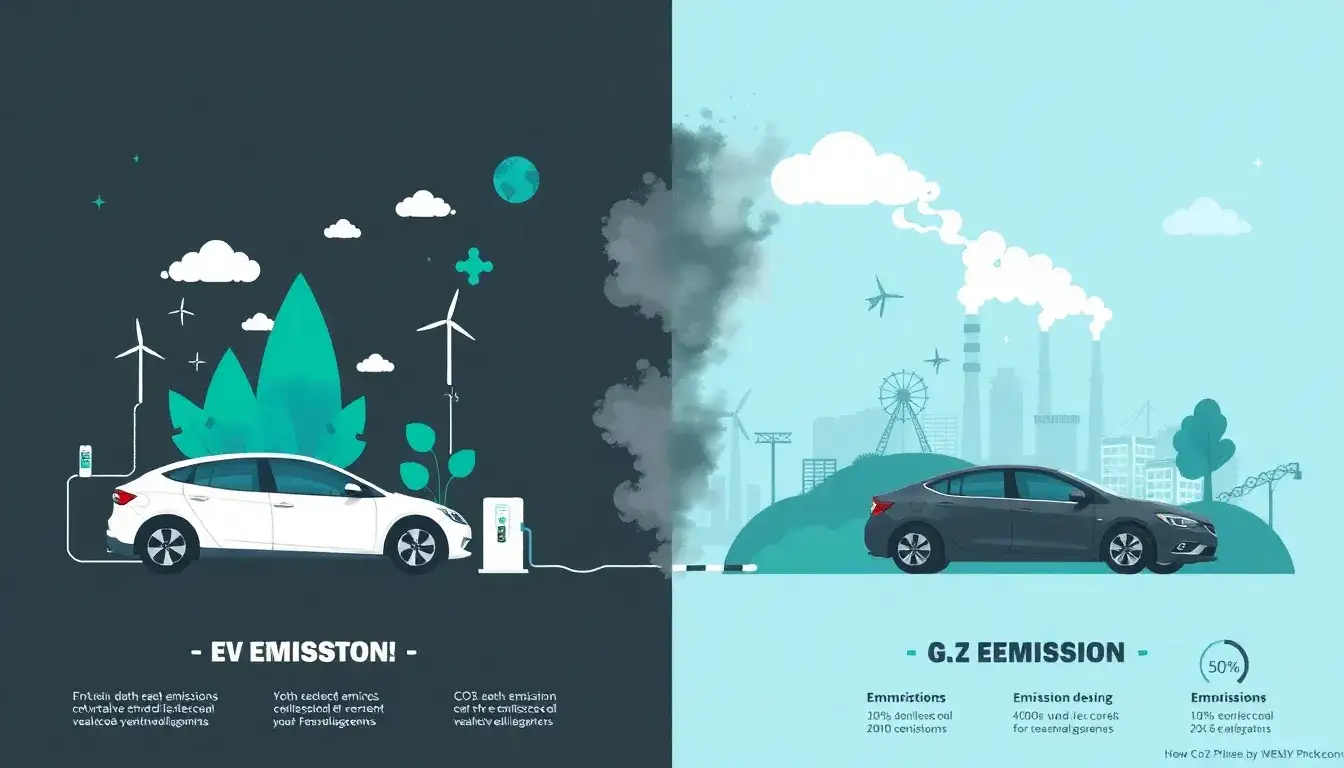
Emissions from electric vehicles (EVs) are significantly lower than those from traditional gasoline-powered cars over their entire lifecycle, despite EVs having more carbon-intensive manufacturing, particularly due to battery production.
Manufacturing Emissions:
- EVs tend to have higher emissions upfront because making their batteries involves energy-intensive processes. Gasoline cars produce less emission during manufacturing.
- However, this initial gap is quickly offset once the vehicles are in use.
Operational Emissions:
- Gasoline cars emit large amounts of CO2 through tailpipe emissions during driving.
- EVs produce zero tailpipe emissions since they run on electricity.
- The emissions related to EVs during operation come from the electricity generation used to charge them, which varies regionally depending on the power sources (coal, natural gas vs. renewables).
Lifecycle Emissions Comparison:
- Studies show EVs produce 27% to 71% less CO2 than comparable internal combustion engine (ICE) vehicles over their lifetime.
- MIT research indicates gasoline cars emit over 350 grams of CO2 per mile on average, while fully electric vehicles emit about 200 grams per mile, including manufacturing and electricity generation emissions.
- According to U.S. Department of Energy data, EVs generate around 3,932 lbs of CO2 equivalent annually compared to 11,435 lbs for gasoline cars.
- Another lifecycle assessment estimates average emissions of 410 grams CO2 per mile for gasoline cars and only 110 grams for EVs, with EVs breaking even on emissions within 1.4 to 1.9 years of driving.
Energy Efficiency:
- EVs convert about 87% to 91% of energy from their batteries to movement.
- Gasoline cars convert only 16% to 25% of the energy in gasoline into actual movement.
Conclusion:
Electric vehicles have a higher upfront emissions cost due to manufacturing but quickly surpass gasoline cars by producing far fewer emissions during their use phase. Over an average vehicle lifetime, EVs emit roughly 27-71% less CO2 and have a substantially smaller carbon footprint, even when accounting for the source of electricity used for charging. This makes EVs a cleaner and more climate-friendly transportation option than traditional gasoline-powered cars.
Original article by NenPower, If reposted, please credit the source: https://nenpower.com/blog/how-do-the-emissions-from-electric-vehicles-compare-to-those-from-traditional-gasoline-powered-cars/

