

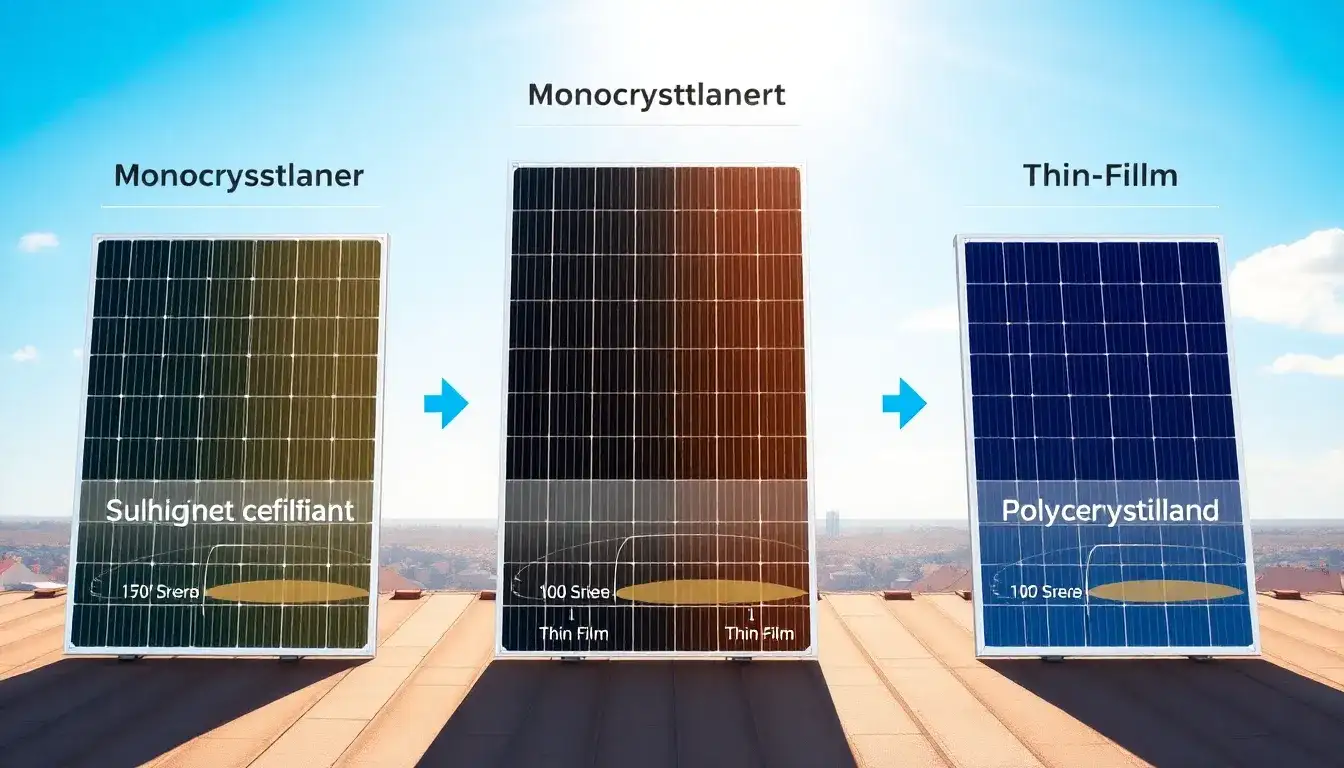
Efficiency by Solar Panel Type
- Monocrystalline Panels
- Standard (P-type PERC): 17.5–21%
- N-type (TOPcon/HJT/Back-contact): 19–24.4%
- Leading models:
- Aiko Neostar 2P (N-type BC): 24.3%
- Maxeon 7 (N-type BC): 24.1%
- Jinko Tiger Neo (TOPcon): 22.5–23.8%
- Polycrystalline Panels
- Traditional: 15–18%
- PERC-enhanced: 17–19.5%
- Status: Phased out in favor of monocrystalline due to lower efficiency.
- Thin-Film Panels
- General range: 7–13%
- Use case: Commercial/utility-scale projects where space is less constrained.
Key Technological Advances
- N-type cells (TOPcon, HJT, back-contact) dominate high-efficiency panels, surpassing older P-type designs.
- Back-contact (BC) cells eliminate front-side wiring, improving light absorption and achieving up to 24.4% efficiency.
- Temperature coefficients impact real-world performance (e.g., REC Alpha Pure: -0.24%/°C vs. Qcells: -0.3%/°C).
Market Trends
- Residential panels now average 20–23%+ efficiency, with premium models exceeding 24%.
- Manufacturer leaders: Maxeon, Aiko, Jinko, REC, and Canadian Solar.
- Cost vs. efficiency: High-efficiency panels (e.g., Maxeon at ~$3.05/W) command premiums over mid-tier options (~$2.50/W).
For limited roof space or max energy output, N-type monocrystalline panels are optimal. For larger installations prioritizing cost, standard PERC panels remain competitive.
Original article by NenPower, If reposted, please credit the source: https://nenpower.com/blog/how-do-the-efficiencies-of-different-types-of-solar-panels-compare/

