

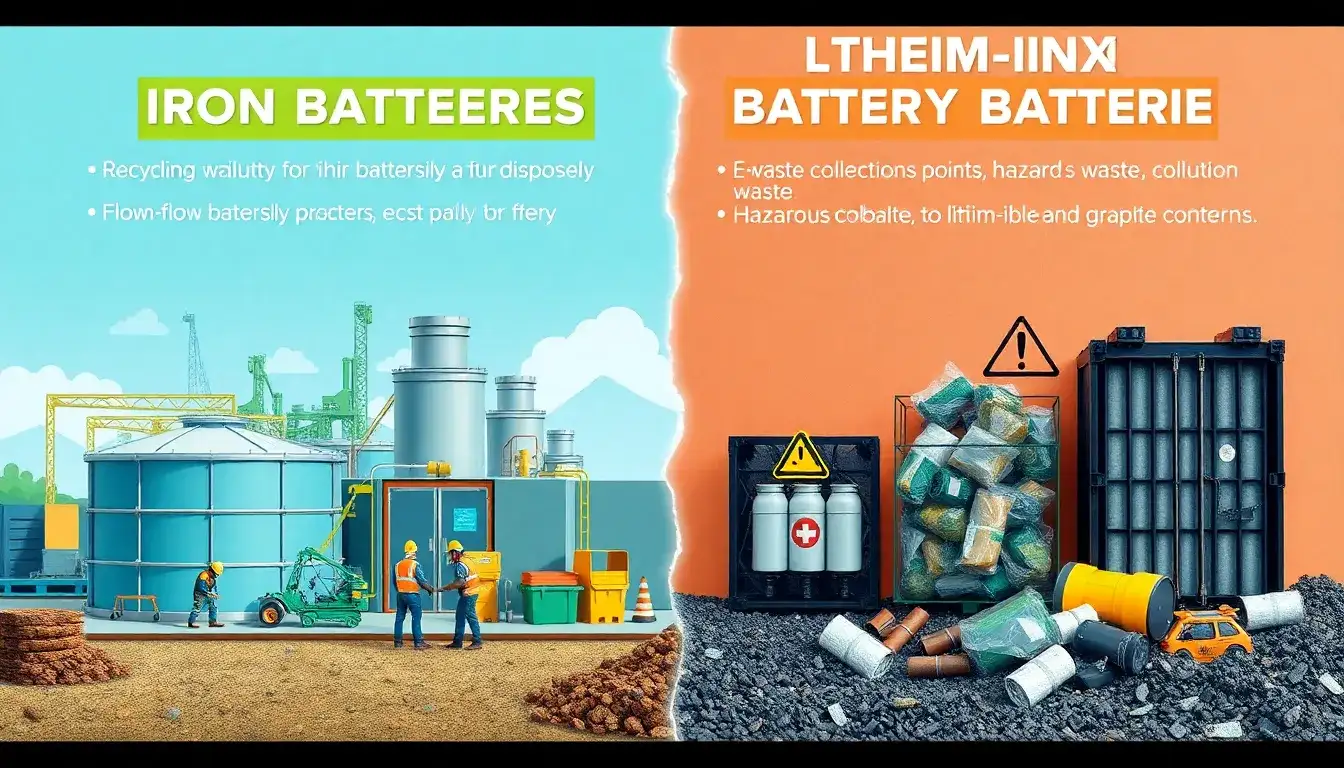
Disposal Comparison: Iron Flow Batteries vs. Lithium-ion Batteries
Iron flow batteries and lithium-ion (Li-ion) batteries differ significantly in terms of disposal options, environmental impact, and complexity.
Iron Flow Batteries
- Environmental Impact: Iron flow batteries are considered environmentally friendly due to the use of non-toxic, earth-abundant materials like iron, salt, and water. They have a lower environmental impact compared to Li-ion batteries, particularly in production and end-of-life management.
- Recyclability: These batteries are fully recyclable, allowing for easy reuse of components. The simplicity of their materials makes recycling less complex and energy-intensive compared to Li-ion batteries.
- Disposal Process: No costly or energy-intensive processes are required for recycling. The batteries can be easily dismantled, reducing handling risks and environmental hazards.
Lithium-ion Batteries
- Environmental Impact: Li-ion batteries contain critical materials such as lithium, cobalt, and graphite, which are difficult to obtain sustainably. Their production and recycling processes have a higher environmental footprint due to the need for energy-intensive smelting operations.
- Recyclability: Although Li-ion batteries can be recycled, the process is more complicated due to the variety of materials involved and the risks associated with their combustibility. Recycling these batteries requires elaborate safety measures to prevent fires.
- Disposal Process: The recycling of Li-ion batteries is complex and costly. Batteries must be carefully prepared for recycling by taping terminals to avoid fire hazards. They are classified as hazardous waste due to their chemical composition and potential for ignition.
Key Differences
- Material Toxicity: Iron flow batteries do not contain toxic materials, making them safer in disposal, while Li-ion batteries contain hazardous materials that require careful handling.
- Recycling Ease: Iron flow batteries are easier to recycle and reuse, as they can be broken down into components without the need for complex processes.
- Environmental Footprint: Iron flow batteries have a lower environmental impact throughout their life cycle compared to Li-ion batteries.
In summary, iron flow batteries offer more environmentally friendly disposal options and a simpler recycling process compared to lithium-ion batteries.
Original article by NenPower, If reposted, please credit the source: https://nenpower.com/blog/how-do-the-disposal-options-for-iron-flow-batteries-compare-to-those-of-lithium-ion-batteries/

