

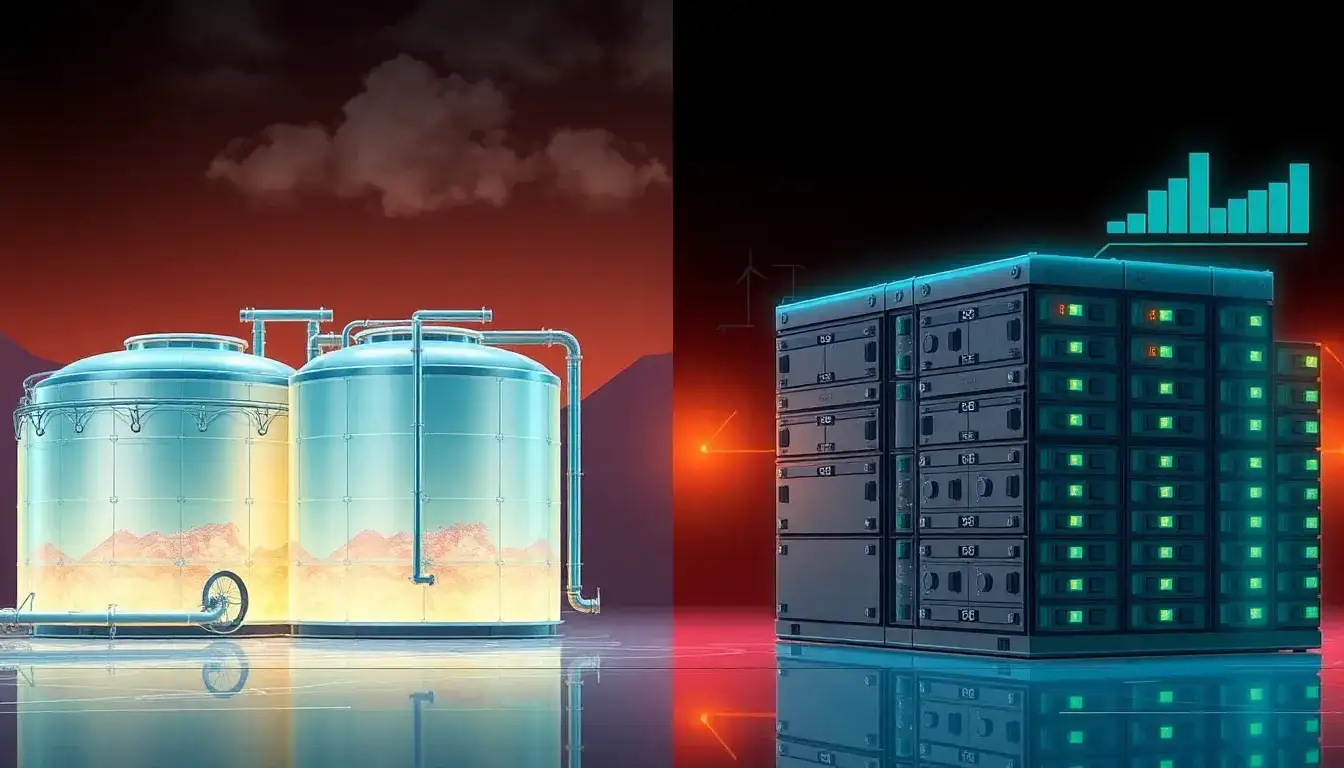
Comparison of Costs: Thermal Energy Storage vs. Lithium-Ion Batteries
Thermal Energy Storage (TES) Costs
- Capital Costs: The global average capex cost for fully installed thermal energy storage systems is approximately $232/kWh.
- Operational Costs: TES systems can offer costs as low as 5-10 cents per kWh-th for heat, depending on the specific technology and implementation.
- Savings and Efficiency: TES is particularly beneficial for long-duration energy storage, offering cost advantages over lithium-ion batteries for discharge durations exceeding eight hours.
Lithium-Ion Battery Costs
- Capital Costs: As of recent reports, lithium-ion batteries cost about $304/kWh for systems designed for four-hour discharge durations.
- Cost Trends: Lithium-ion battery prices have fallen significantly due to economies of scale, especially with the growth of electric vehicles. However, their costs remain higher than some TES technologies for long-duration applications.
- Deployment and Cost Reduction: Lithium-ion batteries have seen a 71% price drop between 2014 and 2020 in some markets.
Key Differences and Advantages
- Duration of Use: TES systems are more economical for long-duration energy storage needs, whereas lithium-ion batteries are preferred for shorter discharge periods due to their high energy density.
- Materials and Technology: TES can utilize inexpensive materials like silica sand, making it cost-effective for large-scale applications. In contrast, lithium-ion batteries are more energy-dense but rely on more expensive materials.
- Scalability and Flexibility: Both technologies have their advantages in terms of scalability and flexibility, but TES systems like particle thermal energy storage offer the flexibility to be sited anywhere without significant geographical constraints.
Conclusion
Thermal energy storage systems can be more cost-effective than lithium-ion batteries for long-duration energy storage needs, particularly due to lower capital costs and operational advantages. However, lithium-ion batteries remain superior in applications requiring high energy density and rapid response times. As technology continues to evolve, both systems will play crucial roles in integrating renewables into modern energy grids.
Original article by NenPower, If reposted, please credit the source: https://nenpower.com/blog/how-do-the-costs-of-thermal-energy-storage-systems-compare-to-those-of-lithium-ion-batteries/

