

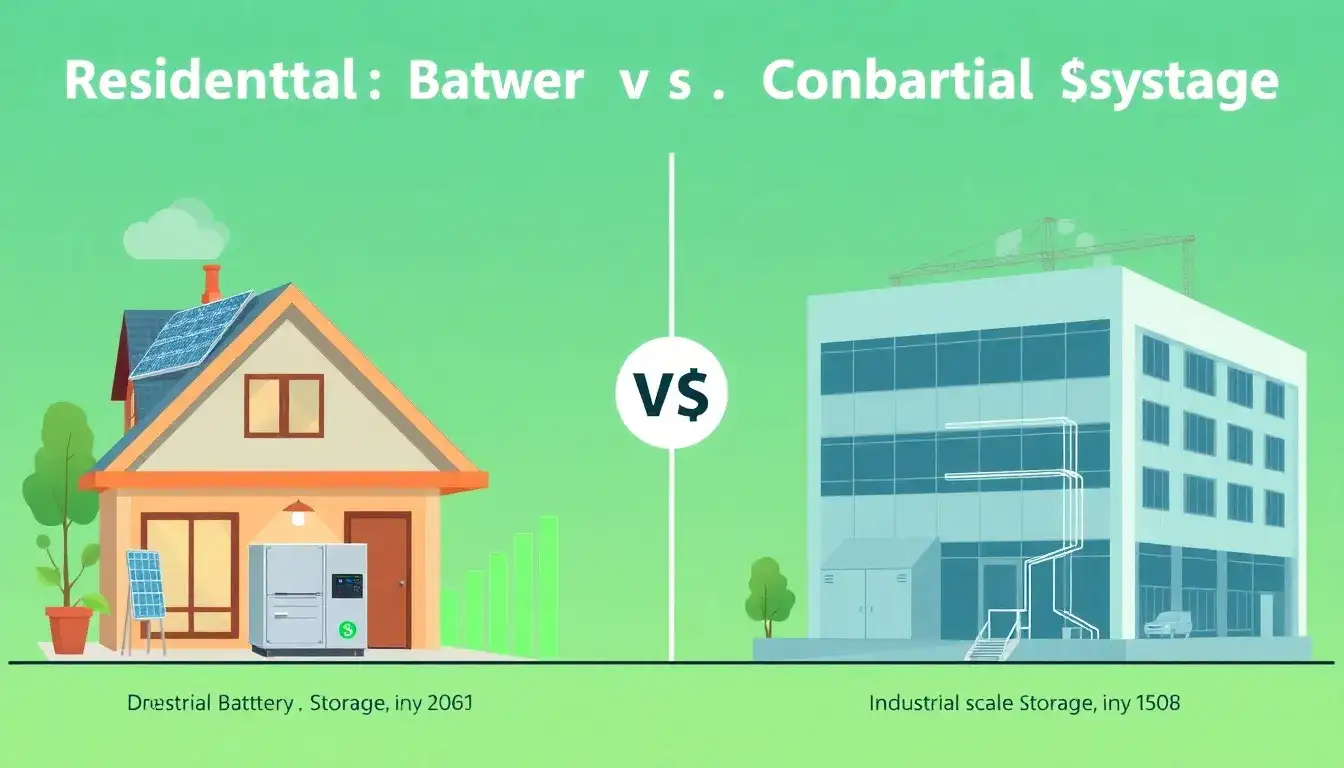
Comparing the costs of residential and commercial battery storage systems involves several factors, including size, technology, and installation complexity. Here’s an overview of both:
Residential Battery Storage Systems
- Cost: Residential systems typically range from $6,000 to $18,000 for a standard installation, with prices averaging about $1,300 per kWh before incentives. After applying the 30% federal tax credit, the cost can be closer to $1,000 per kWh.
- Size: Common sizes range from 5 to 40 kWh, depending on household energy needs.
- Features: Residential batteries often have integrated inverters, and some may include smart features for load management.
- Incentives: Homeowners can benefit from federal tax credits and local rebates.
Commercial Battery Storage Systems
- Cost: The cost for commercial systems is generally higher due to larger storage capacities required and complexity in installation. For commercial use, batteries often cost more per kWh compared to residential due to economies of scale in larger sizes and customized solutions.
- Size: Commercial systems can be significantly larger, often in the range of tens of kWh to MWh, tailored to meet the energy demands of businesses or facilities.
- Features: Commercial systems might include advanced control systems, high-power inverters, and integration with building management systems.
- Incentives: Commercial entities may benefit from larger tax credits and utility incentives, as well as participation in demand response programs.
In summary, while residential systems are more standardized and benefit from federal tax credits, commercial systems are larger, more complex, and tailored to specific business needs.
Key Comparison Points
| Feature | Residential Systems | Commercial Systems |
|---|---|---|
| Cost | $1,000-$1,300 per kWh (after incentives) | Higher due to complexity and scale |
| Size | 5-40 kWh | Tens of kWh to MWh |
| Incentives | Federal tax credits, local rebates | Larger tax credits, utility incentives, demand response |
| Features | Integrated inverters, smart features | Advanced control systems, high-power inverters |
| Installation Complexity | Less complex, standard installations | More complex, customized for specific needs |
Overall, residential systems are more accessible and standardized, while commercial systems are more specialized and generally more expensive due to their larger size and complexity.
Original article by NenPower, If reposted, please credit the source: https://nenpower.com/blog/how-do-the-costs-of-residential-battery-storage-systems-compare-to-commercial-systems/

