

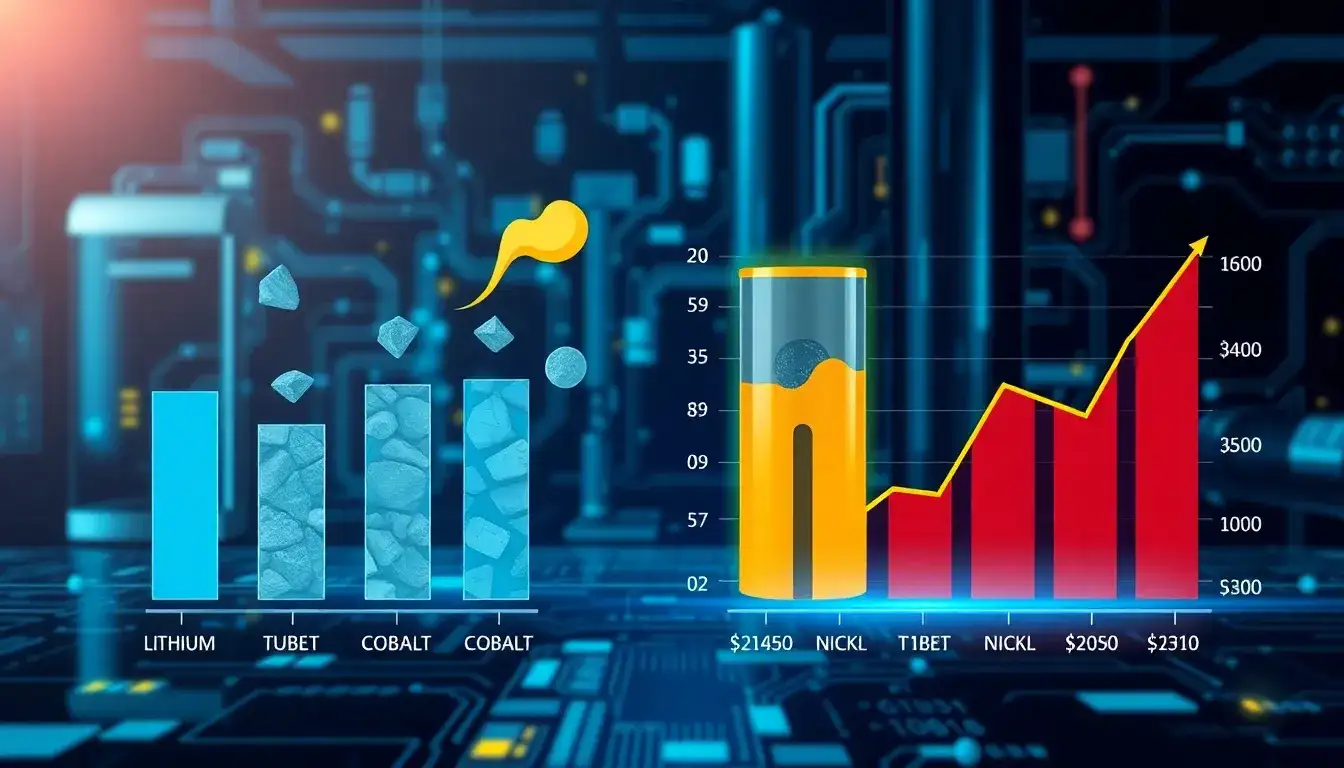
Impact of Raw Materials on Lithium-Ion Battery Costs
- Lithium: Lithium is a key component in lithium-ion batteries. Its price can fluctuate greatly, and recent drops in lithium prices, such as the decrease from $70,000 to $11,000 per tonne of lithium carbonate, have significantly influenced battery costs.
- Cobalt: Cobalt is another crucial element, particularly for nickel-manganese-cobalt (NMC) battery chemistries. Cobalt’s fluctuating prices, with a historical spread of nearly 300%, have a substantial impact on lithium-ion battery costs due to its role in cathode active materials (CAM).
- Nickel: Nickel sulfate prices also impact lithium-ion battery costs, especially in NMC batteries. While nickel’s price fluctuations have been less volatile compared to lithium and cobalt, it plays a significant role in determining overall battery costs.
- Cost Contribution:
- Cathode Active Materials (CAM): Often the largest cost component (29% to 51% depending on battery chemistry), driven by materials like lithium, cobalt, and nickel.
- Anode Materials: Typically 8% to 12% of the total cost, with graphite being the most common material used.
- Other Components: The electrolyte, separator, and packaging materials also contribute to the overall cost but have smaller impacts compared to active materials.
Factors Influencing Battery Prices
- Supply and Demand: Geopolitical factors, supply chain dynamics, and market demand can cause fluctuations in raw material prices, affecting battery costs.
- Manufacturing Costs: Economies of scale, improved manufacturing processes, and the adoption of lower-cost chemistries like lithium iron phosphate (LFP) contribute to reduced battery prices.
- Geographical Differences: Regional differences in production costs and economies of scale significantly affect battery pack prices. For instance, China has notably lower prices compared to the U.S. and Europe.
Recent Price Trends
- Decline in Raw Material Costs: Recent drops in lithium, cobalt, and nickel prices have contributed significantly to lowering battery costs, with average pack prices dropping to $115 per kWh as of late 2024.
- Adoption of LFP Chemistry: The increased use of LFP batteries, which do not contain nickel or cobalt, is helping reduce average battery costs. LFP is gaining market share due to its lower material costs.
Overall, the impact of raw material costs on lithium-ion battery prices is substantial and influenced by a variety of factors including supply chain dynamics, geopolitical tensions, and technological advancements in manufacturing processes.
Original article by NenPower, If reposted, please credit the source: https://nenpower.com/blog/how-do-the-costs-of-raw-materials-like-lithium-cobalt-and-nickel-impact-the-overall-price-of-lithium-ion-batteries/

