

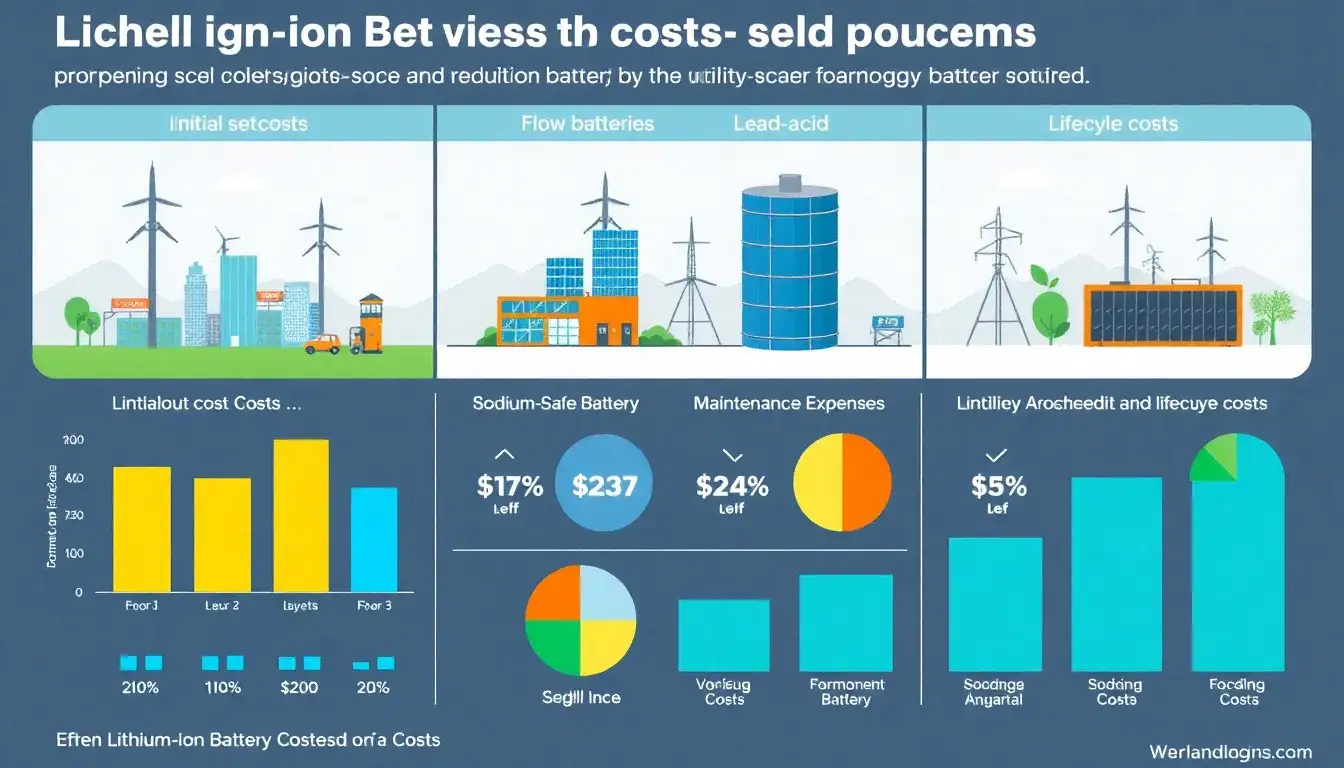
Comparison of Lithium-ion Batteries with Other Technologies for Utility-Scale Applications
Utility-scale battery storage is critical for integrating renewable energy sources into the grid, as it helps stabilize energy supply by storing excess energy produced during periods of high generation and releasing it when needed. Let’s compare the costs and characteristics of lithium-ion batteries with other battery technologies for utility-scale applications.
Lithium-ion Batteries (LIBs)
- Cost: The cost of lithium-ion batteries for large-scale applications ranges from $100 to $300 per kilowatt-hour (kWh). Utility-scale lithium-ion battery systems are projected to cost between $159/kWh and $380/kWh by 2050, depending on the scenario.
- Advantages:
- High energy density and efficiency.
- Long lifespan (typically over 10 years).
- Wide availability and established manufacturing infrastructure.
- Disadvantages: Require additional safety measures due to thermal risks.
Redox Flow Batteries
- Cost: Generally higher than lithium-ion on a per kWh basis initially but may offer lower costs over longer durations due to scalability in capacity without needing additional power conversion equipment.
- Advantages:
- Scalable energy storage capacity without significant increases in power electronics costs.
- Long-duration energy storage capabilities.
- Disadvantages: More complex systems, lower energy density compared to LIBs.
Lead Acid Batteries
- Cost: Generally cheaper upfront, but life cycles are shorter and efficiency is lower compared to lithium-ion.
- Advantages:
- Lower initial investment.
- Established recycling infrastructure.
- Disadvantages: Short lifespan, lower efficiency, and lower energy density.
Pumped Hydro Storage (PHS) and Compressed Air Energy Storage (CAES)
- Cost: These technologies are not batteries but alternative energy storage methods. They offer low costs per kWh but are location-dependent and have high upfront capital costs.
- Advantages:
- High storage capacity and long durations.
- Lower operational costs.
- Disadvantages: Geographic limitations, high upfront costs, and significant environmental impact.
Summary
| Technology | Cost Range (per kWh) | Key Advantages | Key Disadvantages |
|---|---|---|---|
| Lithium-ion | $100-$300 | High energy density, long lifespan, wide availability | Thermal risks, higher overall system cost |
| Redox Flow | Higher upfront, scalable | Scalable capacity, long duration, flexible | Complex systems, lower energy density |
| Lead Acid | Lower upfront | Lower initial cost, established recycling | Short lifespan, lower efficiency |
| PHS & CAES | Not applicable (alternative methods) | High capacity, low operational costs | Geographic limitations, high upfront costs |
In summary, while lithium-ion batteries are dominant due to their cost reductions and performance improvements, other technologies like redox flow batteries offer advantages for specific applications requiring long-duration energy storage. Pumped hydro and compressed air energy storage are viable for large-scale capacity but face geographical and environmental challenges.
Original article by NenPower, If reposted, please credit the source: https://nenpower.com/blog/how-do-the-costs-of-lithium-ion-batteries-for-utility-scale-applications-compare-to-other-battery-technologies/

