

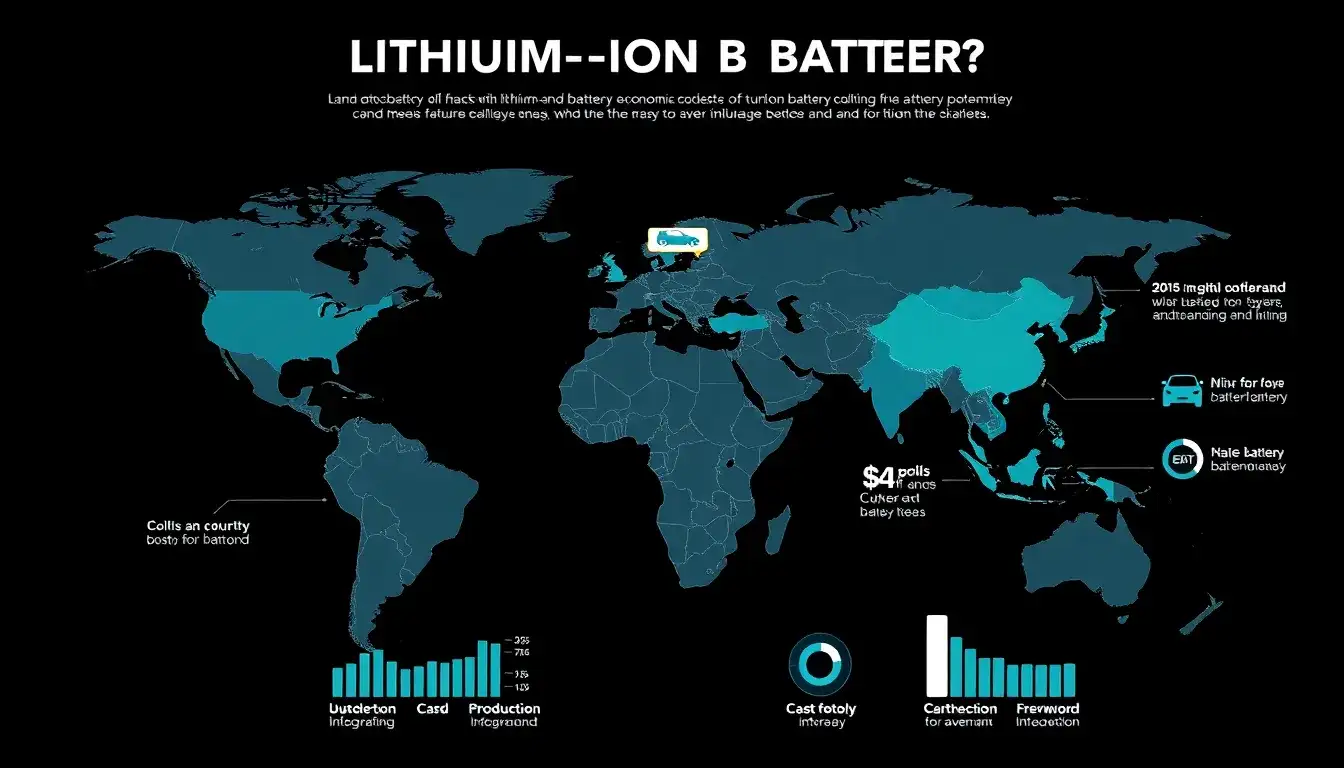
The costs of lithium-ion batteries differ significantly between regions due to factors such as production costs, local policies, market maturity, and the level of localization in manufacturing.
Regional Price Differences
- China consistently has the lowest lithium-ion battery pack prices, with average costs reported at about $126/kWh in 2023, dropping further to $94/kWh by early 2025. This is largely due to high localization of production, lower raw material costs, intense domestic competition, and larger manufacturing scale. The Chinese market benefits from cheaper battery materials and more mature production infrastructure, allowing prices to be notably lower than elsewhere.
- United States and Europe have substantially higher prices. In 2023, U.S. battery pack prices were about 11% higher than China’s, while European prices were roughly 20% higher. By 2024-2025, these disparities increased, with prices in the U.S. and Europe about 31% and 48% higher than China’s, respectively. The higher prices in these regions stem from less mature markets, higher production costs, smaller volumes, and the need to scale up local manufacturing industries.
Reasons for Price Variations
- Production Costs and Scale: China’s battery industry benefits from larger-scale production and more localized supply chains, cutting costs. Western markets have smaller production bases with higher overheads and labor costs.
- Policy and Incentives: Local government policies affect prices. For example, the U.S. Inflation Reduction Act offers a $45/kWh production tax credit, which helps offset some costs but does not entirely close the price gap with China.
- Raw Material Prices: While raw material costs (lithium, cobalt, nickel) affect prices globally, China’s manufacturing efficiencies and supply chain integration help mitigate these impacts more effectively, contributing to lower prices.
- Market Maturity and Competition: The Chinese market has fierce competition among battery manufacturers, pushing prices down aggressively. In contrast, U.S. and European markets are still developing, with fewer players and less intense price competition.
Summary Table
| Region | Approximate Battery Pack Price (per kWh) | Price Compared to China | Key Factors |
|---|---|---|---|
| China | $94 – $126 | Baseline | High localization, large scale, competitive market, lower raw material costs |
| United States | ~$140 – 165 (31%+ higher than China) | +31% or more | Immature market, higher production costs, lower volume, policy incentives partially offset costs |
| Europe | ~$185 – 190 (48%+ higher than China) | +48% or more | Immature market, higher labor and production costs, scaling manufacturing |
Battery prices are expected to continue falling worldwide but with China maintaining a clear cost advantage due to its manufacturing ecosystem and scale advantages.
In conclusion, lithium-ion battery prices are notably lower in China compared to the US and Europe due to factors including production scale, market maturity, local policies, and supply chain efficiencies. The US and Europe face higher costs but have policy support like tax credits to help reduce prices as their industries scale up.
Original article by NenPower, If reposted, please credit the source: https://nenpower.com/blog/how-do-the-costs-of-lithium-ion-batteries-differ-between-different-regions-or-countries/

