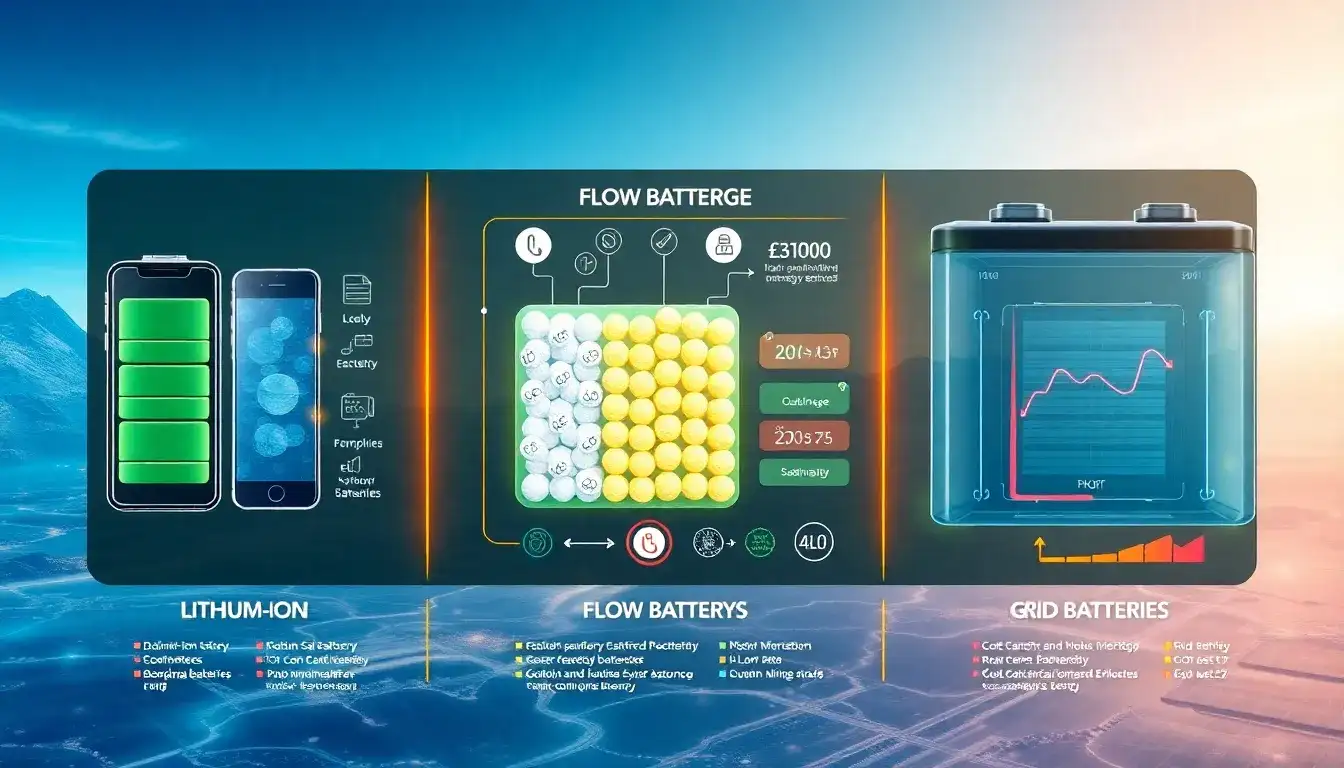
Comparing the costs of lithium-ion batteries with sodium-sulphur and flow batteries provides insights into their economic viability and suitability for various applications.
Lithium-Ion Batteries
- Cost Range: Lithium-ion battery costs vary from approximately $40 to $140 per kilowatt-hour (kWh), depending on the chemistry, geography, and specific application.
- Advantages: High energy density, long cycle life, and rapid charging capabilities make them ideal for electric vehicles and portable electronics.
- Disadvantages: High upfront costs, safety concerns, and environmental impact from mining and disposal.
Sodium-Sulphur Batteries
- Cost Range: Sodium-sulphur (NaS) batteries are generally more expensive on a per kWh basis compared to lithium-ion batteries, but they offer advantages in long-duration energy storage.
- Advantages: High efficiency, long lifespan, and ability to operate at high temperatures, making them suitable for grid-scale energy storage applications.
- Disadvantages: Lower energy density compared to lithium-ion batteries and specific temperature requirements for operation.
Flow Batteries
- Cost Range: Flow batteries are competitive with sodium-sulphur batteries for long-duration energy storage, with costs that can be lower on a per kWh basis for longer discharge times.
- Advantages: Scalable energy storage capacity, long cycle life, and minimal degradation over time, making them suitable for grid-scale energy storage.
- Disadvantages: Lower power density, complex system design, and typically higher upfront costs compared to lithium-ion batteries.
Comparison Summary
| Battery Technology | Cost Range | Energy Density | Advantages | Disadvantages |
|---|---|---|---|---|
| Lithium-Ion | $40-$140/kWh | High | Portable electronics and EVs, rapid charging | High upfront, safety concerns |
| Sodium-Sulphur | Higher than Li-ion | Medium | Grid-scale storage, high efficiency | Lower energy density, specific temp requirements |
| Flow Batteries | Competitive with NaS | Low | Scalable, long-lasting, grid-scale storage | Lower power density, complex design |
In summary, lithium-ion batteries are more economical for portable applications, while sodium-sulphur and flow batteries are more suited for grid-scale energy storage due to their ability to handle long-duration storage efficiently. However, sodium-sulphur batteries are less commonly used due to operational complexities. Flow batteries offer scalability and long cycle life, making them a promising technology for future energy storage needs.
Original article by NenPower, If reposted, please credit the source: https://nenpower.com/blog/how-do-the-costs-of-lithium-ion-batteries-compare-to-other-battery-technologies-like-sodium-sulphur-and-flow-batteries/