

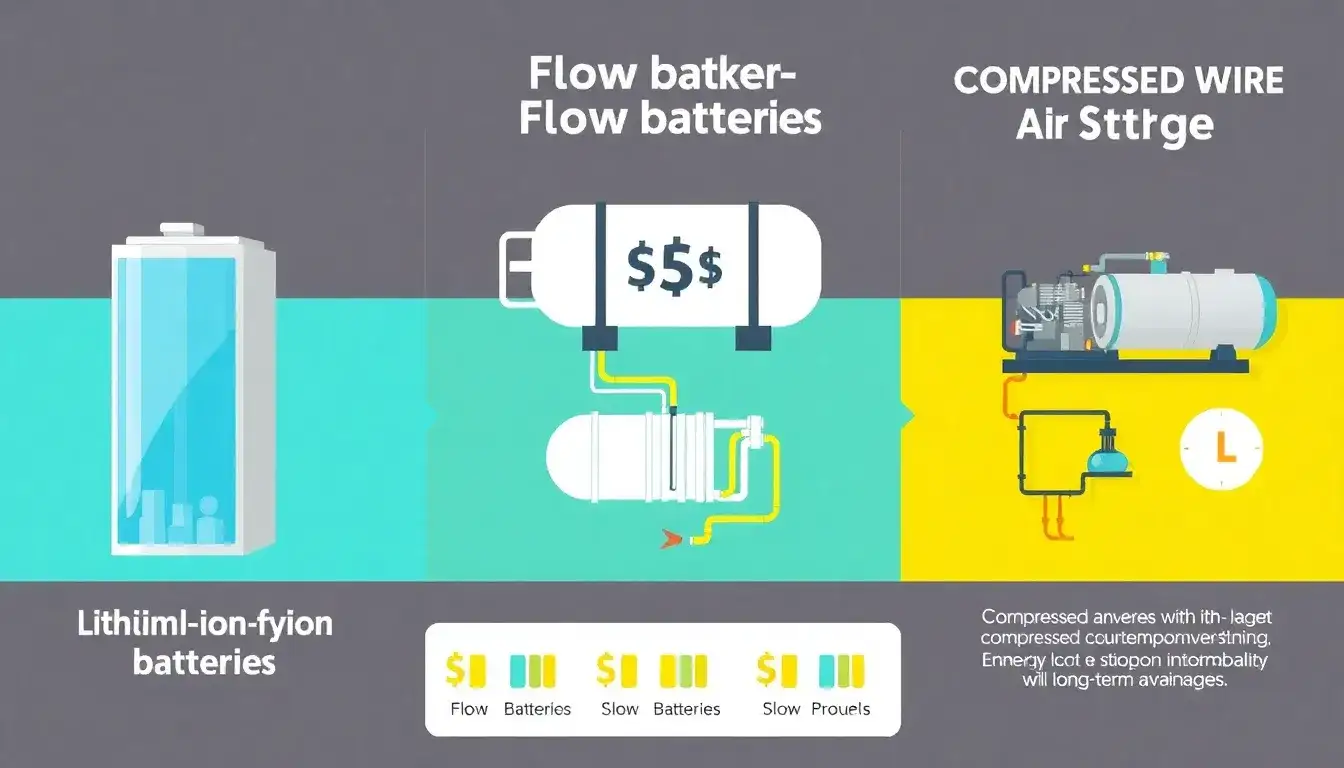
Comparing the costs of lithium-ion batteries to other storage technologies
Comparing the costs of lithium-ion batteries to other storage technologies like flow batteries and compressed air storage can provide insights into their economic viability. Here’s an overview of each:
Lithium-Ion Batteries
- Cost: The cost of lithium-ion batteries has been decreasing significantly. In 2024, the global average price was around $115 per kWh, with prices dropping below $100 per kWh for electric vehicle applications.
- Advantages: Lithium-ion batteries offer high energy density, long cycle life, and are widely used in portable electronics and electric vehicles.
- Disadvantages: They are more expensive than some other battery chemistries like lead-acid, though prices have been dropping rapidly.
Flow Batteries
- Cost: Flow batteries typically have higher upfront costs compared to lithium-ion batteries but can be more cost-effective over long durations due to their scalability and potentially longer lifetimes. The cost can range from $200 to over $400 per kWh, depending on the specific chemistry and scale of deployment.
- Advantages: Flow batteries are ideal for long-duration energy storage, which makes them suitable for grid-scale applications, and they can offer thousands of cycles without significant degradation.
- Disadvantages: Their energy density is lower compared to lithium-ion batteries, which may require more space for the same amount of stored energy.
Compressed Air Energy Storage (CAES)
- Cost: CAES systems are generally less expensive than both lithium-ion and flow batteries in terms of cost per kWh of stored energy. The cost can range from $30 to $150 per kWh for the energy stored, depending on the scale and location.
- Advantages: CAES is efficient for large-scale energy storage and can offer significant economies of scale, making it suitable for grid-scale applications.
- Disadvantages: CAES requires suitable geography (like underground caverns) to store compressed air effectively, limiting its deployment locations.
Comparison Summary
| Technology | Cost per kWh | Advantages | Disadvantages |
|---|---|---|---|
| Lithium-Ion | $115 (down to $97 for EVs) | High energy density, wide adoption | Relatively high cost initially |
| Flow Batteries | $200-$400 | Scalable, long cycle life, suitable for grid-scale | Higher upfront cost, less energy-dense |
| CAES | $30-$150 | Economical for large-scale storage, suitable for grid-scale | Limited by geography, lower efficiency |
In summary, while lithium-ion batteries have seen significant price drops and are widely used, flow batteries and compressed air storage offer alternatives with different advantages, especially for long-duration or large-scale energy storage applications.
Original article by NenPower, If reposted, please credit the source: https://nenpower.com/blog/how-do-the-costs-of-lithium-ion-batteries-compare-to-other-battery-technologies-like-flow-batteries-or-compressed-air-storage/

