

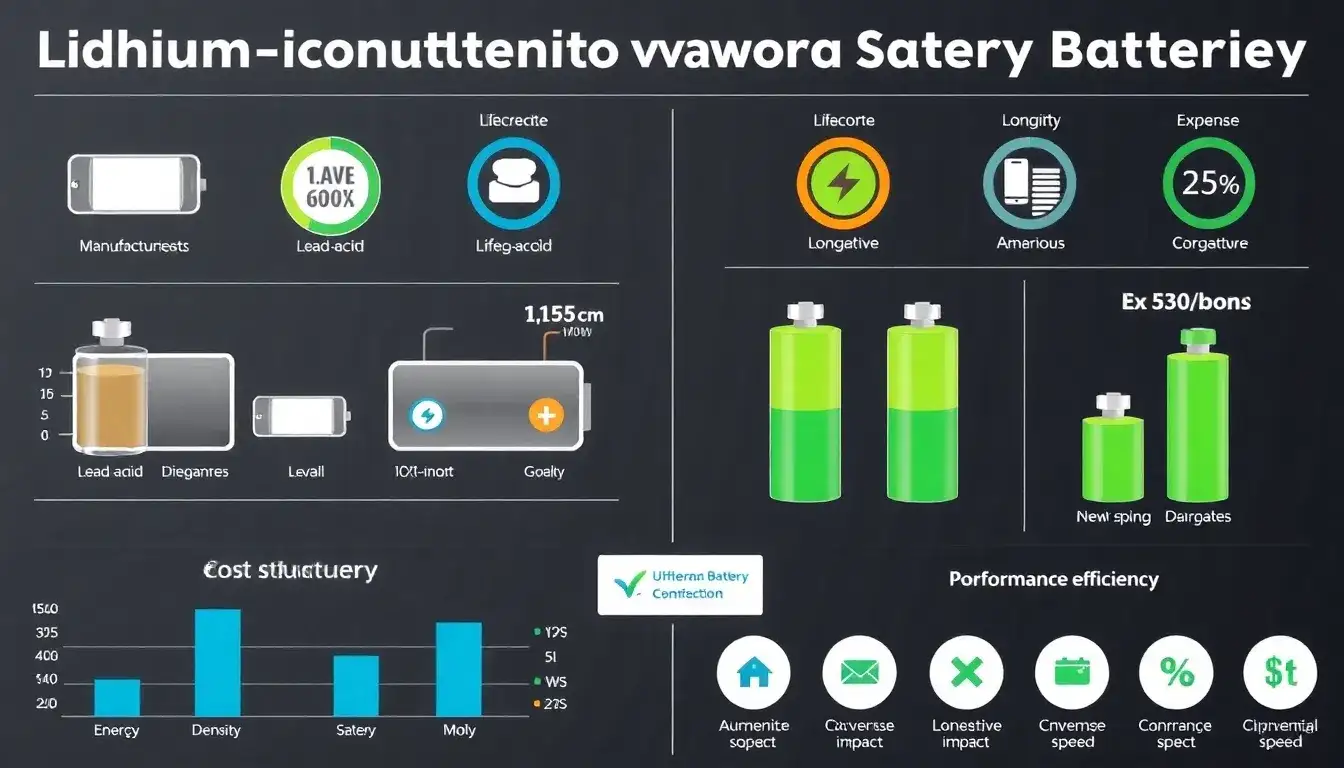
The cost of lithium-ion batteries compared to other battery technologies, such as lead-acid batteries, can be understood by examining both the initial purchase price and the long-term cost of ownership.
Lithium-Ion vs. Lead-Acid Batteries
- Initial Purchase Price: Lithium-ion batteries are generally more expensive than lead-acid batteries. For example, an average lithium-ion battery costs around $151 per kWh, while lead-acid batteries are cheaper upfront but require more frequent replacement and maintenance.
- Total Cost of Ownership: Despite the higher upfront cost, the total cost of ownership per usable kWh is about 2.8 times cheaper for lithium-ion batteries compared to lead-acid batteries. This is due to lithium-ion batteries’ higher energy density and longer lifespan, which lead to lower transportation and maintenance costs over time.
Cost Variability in Lithium-Ion Batteries
- Chemistry: The cost of lithium-ion batteries can vary significantly depending on the chemistry, such as lithium iron phosphate (LFP) versus nickel-manganese-cobalt oxide (NMC). For instance, LFP batteries are generally cheaper than NMC batteries.
- Geographical Factors: Prices also vary by region, with the lowest costs often found in China, where prices have been reported as low as $126/kWh.
- Recent Trends: The cost of lithium-ion batteries has been decreasing over time. As of 2024, these batteries have reached a price of approximately $115/kWh.
Overall, while lithium-ion batteries might have a higher initial cost, their efficiency and longevity often make them a more economical choice in the long term compared to lead-acid batteries.
Original article by NenPower, If reposted, please credit the source: https://nenpower.com/blog/how-do-the-costs-of-lithium-ion-batteries-compare-to-other-battery-technologies-2/

