

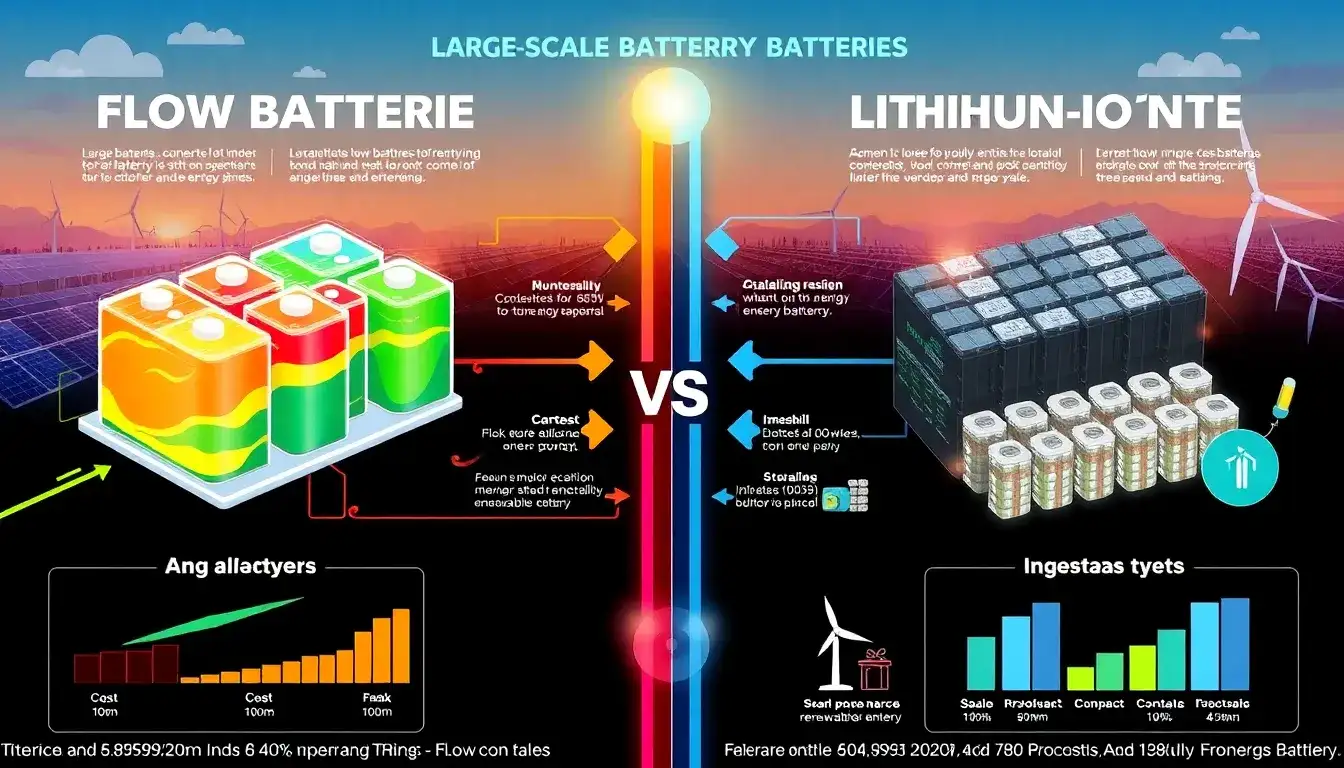
Key Differences in Costs
Initial Cost Per kWh
- Flow Batteries: The initial cost per kWh for flow batteries is typically higher, ranging from $200 to $500. This is largely due to the complexity of the technology and the cost of materials like vanadium or iron.
- Lithium-Ion Batteries: The cost for lithium-ion batteries is generally lower, typically ranging from $100 to $300 per kWh. However, costs can vary depending on the specific chemistry and brand.
Long-Term Costs and Efficiency
- Flow Batteries: Despite the higher initial cost, flow batteries offer a longer lifespan (often exceeding 20 years) and can handle over 10,000 charge cycles with minimal degradation. Their cost-effectiveness increases over time due to lower maintenance and replacement needs.
- Lithium-Ion Batteries: These batteries have a shorter lifespan (typically 5 to 10 years) and may only endure 500 to 1,500 charge cycles before significant capacity loss occurs. While they are more affordable upfront, their shorter lifespan may lead to higher costs in the long run.
Scalability and Performance Costs
- Flow Batteries: As flow batteries scale, their cost per unit of electricity can decrease because larger electrolyte tanks can be added relatively inexpensively. They are ideal for long-duration energy storage (up to 10 hours or more).
- Lithium-Ion Batteries: Lithium-ion batteries become more expensive as they scale due to the higher cost of cathode materials needed for larger capacities.
Cost Per kWh for Discharge Over Time
- Flow Batteries: According to the US Department of Energy, flow batteries can achieve a cost as low as $0.06/kWh, making them competitive for long-duration energy storage.
- Lithium-Ion Batteries: Lithium-ion batteries have a cost of about $0.07/kWh for this purpose.
Summary
While lithium-ion batteries are generally more affordable upfront, flow batteries can become more cost-effective over time due to their long lifespan and scalability advantages. For large-scale energy storage where durability and long discharge times are crucial, flow batteries may offer better value despite their higher initial costs. However, lithium-ion batteries remain a competitive choice due to their higher energy density and lower upfront costs, especially for applications needing rapid charge/discharge cycles.
Original article by NenPower, If reposted, please credit the source: https://nenpower.com/blog/how-do-the-costs-of-flow-batteries-compare-to-those-of-lithium-ion-batteries-for-large-scale-energy-storage/

