

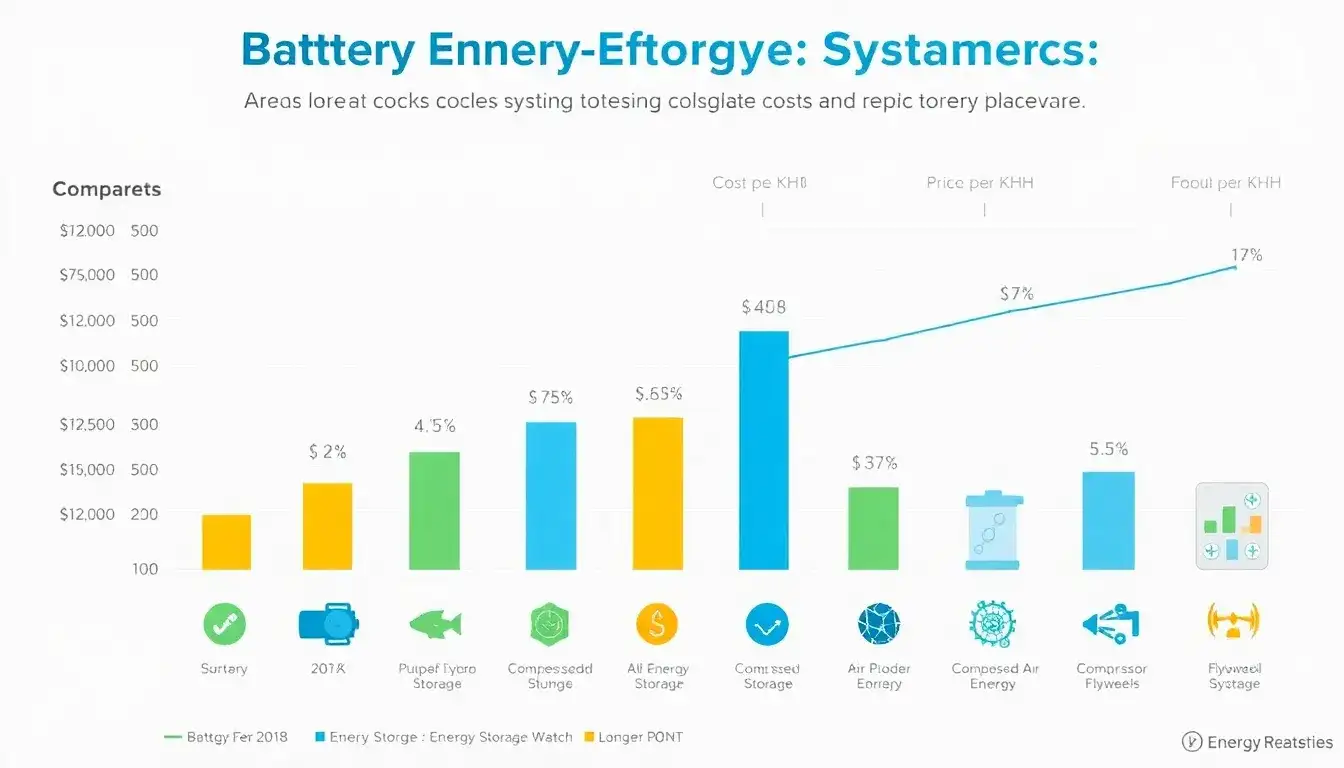
The costs of Battery Energy Storage Systems (BESS), primarily using lithium-ion batteries, are compared to other energy storage technologies below.
Comparison Overview
-
Battery Energy Storage Systems (BESS):
- Cost: The average cost of BESS ranges from $400 to $600 per kWh.
- Advantages: Li-ion batteries are widely used due to their efficiency and long lifespan, though they are more expensive than some alternatives.
- Trends: Costs have decreased significantly due to advancements in technology and economies of scale. However, the rate of cost reduction is expected to slow in some scenarios.
-
Thermal Energy Storage:
- Cost: Thermal energy storage systems have an average capex cost of $232/kWh, which is lower than lithium-ion for certain durations.
- Advantages: They can store energy for long durations at lower costs. However, these systems are less mature in many markets compared to lithium-ion.
-
Compressed Air Energy Storage:
- Cost: Compressed air storage has a capex cost of $293/kWh.
- Advantages: Offers competitive pricing for long-duration storage, especially in regions like China where it is heavily developed.
-
Flow Batteries:
- Cost: Flow batteries are more expensive than lithium-ion in some markets, though they offer advantages for long-duration applications.
- Advantages: Can store energy for longer durations, making them suitable for applications requiring hours or days of storage.
-
Pumped Hydro Storage:
- Cost: Though not as portable, pumped hydro is very cost-effective for large-scale energy storage applications, especially in suitable geographies.
- Advantages: Offers high energy storage capacity and is particularly effective for grid stability over long durations.
Key Points
- Lithium-ion BESS remains a dominant choice due to its established supply chain and rapid cost decline, despite being more expensive than some alternatives for long-duration storage.
- Thermal and compressed air storage are emerging as cost-effective options for long-duration applications, particularly where policy support exists.
- Economies of Scale: Larger systems, especially utility-scale, benefit from lower costs per unit due to bulk purchasing and optimized installation.
In summary, while BESS using lithium-ion batteries offers versatility and a well-established supply chain, other technologies like thermal and compressed air storage are becoming competitive, especially for long-duration needs and where specific conditions favor their deployment.
Original article by NenPower, If reposted, please credit the source: https://nenpower.com/blog/how-do-the-costs-of-battery-energy-storage-systems-bess-compare-to-other-energy-storage-technologies/

