

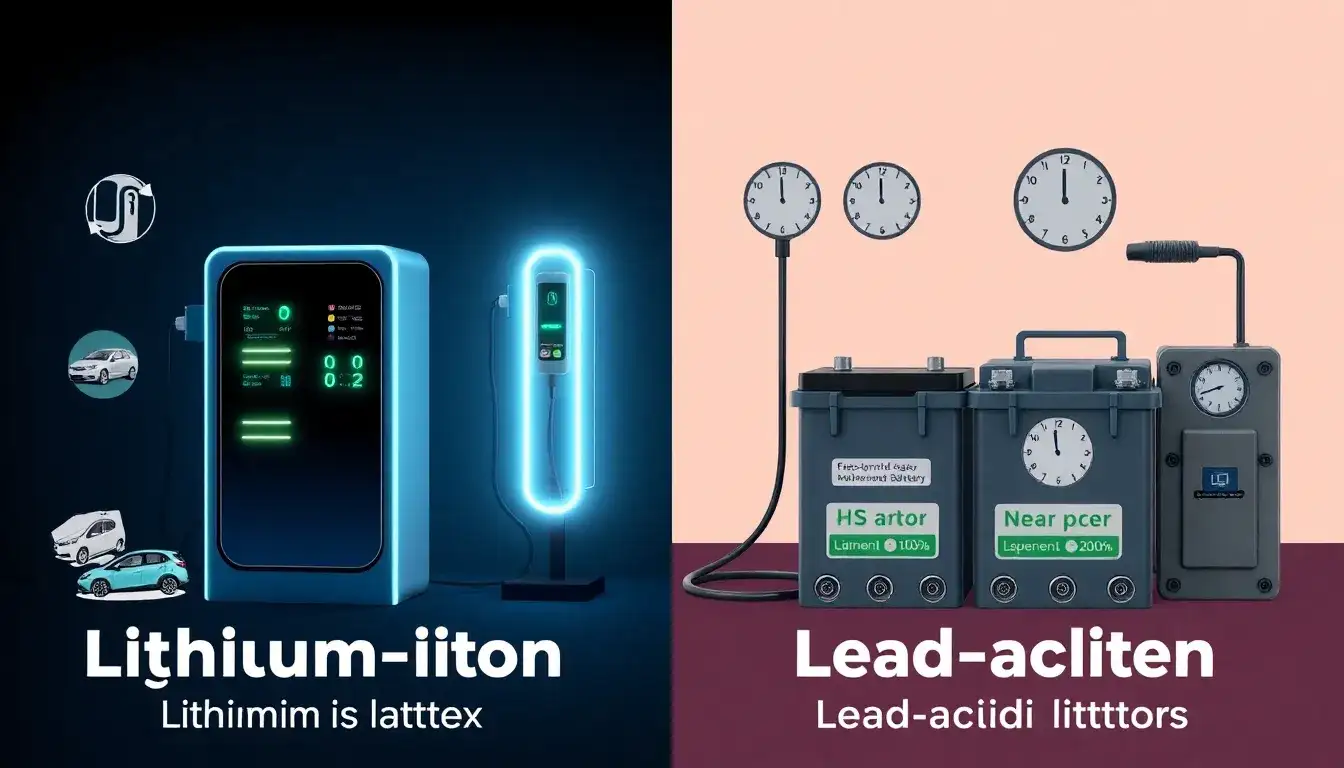
Lithium-ion Battery Charging Times
- Lithium-ion batteries typically charge at rates between 0.5C and 1C, meaning they can be charged in about 2 to 3 hours under optimal conditions. For example, a lithium-ion battery charged at 1C can theoretically reach full charge in about one hour.
- The charging process consists of two stages: a constant current (CC) phase until a specified voltage threshold is reached, then a constant voltage (CV) phase where current gradually decreases until the battery is fully charged. The full charge occurs when the current drops to a set cut-off level.
- Practical charge times depend on the battery capacity and charger current. For instance, a 100Ah lithium battery charged at 20A would take about 5 hours (100Ah/20A), but smart chargers automatically adjust charging rates and switch to maintenance mode after full charge.
- Some sources note that if charging at a lower current (e.g., 500mA for a 1800mAh battery), the charge time can be around 5 to 6 hours, accounting for inefficiencies and safety factors.
Lead-acid Battery Charging Times
- While the search results do not provide specific numbers for lead-acid charging times, it is well established that lead-acid batteries generally require longer charging times compared to lithium-ion batteries at similar capacities.
- Lead-acid batteries typically require slow charging to avoid damage (often at C/10 to C/20 rates), resulting in charging times around 8 to 12 hours to reach full charge.
- They also require a bulk charge phase followed by an absorption phase where voltage is held constant and current tapers off slowly, which extends charge time compared to lithium-ion batteries.
Comparative Summary
| Aspect | Lithium-ion Batteries | Lead-acid Batteries |
|---|---|---|
| Typical Charge Rate | 0.5C to 1C (fast charging) | Typically C/10 or slower |
| Typical Full Charge Time | 2 to 5 hours (depending on capacity and current) | 8 to 12 hours or more |
| Charging Method | CC-CV with current taper | Bulk, absorption, and float stages |
| Charging Efficiency | High (less energy loss, faster) | Lower (more energy loss, slower) |
In summary, lithium-ion batteries can charge significantly faster than lead-acid batteries due to their ability to safely accept higher charging currents and their more efficient CC-CV charging profile. Lead-acid batteries require slower charging to avoid damage and maintain longevity, thus resulting in longer charge times. This makes lithium-ion preferable in applications where quick recharge is important.
Original article by NenPower, If reposted, please credit the source: https://nenpower.com/blog/how-do-the-charging-times-of-lithium-ion-batteries-compare-to-lead-acid-batteries-2/

