

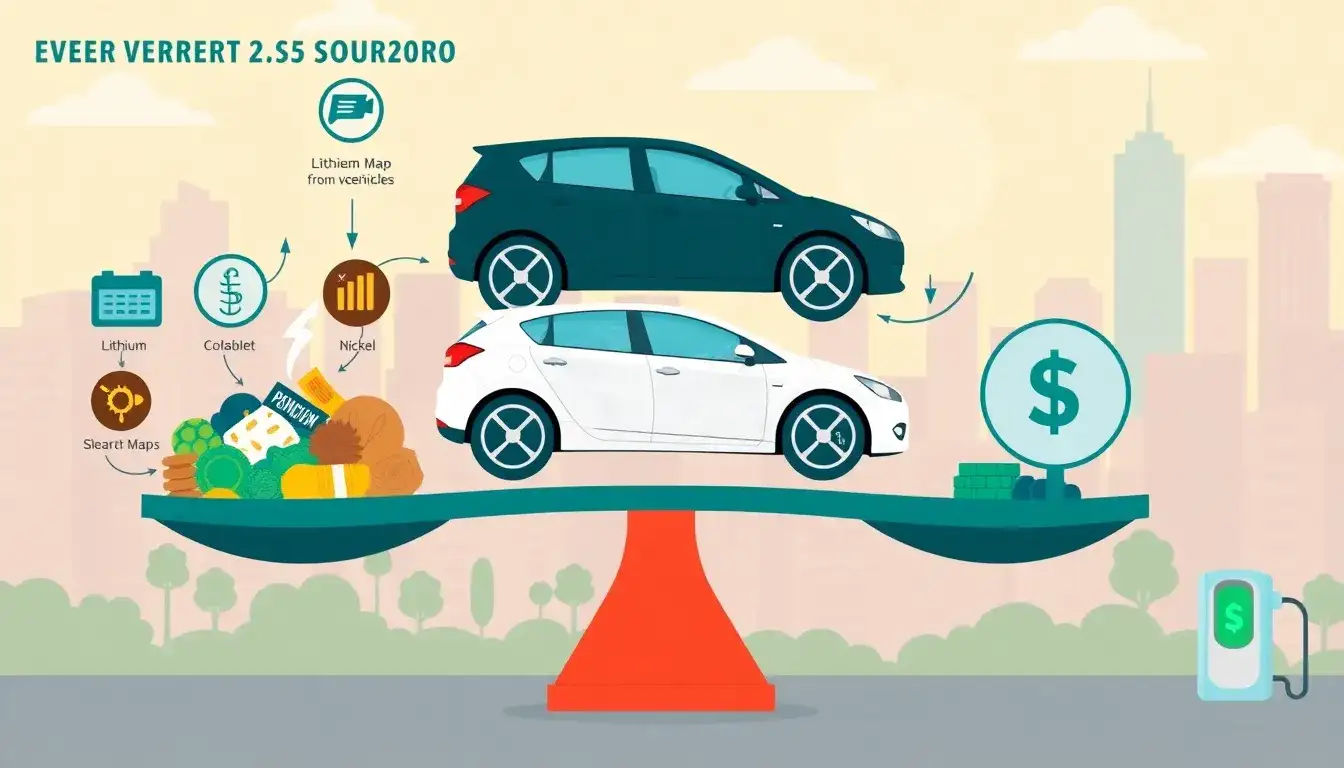
The battery sourcing requirements significantly impact the eligibility and amount of the federal EV tax credit under current U.S. law, primarily stemming from the Inflation Reduction Act (IRA) provisions.
Structure of the Federal EV Tax Credit
The full federal EV tax credit is worth up to $7,500, split evenly between two main requirements:
- Battery component assembly/manufacturing in North America — up to $3,750
- Critical minerals sourcing and processing in the U.S. or a U.S. free-trade partner country — up to $3,750
To qualify for the full credit, the vehicle must meet both requirements. Meeting only one can yield a partial credit of up to $3,750.
Battery Sourcing Requirements
- At least 50% of the value of the EV battery components must be manufactured or assembled in North America starting in 2023, with this percentage increasing annually:
- 2023: 50%
- 2024-2025: 60%
- 2026: 70%
- 2027: 80%
- 2028: 90%
- 2029–2032: 100%
- The IRS and Treasury have established regulations requiring automakers to trace and verify the battery supply chain to confirm compliance with these domestic content requirements through a detailed “Traced Qualifying Value Add Test.”
Critical Minerals Requirements
- A specific percentage of critical minerals in the battery must be extracted or processed domestically or in a U.S. free-trade partner country:
- 2023: 40%
- 2024: 50%
- 2025: 60%
- 2026: 70%
- 2027–2032: 80%
- The Treasury regulations also address how to calculate and trace the sourcing and processing of these minerals.
Impact on Tax Credit Eligibility
- Vehicles that do not meet the battery assembly or critical minerals sourcing requirements are ineligible for the full $7,500 credit and may only qualify for a partial credit or none at all.
- The sourcing requirements aim to reduce reliance on foreign supply chains (notably China, which dominates battery materials) and incentivize domestic manufacturing and mineral processing.
- These rules apply to new vehicles purchased from 2023 onward and to leased vehicles as well, although commercial EV tax credits may have different or less restrictive sourcing requirements.
In summary, the battery sourcing and critical minerals requirements are key criteria that determine whether a new EV qualifies for the full federal tax credit and affect how much of the credit (if any) a vehicle buyer can claim. Increasing domestic content percentages over time impose progressively stricter conditions to encourage the U.S. EV supply chain development and reduce dependence on foreign sources.
Original article by NenPower, If reposted, please credit the source: https://nenpower.com/blog/how-do-the-battery-sourcing-requirements-affect-the-federal-ev-tax-credit/

