

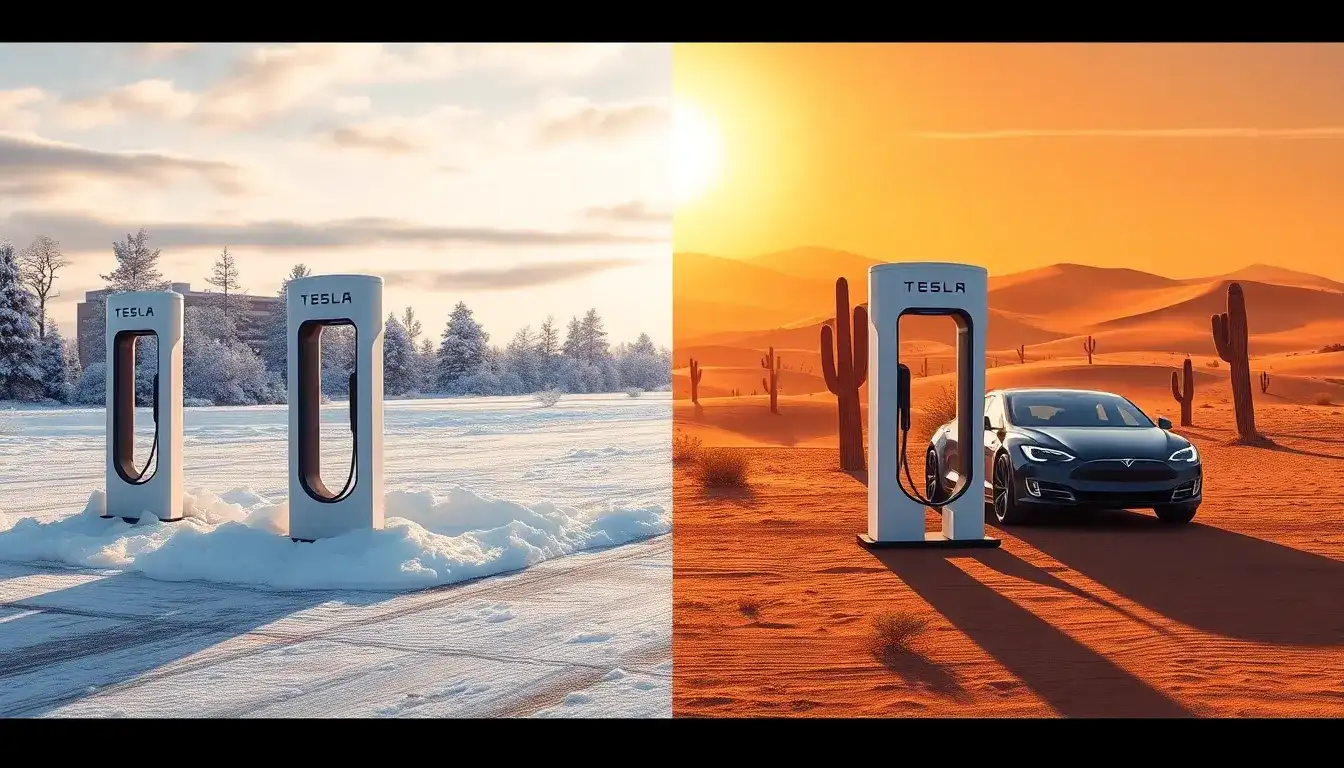
Tesla Superchargers have made significant advancements to maintain and improve charging performance in extreme weather conditions, especially in very cold climates.
Performance in Cold Weather
- Cold temperatures typically reduce electric vehicle (EV) battery efficiency and charging speeds. Tesla combats this challenge using both hardware and software improvements.
- Tesla recommends preconditioning the vehicle’s climate system 30–45 minutes before departure to optimize battery temperature for driving and charging.
- A major recent improvement is the introduction of battery preconditioning tailored for Supercharging. Tesla’s software update 2024.44 improved battery preconditioning to enable better Supercharging performance and automatic windshield defogging before, during, and after charging in cold weather.
Innovative Battery Warming Technology
- Tesla’s V3 and V4 Superchargers (capable of 250 kW+ charging) now include a novel feature that actively warms cold batteries during charging by sending an AC ripple current through the battery pack.
- This heating method is specifically available for Model 3 and Model Y vehicles with lithium iron phosphate (LFP) batteries (standard-range, rear-wheel drive versions).
- The AC ripple current heats the battery externally, which can warm a cold battery up to four times faster than the vehicle’s internal preconditioning system alone.
- This dramatically reduces charging delays caused by low battery temperatures, enabling EV drivers to charge more quickly in freezing conditions.
Performance in Hot Weather
- On very hot days, V2 Supercharger cables can overheat, causing a reduction in charging speeds. Users have found that methods such as wrapping a wet rag around the cable can help cool it down and temporarily restore charging rates.
Summary
Tesla Superchargers perform reliably in extreme weather by combining vehicle preconditioning, newly enhanced software improvements, and cutting-edge hardware features:
- In cold weather, Tesla’s software updates and V3/V4 Superchargers now actively warm LFP batteries using an AC ripple current, significantly improving charging speeds and convenience.
- In hot weather, while cable overheating can slow charging on older V2 Superchargers, newer Superchargers and user mitigations can help manage this.
- These innovations make Tesla Supercharging more effective and user-friendly in both extreme cold and heat, maintaining faster and more consistent charging performance across diverse climates.
Original article by NenPower, If reposted, please credit the source: https://nenpower.com/blog/how-do-tesla-superchargers-perform-in-extreme-weather-conditions/

