

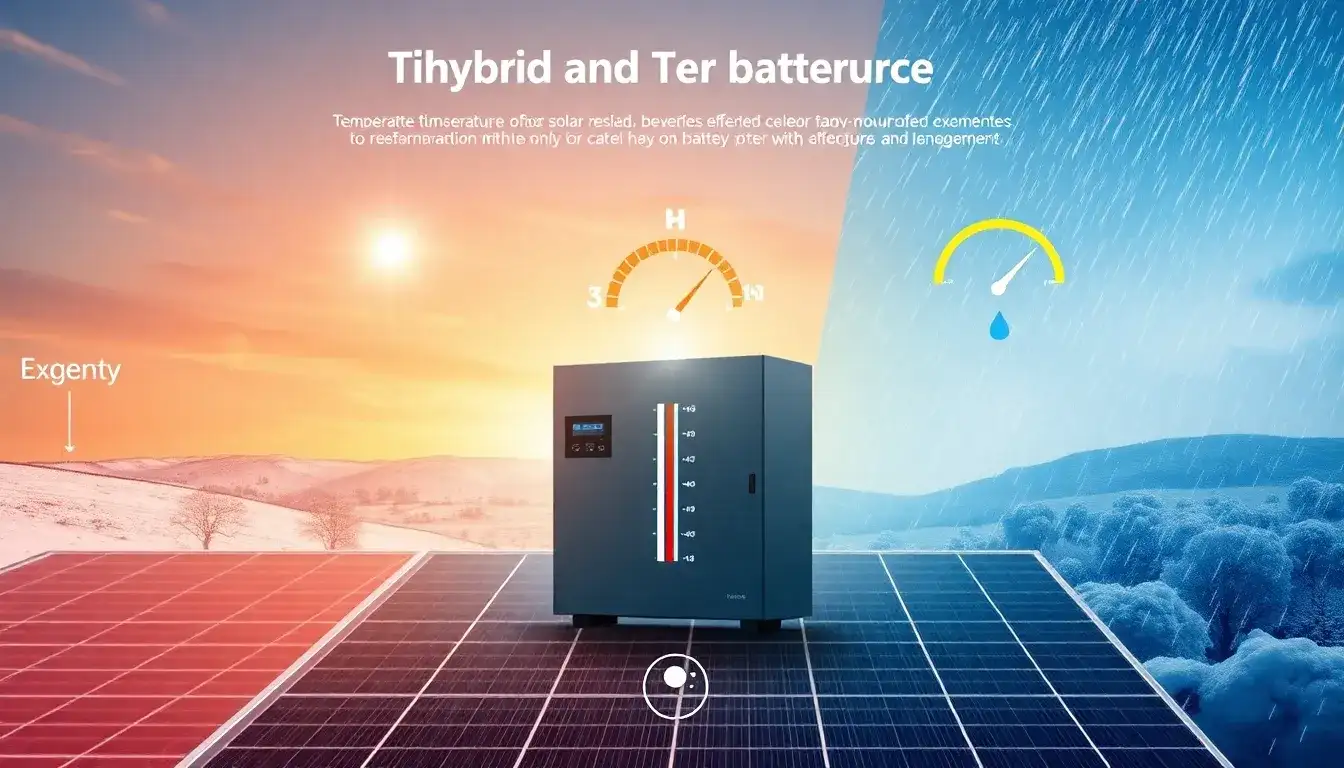
Temperature fluctuations significantly impact the performance and lifespan of hybrid solar batteries by affecting their capacity, efficiency, and chemical processes within the battery cells.
Effects of Temperature on Hybrid Solar Battery Performance
1. Reduced Capacity and Efficiency at Low Temperatures
- When temperatures drop below the ideal range (typically 59°F to 77°F or about 15°C to 25°C), battery capacity can decrease by 20-30%, meaning a fully charged battery may only deliver 60-80% of its rated capacity in cold conditions.
- Cold temperatures slow down the chemical reactions inside the battery, causing slower charging and discharging rates and reduced overall efficiency.
- Batteries can experience sudden voltage drops in extremely low temperatures, which affects the stability and functioning of the solar power system.
- Installation locations exposed to cold, such as garages, lofts, or outdoors without insulation, are especially prone to these effects, making temperature regulation critical.
2. Impact of High Temperatures
- Higher temperatures can temporarily boost battery performance and capacity by accelerating chemical reactions.
- However, prolonged exposure to high temperatures (above about 40°C or 104°F) can cause irreversible damage to the battery, shortening its lifespan and degrading its overall health. This leads to less capacity over time and increased risk of failure.
3. Optimal Temperature Range
- Most hybrid solar batteries perform best within the moderate temperature range of approximately 59°F to 77°F (15°C to 25°C), balancing efficient chemical activity without accelerating degradation.
Summary Table: Temperature Effects on Hybrid Solar Batteries
| Temperature Range | Effect on Battery Performance |
|---|---|
| Below 0°C (32°F) | Capacity decreases by 20-30%, slower chemical reactions, voltage drops |
| 15°C to 25°C (59°F-77°F) | Optimal performance with maximum efficiency and lifespan |
| Above 40°C (104°F) | Temporary capacity boost but risk of damage and reduced lifespan |
Managing temperature through proper installation, insulation, and environmental control is essential to maximize the efficiency and durability of hybrid solar batteries. This ensures reliable energy storage and optimal return on investment from solar energy systems.
Original article by NenPower, If reposted, please credit the source: https://nenpower.com/blog/how-do-temperature-fluctuations-affect-the-performance-of-hybrid-solar-batteries/

