

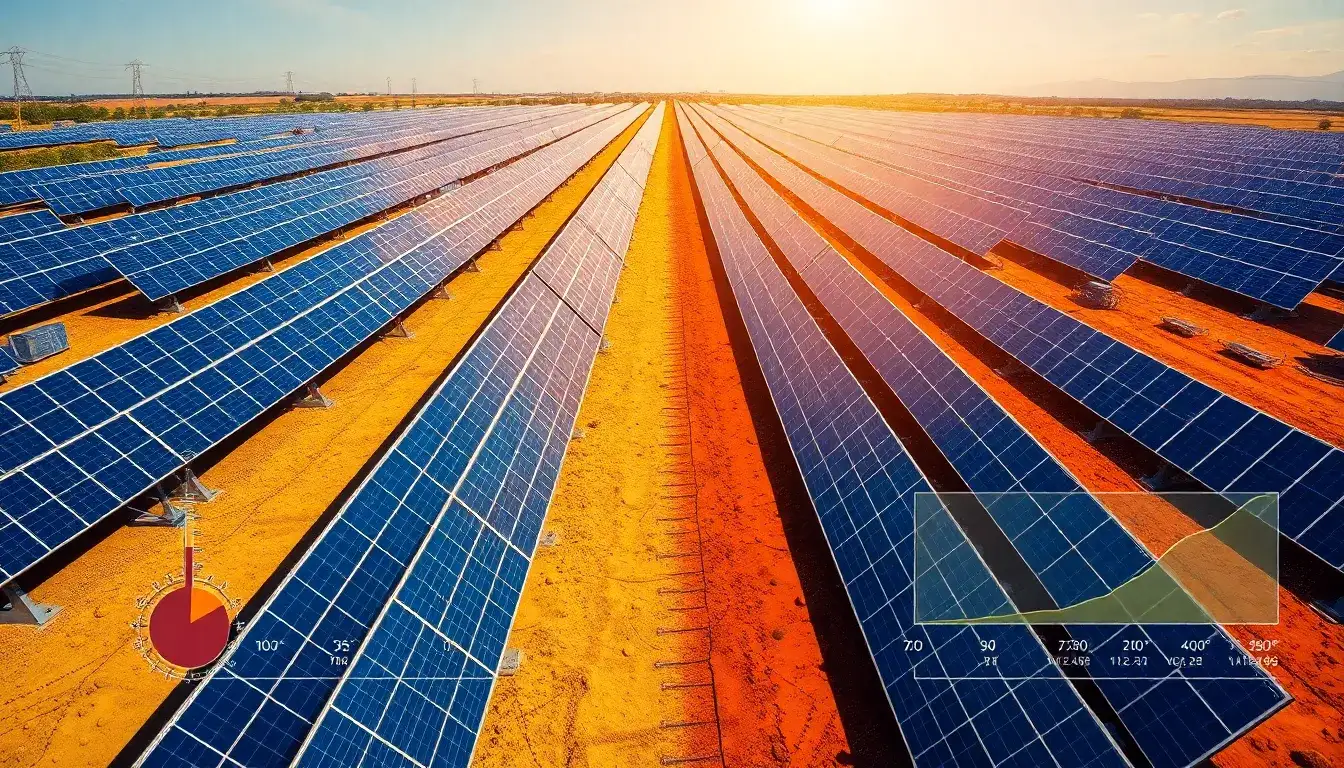
Impact of Temperature Coefficients on Long-Term Energy Production of Solar Panels
The temperature coefficient is a crucial factor in determining the efficiency and long-term energy production of solar panels. Here’s how temperature coefficients impact solar panel performance over time:
Definition and Impact of Temperature Coefficient
- Temperature Coefficient: This metric represents the rate at which a solar panel’s efficiency decreases as its temperature rises. Most solar panels have a negative temperature coefficient, typically ranging from -0.3% to -0.5% per degree Celsius above 25°C.
- Effect on Power Output: For every degree above 25°C, solar panels suffer a decrease in power output. For example, if a panel is 40°C above the reference temperature, it could lose around 12% to 20% of its maximum power output.
Factors Influencing Temperature Coefficients
- Panel Technology: Different technologies, such as monocrystalline, polycrystalline, and thin-film solar cells, have varying temperature coefficients. Thin-film panels generally have a lower temperature coefficient (-0.2% / °C) compared to crystalline silicon panels, which typically range from -0.44% to -0.5% / °C.
- Roofing Materials: The material of your roof can also affect solar panel temperature. Lighter-colored or reflective roofs can keep solar panels cooler by reflecting more sunlight.
Long-Term Energy Production
- Efficiency Over Time: While the immediate impact of temperature coefficients may seem minor, over long periods and in hotter climates, these losses can add up significantly. Panels exposed to high temperatures may degrade faster and produce less energy annually.
- Cost and ROI: Solar panels with lower temperature coefficients can offer better long-term returns on investment by maintaining higher efficiency levels and thus producing more electricity over their lifespan.
Recommendations for Optimal Performance
- Choosing Panels: When selecting solar panels, consider the temperature coefficient to ensure optimal performance in your local climate conditions. Panels with lower temperature coefficients are advantageous in regions with high temperatures.
- Installation and Maintenance: Proper installation techniques, such as angled mounting and appropriate rooftop materials, can help mitigate heat-related losses.
In summary, understanding the temperature coefficient is crucial for optimizing the long-term energy production of solar panels. By choosing panels with favorable coefficients and implementing smart installation strategies, homeowners and businesses can ensure more efficient energy generation over the panel’s lifespan.
Original article by NenPower, If reposted, please credit the source: https://nenpower.com/blog/how-do-temperature-coefficients-impact-the-long-term-energy-production-of-solar-panels/

