

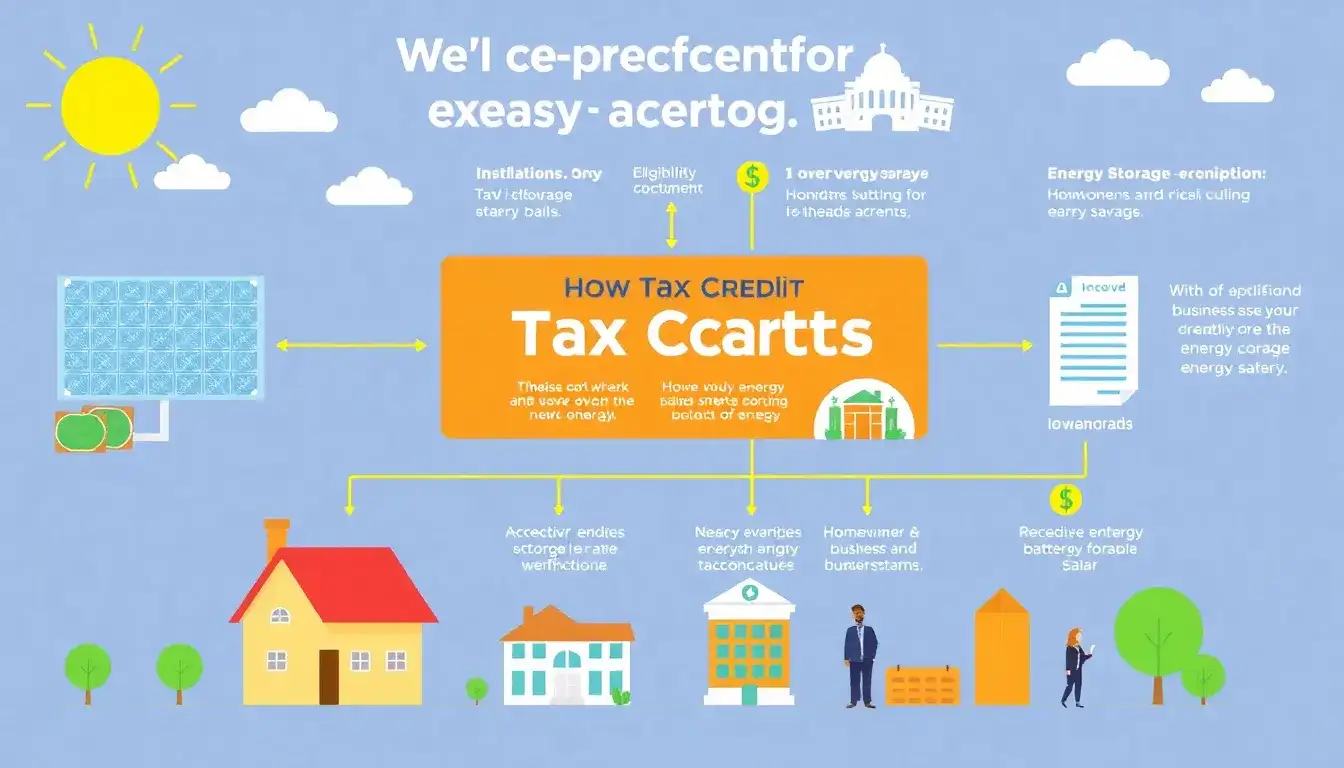
How Tax Credits for Energy Storage Systems Work
Tax credits for energy storage systems are designed to incentivize the adoption of clean energy technologies by reducing the upfront costs of installation. These credits can be divided into two main categories: the Residential Clean Energy Credit and the Investment Tax Credit (ITC) for larger projects.
Residential Clean Energy Credit
Eligibility and Benefits
- Eligible Products: Battery storage technology with a capacity of at least 3 kilowatt-hours qualifies for this credit.
- Credit Percentage: From 2022 through 2032, homeowners can claim a 30% credit on qualified expenditure. The credit phases down to 26% in 2033 and 22% in 2034.
- Requirements: The system must be installed in a dwelling unit used as a residence in the United States.
- Non-Refundable Credit: The credit reduces federal tax liability but does not generate a refund if it exceeds tax liability. Unused credits can be carried forward.
How to Claim
- Homeowners claim this credit on IRS Form 5695 for the tax year the system is placed in service.
- Qualified expenses include equipment and labor costs.
Investment Tax Credit (ITC)
Eligibility and Benefits
- Eligibility: Various energy storage projects qualify, including standalone energy storage. The credit is available under Section 48 of the Internal Revenue Code.
- Base and Bonus Rates: The base ITC rate is 6%, rising to 30% if prevailing wage and apprenticeship requirements are met. Other adders may apply, potentially increasing the credit to 50% for certain projects.
- Technology-neutral ITC under Section 48E: Applicable from 2025, this credit applies to clean energy generation and storage projects with no carbon emissions requirement for energy storage.
How to Claim
- Project developers can claim this credit upon placing the project in service. Rules similar to those for production tax credits apply to refundability for certain entities.
Both types of credits encourage the adoption of energy storage systems by offsetting installation costs, making these technologies more accessible for both residential and commercial use.
Original article by NenPower, If reposted, please credit the source: https://nenpower.com/blog/how-do-tax-credits-for-energy-storage-systems-work/

