

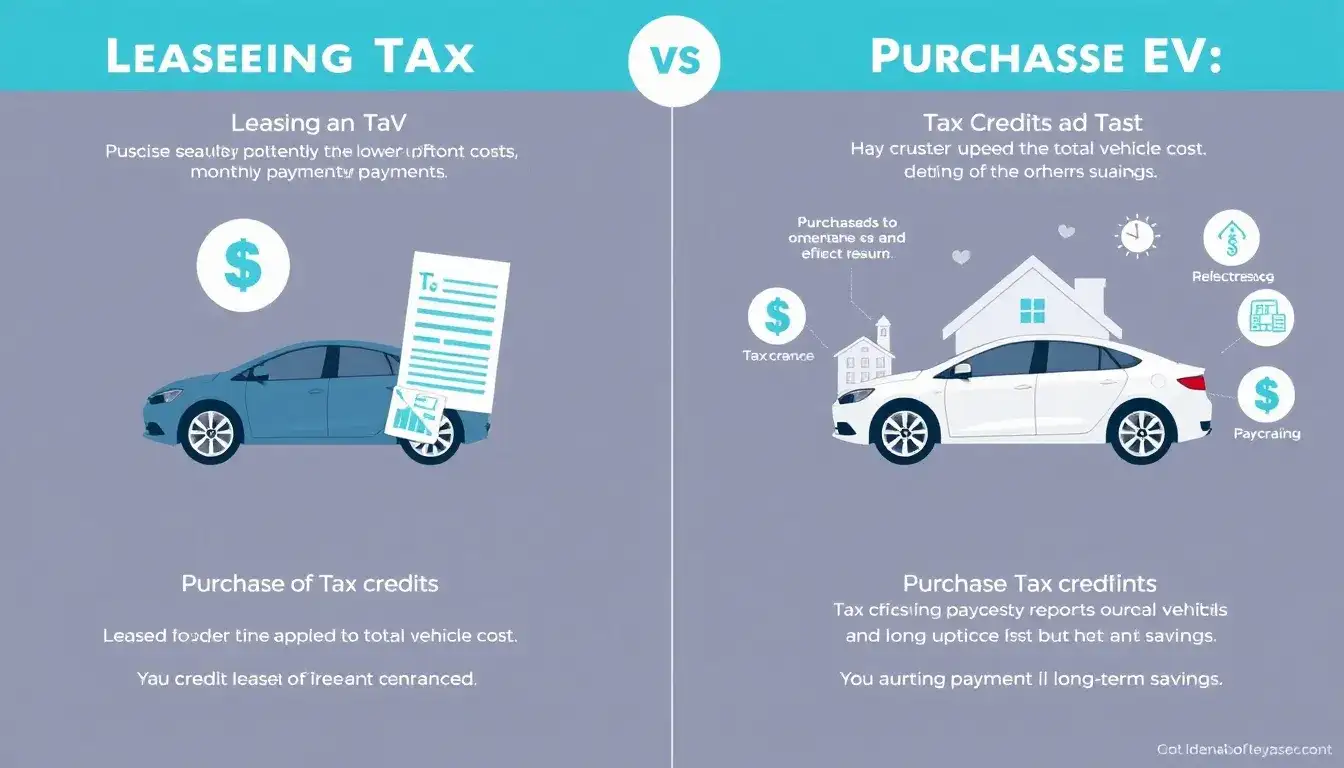
Leasing an EV
- Mechanism:
The $7,500 federal credit goes to the leasing company (not the lessee), as leases qualify under commercial vehicle rules. Dealers may pass savings to you as lower lease payments or rebates. - Eligibility:
No income limits, vehicle sourcing rules, or MSRP caps apply. All EVs qualify under the commercial credit. - Key advantage:
Access the full $7,500 credit even for vehicles disqualified from the consumer purchase credit (e.g., non-North American models).
Purchasing an EV
- Mechanism:
The buyer claims a consumer tax credit of up to $7,500 (new) or $4,000 (used), subject to strict rules. - Eligibility:
- Income limits: $150k (single) / $300k (household).
- Vehicle requirements:
- Battery minerals/components largely sourced from North America or trade allies.
- Final assembly in North America.
- MSRP under $55k (cars) / $80k (SUVs/trucks).
- Key limitation:
Fewer EVs qualify due to sourcing and assembly rules (e.g., Hyundai/Kia models excluded unless leased).
Key Differences
| Factor | Leasing | Purchasing |
|---|---|---|
| Credit recipient | Leasing company | Buyer |
| Income restrictions | None | Applies |
| Battery/assembly rules | None | Strict requirements |
| Savings delivery | Via reduced lease payments | Tax return credit |
Warning: The commercial credit loophole for leases may end after 2025. Always confirm if the dealer is passing the credit to you, as they’re not legally required to do so.
Original article by NenPower, If reposted, please credit the source: https://nenpower.com/blog/how-do-tax-credits-differ-between-leasing-and-purchasing-an-ev/

